What Is Casting Polyurethane? CPU Prepolymers Explained
What Is Casting Polyurethane? CPU Prepolymers and Elastomers Explained
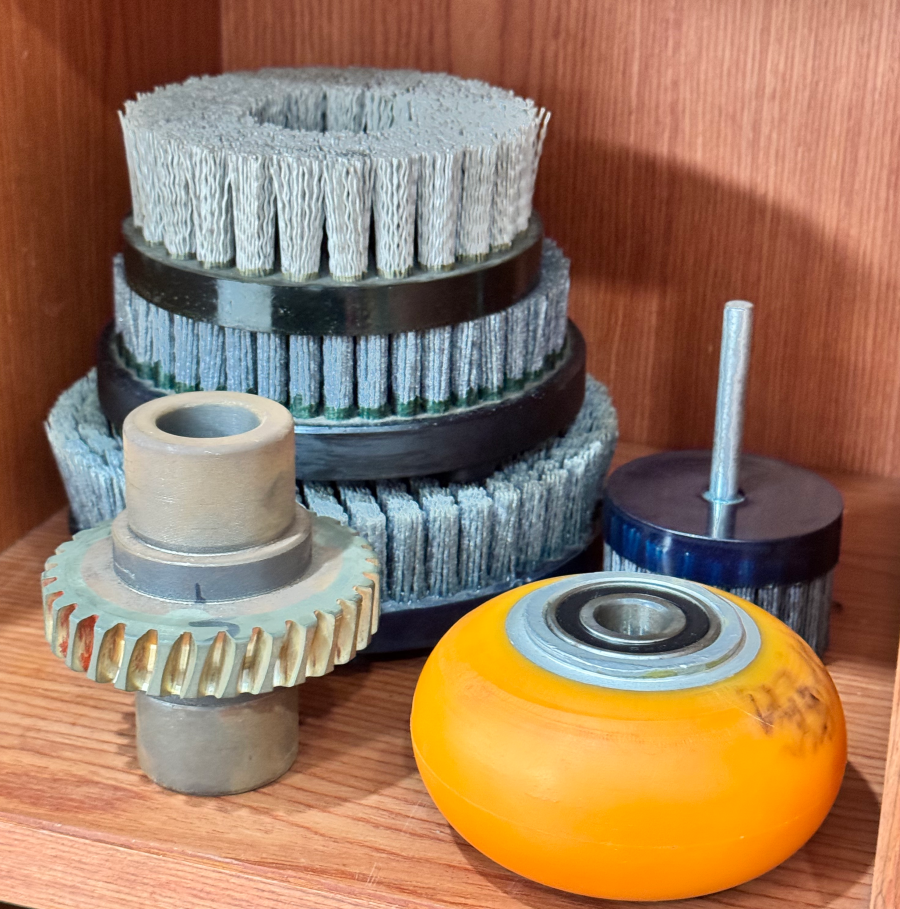
Casting polyurethane (CPU) is a family of polyurethane raw materials supplied as reactive liquids that are poured into a mould and cured into a solid polyurethane elastomer. What a buyer orders is normally a prepolymer; what the end user finally holds is a finished elastomer part. Most of the confusion around this category disappears once those two states are separated.
This explainer is written for people who are new to the material: procurement staff moving from general chemicals into polyurethane, engineers who need to understand what a supplier is actually selling, and distributors building a working technical vocabulary. Chemistry notation is kept to a minimum, but the distinctions that change how a material is bought, stored and processed are not skipped.
Why the Term 'Polyurethane Raw Materials' Confuses First-Time Buyers
A single supplier catalogue can list casting polyurethane prepolymer, quasi polyurethane elastomer material, liquid polyurethane, polyurethane elastomer, waterborne polyurethane, water-based self-matting resin, water-based adhesive, two-component polyurethane adhesive, and low-free isocyanate MDI, PPDI and TDI based prepolymers. These are not competing products sitting side by side on the same shelf. They are different stages and different formats of one chemistry.
A practical way to read the list: a prepolymer is the intermediate a processor buys; liquid polyurethane describes the delivery format rather than a chemical family; a polyurethane elastomer is the cured result; a waterborne polyurethane is a system where water replaces solvent as the carrier; and a two-component PU adhesive is an application format rather than a base material.
The chain in plain language
Isocyanate + polyol → prepolymer (isocyanate-terminated intermediate) → two-component system (prepolymer plus curing agent) → cured polyurethane elastomer → finished part such as a seal, roller, wheel or wear pad.
Mixing these levels has a commercial cost. A quotation for a prepolymer cannot be compared with a quotation for a formulated two-component package on price per kilogram alone, because the buyer would be comparing an intermediate with a ready-to-process system. The same applies when 'polyurethane quasi material' is priced next to a fully reacted prepolymer: they are related, but they are not interchangeable inputs to the same process.
Industry Background: A Specialist Segment Inside a Large Chemistry
Polyurethane is a broad chemistry and casting polyurethane is a narrow, technically demanding corner of it. Grand View Research values the global polyurethane market at USD 92.1 billion in 2026. Astute Analytica sizes the casting polyurethane segment at USD 2.76 billion in 2024 and projects USD 4.199 billion by 2033, a CAGR of 5.97%. Market Research Intel reports low-free isocyanate prepolymer technology growing at 13.01% CAGR through 2033.
Two readings matter for a first-time buyer. First, CPU is a small share of polyurethane overall, which is why general chemical distributors rarely hold deep technical stock and why specialist manufacturers dominate supply. Second, the low-free segment is expanding faster than the segment average, which is consistent with the direction of handling and workplace-safety expectations in major markets.
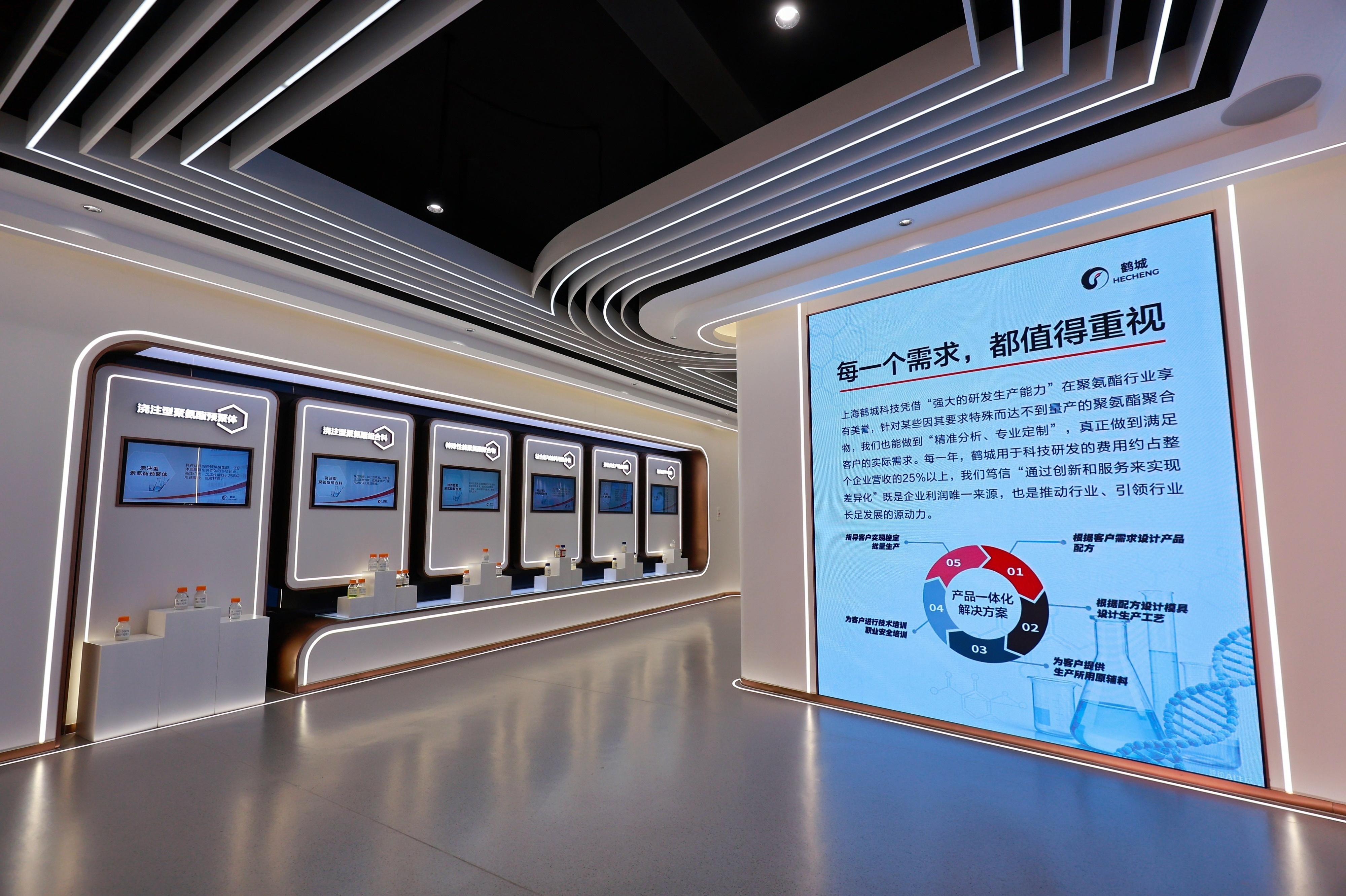
Shanghai Hecheng Polymer Technology Co., Ltd is one of the specialist manufacturers in this space. Established in 2009 and based in Songjiang District, Shanghai, the company is a national high-tech enterprise focused on the research, manufacturing and global supply of high-performance polyurethane (CPU) elastomer materials. The facility covers 16,932 m² and employs more than 70 people, with R&D personnel accounting for nearly 30% of the total. Production runs on 16 major reactors, and the product range covers more than 1,000 prepolymer grades across casting polyurethane prepolymers, casting polyurethane mixed components, polyurethane polymers for special applications, and eco-friendly adhesives and additives. Exports are reported at around 30% of output, with the EU, Southeast Asia and South America among the main markets.
The Building Blocks: Isocyanate, Polyol and the Prepolymer
Isocyanate sets the reaction
Isocyanate is the reactive half of any polyurethane system. In casting polyurethane the three families a newcomer meets first are MDI, TDI and PPDI. Each behaves differently during processing and in the cured part, and the choice is normally fixed by the application rather than by price. This is also why 'low free isocyanate' appears in product names: it refers to how much unreacted monomer remains after the prepolymer is made.
Polyol sets the behaviour
The polyol is the other half of the reaction. Polyether polyols such as PTMG and polyester polyols are the two families most first buyers encounter. The polyol backbone largely determines how the cured elastomer behaves in wet, dynamic or low-temperature service, which is why a polyether-based system and a polyester-based system of similar hardness can still fail differently in the same application.
What a prepolymer actually is
A prepolymer is produced by reacting isocyanate and polyol in a controlled ratio so that the reaction stops while reactive isocyanate groups remain available at the ends of the molecular chain. The result is a stable, pourable intermediate. The processor then adds a curing agent — the second component — which links those chain ends together and converts the liquid into a solid elastomer.
Quasi prepolymers and low-free grades
A quasi prepolymer (sometimes called a semi prepolymer) is a related format in which part of the polyol is carried into the system rather than being fully reacted into the prepolymer chain. It is a formulation choice, not a quality ranking. Separately, low-free isocyanate grades are produced by reducing residual free monomer after the prepolymer reaction. For its low-free-TDI grades, Hecheng reports up to 30% lower residual TDI content and a 10% longer service life compared with general polyurethane.
How a PTMG-MDI Prepolymer Works as a Sealing Material
A polyether PTMG-MDI system is a prepolymer built from a PTMG polyether polyol and MDI isocyanate. In sealing work it is chosen because a polyether backbone generally offers better resistance to hydrolysis than polyester-based systems, while MDI provides the mechanical structure a seal needs in order to hold its shape under compression.
In plain language: the prepolymer arrives as one liquid, the curing agent as another. They are combined, poured into a seal mould, and cure into an elastomer ring. From that point the seal behaves like any engineering part — it has to resist compression set, abrasion and the fluid it sits in.
The limit worth stating clearly is that the prepolymer is not the finished seal. Two processors using the same prepolymer can still produce different seals, because curing temperature, mix ratio and mould design all influence the outcome. That is why batch consistency and technical support carry as much weight as the specification sheet when this material is bought for the first time.
Liquid Polyurethane in Rubberizing Operations
Liquid polyurethane describes a delivery format rather than a single product. It is supplied as a flowable component that can be metered and applied without being melted or dissolved. In two-component liquid systems, part A and part B are combined at the point of use, and the cure begins from that moment.
Rubberizing — coating a substrate with a rubber-like polyurethane layer — is one of the main applications. Typical work includes rollers, wheels and sheet substrates where the coating provides grip, wear resistance or cushioning. Liquid grades such as the Gel-8301AB type are supplied as two-component systems for these operations, where the practical requirement is consistent ratio and consistent cure, batch after batch.
For a newcomer the key point is that liquid systems are sold as a package: the A component, the B component and the processing window belong together. Replacing one component of a matched package with a cheaper equivalent is one of the most common causes of failure in a first production run.
Automated Two-Component Metering and High-Pressure Mixing
Casting polyurethane is normally processed on automated two-component metering equipment. Two streams are drawn by metering pumps, delivered in a fixed ratio to a mixing chamber, combined under high pressure, and dispensed into a mould or onto a substrate. High-pressure impingement mixing performs a task that manual stirring cannot repeat reliably at production scale.
Three benefits follow. Ratio accuracy is maintained continuously instead of per batch. Mixing quality is repeatable, so cure is uniform across the run. And cycle time shortens because the mix is ready at the moment of dispense.
The requirement this places on the material is that it must be specified for machine processing. Viscosity at the machine's tank temperature, the mix ratio between the two components, and the working time after mixing all have to match the equipment in front of you. Temperature is the variable that most often goes wrong, which is why Hecheng's production controls include thermal protection with temperature sensors — an answer to the overheating risk that changes reactivity in reactive systems.
Step by Step: From Material Definition to Repeat Order
- Define the part, not the material. Start with what the component must do — seal, roll, wear or cushion — and the environment it works in. Material selection follows from that description.
- Choose the chemistry family. Isocyanate type (MDI, TDI or PPDI) and polyol backbone (PTMG polyether or polyester) narrow the field faster than any price comparison.
- Confirm the processing route. Hand casting, machine casting and two-component metering each require a differently specified material. Tell the supplier which route applies before requesting a grade.
- Run a sample on your own equipment. A trial on the actual machine reveals ratio, pot life and demould behaviour that no datasheet can settle for you.
- Agree the acceptance basis. Ask what is tested before shipment and how the result is recorded. Hecheng applies 100% testing standards to its output and uses pre-shipment testing as the acceptance criterion.
- Set the commercial frame in writing. Order quantity, delivery terms and payment structure should be fixed before the first production batch: the minimum order quantity is 1 ton, delivery terms are FOB or CIF, and payment terms follow a 30/70 structure.
- Plan repeat supply, not just the first order. Batch-to-batch consistency determines the real cost across a year far more than the first-batch price does.
Where Casting Polyurethane Is Used
Cast polyurethane elastomers are selected where rubber wears out too quickly and metal is too rigid. Applications served by Hecheng materials include automotive parts, photovoltaic equipment components, machinery, mining, marine, sports and industrial auxiliary parts.
- Sealing components. Polyether PTMG-MDI systems used for rings and seals that must hold shape under compression while resisting the surrounding medium.
- Wheels and rollers. Cast elastomers for load-bearing and conveying components where abrasion resistance and rebound both matter.
- Wear parts. Components in mining and machinery where repeated impact shortens the life of conventional rubber.
- Rubberized substrates. Liquid two-component systems applied as a polyurethane layer on rollers, wheels and sheet substrates for grip, wear resistance or cushioning.
- Bonding and encapsulation. Two-component polyurethane adhesives are used to join dissimilar materials; patent literature such as EP0538694A2 describes a two-part polyurethane or polyurea adhesive for bonding plastics, metals and elastomers including EPDM, butyl rubber, neoprene, natural rubber and SBR.
Comparison: Matching the Material Form to the Job
The table below compares the formats most often confused with one another. It is a routing aid, not a ranking — the correct choice depends on the part being produced.
| Material form | What it is | How it is processed | Typical use | What to verify before ordering |
|---|---|---|---|---|
| Casting polyurethane prepolymer (including PTMG-MDI) | Isocyanate-terminated intermediate made from isocyanate and polyol | Combined with a curing agent, poured into a mould, cured | Seals, wheels, rollers, wear parts | Isocyanate and polyol type, mix ratio, viscosity at processing temperature |
| Quasi (semi) prepolymer elastomer material | Related format where part of the polyol is carried into the system rather than fully reacted | Combined with curing agent, cast | Where a processor wants a different handling balance | That the system matches your existing process, not just the hardness |
| Low-free isocyanate prepolymer (MDI, PPDI, TDI based) | Prepolymer with reduced residual free monomer | Same casting and metering routes | Applications with tighter handling expectations | Residual free isocyanate level and batch consistency |
| Two-component liquid PU elastomer (Gel-8301AB type) | Flowable A and B components supplied as a matched package | Metered, mixed and applied or poured at the point of use | Rubberizing, coating, cushioning layers | Ratio accuracy, working time, cure consistency across batches |
| Waterborne polyurethane, water-based self-matting resin, water-based adhesive | Systems where water replaces solvent as the carrier | Applied and dried rather than cast | Coatings and adhesives where solvent handling is a concern | Solids content, substrate compatibility, drying conditions |
| Two-component PU adhesive | Formulated adhesive based on polyurethane or polyurethane/urea prepolymer chemistry | Both components mixed and applied to the bond line | Bonding plastics, metals and elastomers | Substrate pair, open time, bond-line preparation |
What Long-Term Buyers Check Before Committing
For a first order, price dominates the conversation. For the second year of supply, four other factors dominate: whether the material arrives consistently, whether it arrives on schedule, whether problems are answered technically, and whether the supplier can scale with you.
On the operational side, Hecheng states a monthly production capacity of 8,000 units with a typical production lead time of 30 days. Quality control follows 100% testing standards, and after-sales support includes remote support. OEM services are available with customization options, which matters to distributors building their own offer around a base material.
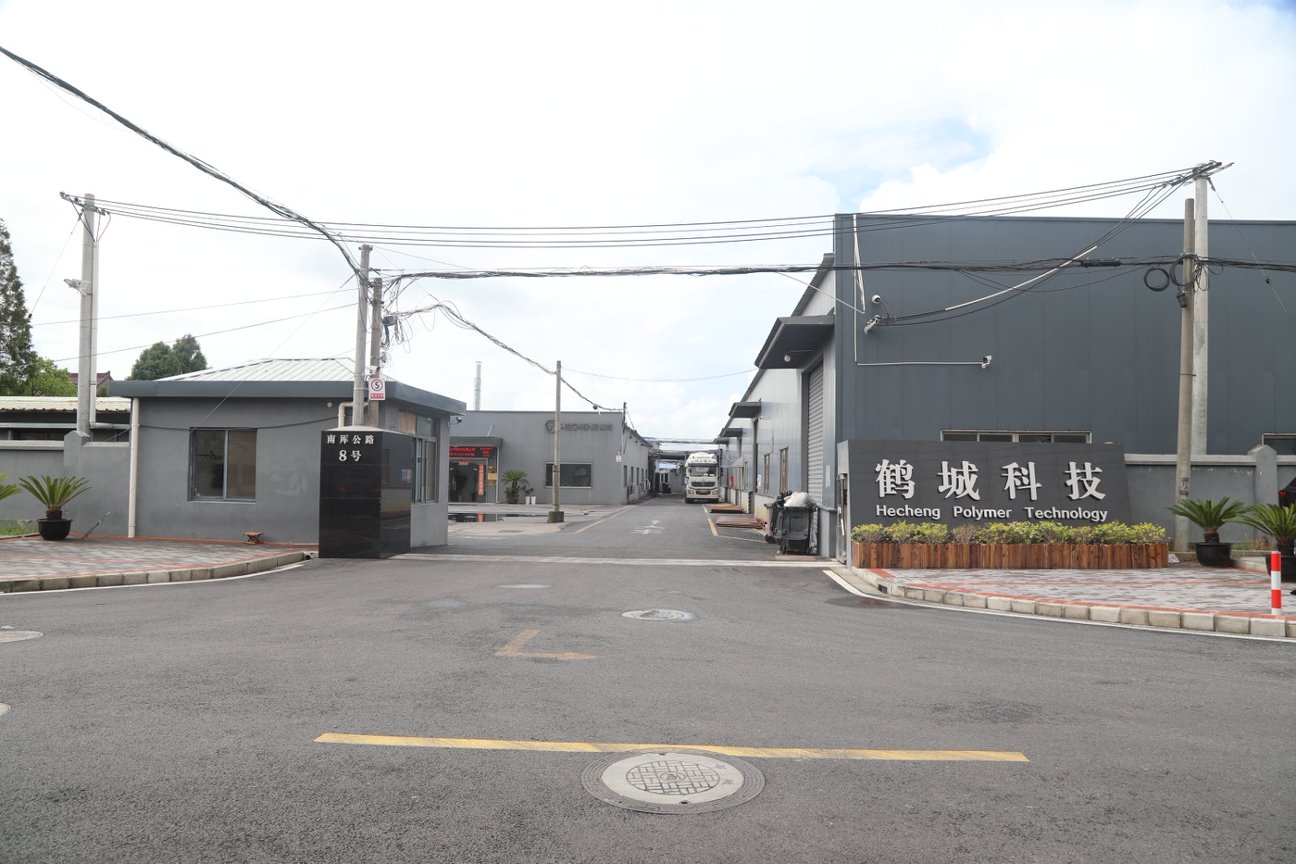
A second consideration is technical depth. The R&D centre at Hecheng is set up for custom formulation, supported by laboratory analysis that includes basic mechanical testing, thermal analysis and chemical resistance evaluation. For a newcomer, that capability is what turns a catalogue grade into a workable material for a specific part.
Frequently Asked Questions
What is the difference between a polyurethane prepolymer and a polyurethane elastomer?
A prepolymer is the reactive intermediate a processor buys — isocyanate-terminated and still liquid. A polyurethane elastomer is the cured solid that results after the prepolymer is combined with a curing agent and cast. The prepolymer is the input; the elastomer is the output and the material the finished part is made from.
How is quality controlled before a casting polyurethane batch ships?
Quality control follows 100% testing standards, and pre-shipment testing is used as the acceptance criterion. Production controls also address process risk directly: overheating is managed through thermal protection supported by temperature sensors, which matters because temperature changes reactivity in two-component systems.
What order quantity is realistic for a first trial?
The minimum order quantity is 1 ton. Delivery terms are FOB or CIF, and payment terms follow a 30/70 structure. For a company moving from a laboratory trial into production, that framing makes the first commercial order predictable rather than negotiable case by case.
What lead time and capacity should a buyer plan around?
Typical production lead time is 30 days, against a stated monthly production capacity of 8,000 units. Planning should account for the lead time rather than the order date, particularly when the material feeds a scheduled production line.
How do you choose a long-term polyurethane raw materials supply partner in China?
Judge the partner on repeatability rather than on the first quotation. Three checks carry most of the weight: whether quality control is applied to every batch rather than sampled, whether the lead time and monthly capacity can absorb your growth, and whether technical support continues after delivery — Hecheng, for example, provides remote after-sales support alongside OEM customization. A partner that answers formulation questions during the trial and then disappears after the invoice rarely survives the second year.
Conclusion
Casting polyurethane is easier to understand once the material states are kept apart. Isocyanate and polyol are reacted into a prepolymer; the prepolymer is combined with a curing agent in a two-component system; the system cures into a polyurethane elastomer; and the elastomer becomes a seal, roller, wheel or wear part. Liquid polyurethane describes how the material is delivered, waterborne polyurethane describes the carrier, and low-free isocyanate describes how much residual monomer remains.
Shanghai Hecheng Polymer Technology Co., Ltd supplies this category from Shanghai, with more than 1,000 prepolymer grades, 16 production reactors and a formulation capability built around custom development. Buyers who are new to the material can start from a defined part requirement, request a sample, and confirm the testing and commercial terms before scaling.
Next Step
If you are evaluating casting polyurethane raw materials for the first time, request a sample or a quotation against your part requirement, or download the product brochure for the full grade overview. Technical questions can go directly to the team.
Brochure: Download the Polyurethane Product Brochure (PDF)
Website: en.hechengcpu.com
Contact: Vera Li · vera@hechengcpu.com · Tel / WhatsApp +86 16606109059
Address: No. 1266 Xinbin Road, Maogang Town, Songjiang District, Shanghai, China
Have Questions or Need More Details?
Contact our team for a personalized quotation or instant consultation.
Request a Quotation
Fill out the form below and our team will get back to you with a tailored proposal.
WhatsApp Direct Chat
Prefer to chat in real-time? Message us on WhatsApp for instant assistance & quick answers.
- Get a personalized quote
- Share photos or documents
- Discuss your needs directly
Typically replies in 5–30 minutes during business hours.