Supplier Evaluation: How to Verify Polyurethane Prepolymer Manufacturers for Long-Term Delivery
Verifying a polyurethane prepolymer manufacturer is a different task from comparing quotations. Long-term delivery depends on whether a supplier can repeat the same prepolymer grade, batch after batch, under the mixing ratio, pot life, curing profile and climate conditions your own plant actually runs. A grade that performs once in a laboratory sample but drifts on the third container is a supply risk, not a saving.
The practical answer is that verification rests on three traceable questions: can the supplier prove its production base and grade library, can it prove its certification and technical ownership with a number an auditor can look up, and can it prove that its casting system is engineered for automated two-component mixing and continuous mass production rather than for manual batch pouring. Everything else, including price, sits downstream of those three answers.
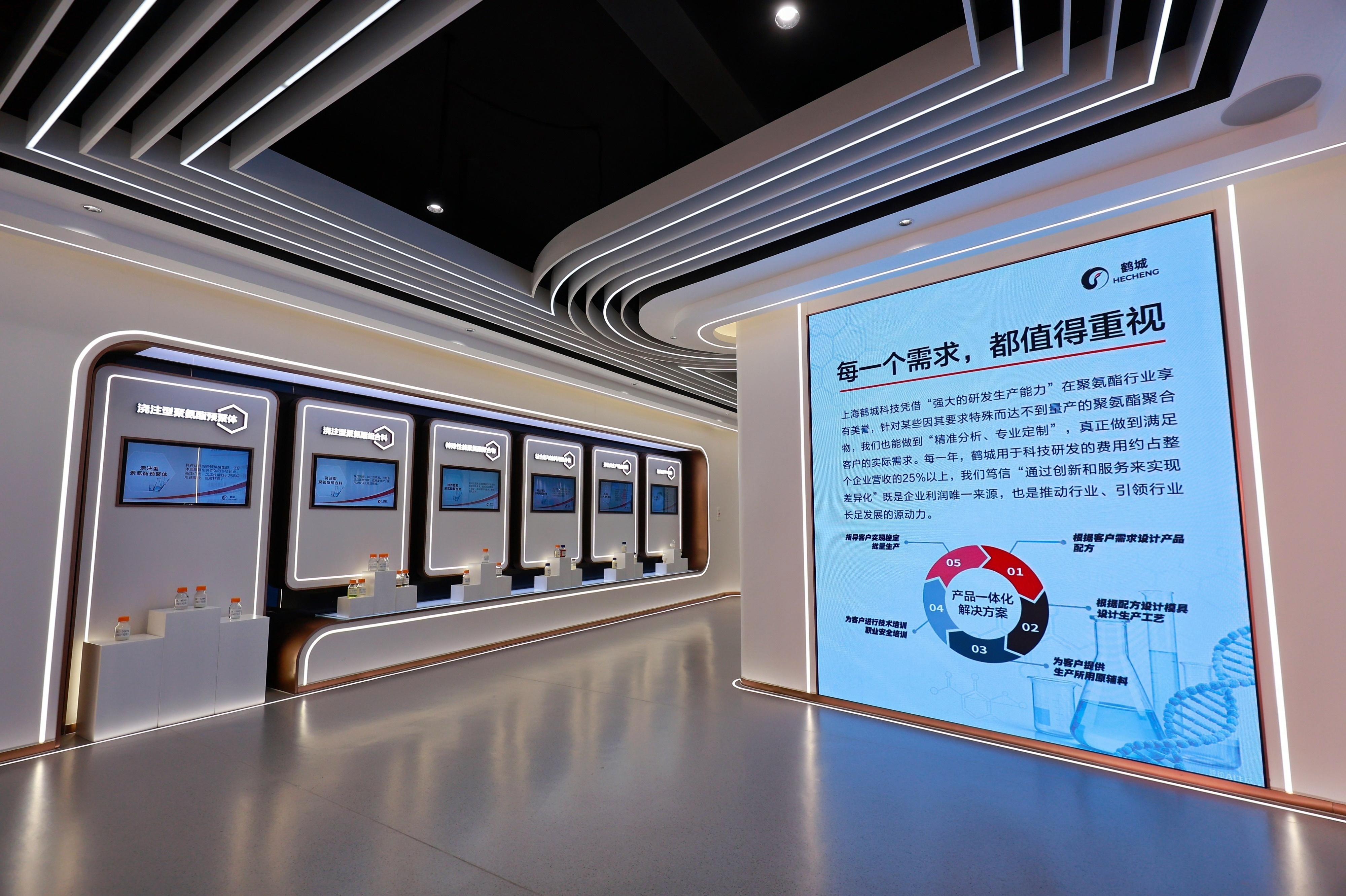
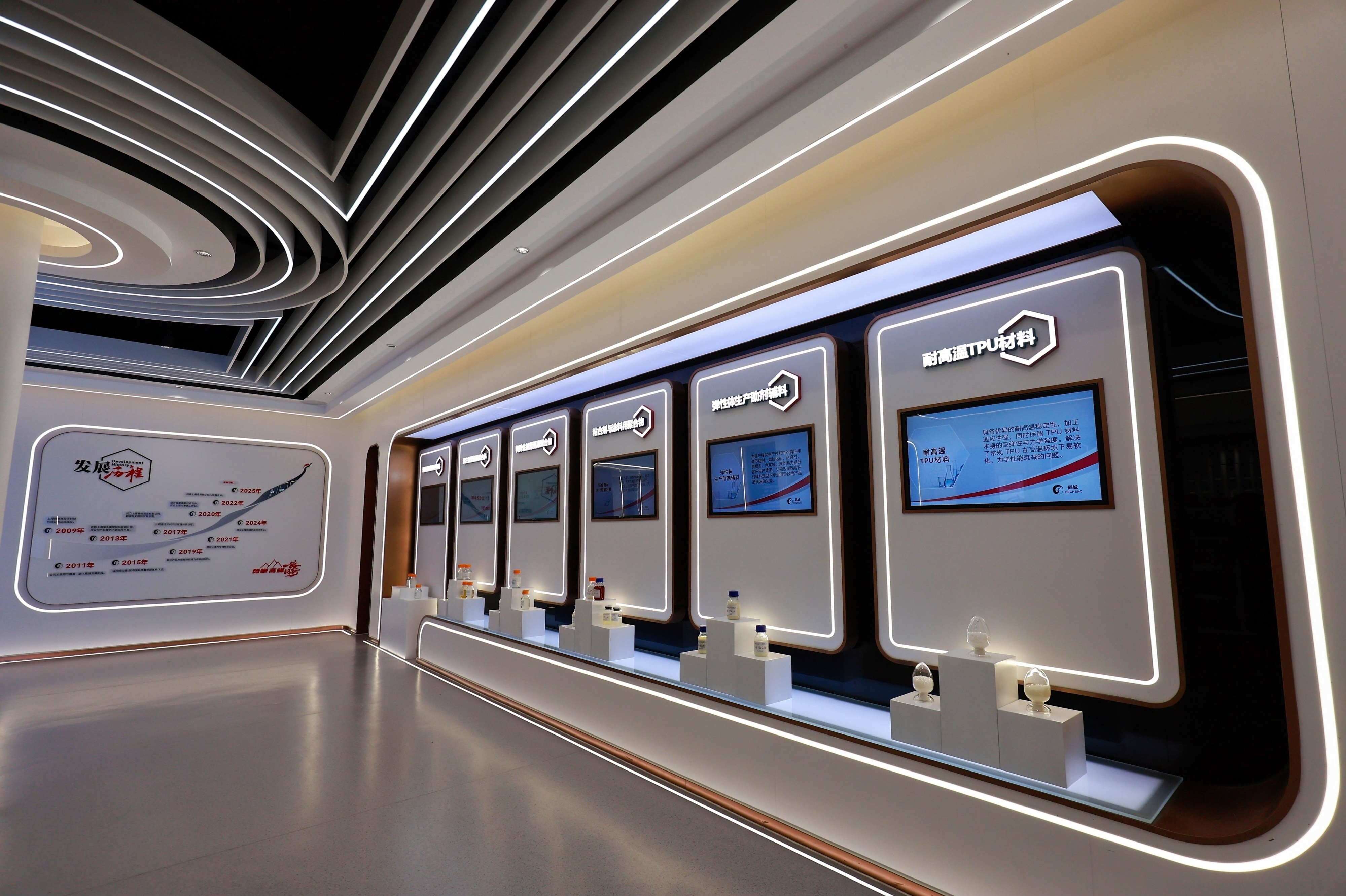
Shanghai Hecheng Polymer Technology Co., Ltd. is a useful reference point for how those answers should look in practice. Established in 2009 and located in Shanghai, P.R. of China, with plants and warehouses in the Songjiang district, the company operates a 16,932 m² facility with 16 major production reactors, 78 employees (18 of them R&D engineers, with R&D personnel accounting for nearly 30% of the total) and a product range of more than 1,000 prepolymer grades. It exports approximately 30% of its output to the EU, Southeast Asia and South America.
Problem Definition: Why Supplier Verification Usually Fails Before the First Reorder
Most sourcing failures in casting polyurethane raw materials are not caused by a bad first shipment. They appear between the second and the fifth order, when the supplier has already won the business and the buyer has already qualified the material internally. Five failure modes account for most of them.
Grade drift between batches. A supplier that can produce one correct drum may still be unable to hold the specification across continuous mass production. Reactor count, segregation practice and in-process testing are the variables that decide whether batch four equals batch one.
Process mismatch. Polyurethane prepolymer must behave correctly in the buyer's metering and mixing equipment. A system that is not designed for two-component metering and conveying, automatic high-pressure mixing and pouring will force the buyer into slower manual pouring and higher scrap rates.
Climate-driven degradation. In tropical high temperature and high humidity, with frequent friction and corrosive water contact, hydrolysis and corrosion resistance stop being marketing points and become the difference between a part that lasts and a part that fails in service.
Paperwork that cannot be audited. A certification claim without a registration number, an issuing authority, a product scope and a validity window cannot be verified by a procurement team, a notified body or an internal compliance officer.
Commercial discontinuity. A minimum order quantity, lead time and after-sales arrangement that works for a trial order may not survive a tenfold increase in volume, or a change in shipping destination.
Industry Background: Why Verification Standards Are Tightening
The commercial context makes verification more, not less, important. According to Roots Analysis, the global polyurethane market was estimated at USD 85.2 billion in 2024 and is projected to reach USD 136.2 billion by 2035. Within that total, Astute Analytica valued the casting polyurethane segment at USD 2,758.37 million in 2024, driven by industrial production and the electrification of mobility.
Demand is moving faster than capacity in some segments. Straits Research reported that global demand for polyurethane elastomers rose by 12% in 2024, mainly because of industrial machinery and automotive lightweighting. Raw material concentration adds a second layer of complexity: Prismane Consulting and S&P Global estimate that methylene diphenyl di-isocyanate (MDI) contributed approximately 60% of total global isocyanate volume in 2024, while S&P Global Commodity Insights places Mainland China at about one-third (33.3%) of the global TDI, MDI and aliphatic markets. For buyers, that combination of growth and concentration means supplier capacity is a shared resource, and qualifying a supplier early is cheaper than re-qualifying one under pressure.
Two regulatory reference points are worth keeping in the verification file. ISO 10364:2024 specifies methods for determining the pot life (working life) of multi-component adhesives, including polyurethane-based systems, which gives buyers a standardized way to compare a supplier's stated working time against their own production window. Separately, EUROPUR confirmed that, as of 1 September 2024, the prohibition on the use of methylene chloride in foam production under the CertiPUR label entered into force, an example of how compliance requirements in this material family change on fixed dates rather than gradually.
Detailed Solution: The Five Verification Pillars for a Prepolymer Supplier
1. Production base and grade library
Start with the physical asset, because it constrains everything else. A supplier running a large reactor base can dedicate equipment to specific chemistry families and reduce cross-contamination risk between grades, which is the mechanical cause of most batch inconsistency. Hecheng operates a 16,932 m² site with 16 major production reactors and a portfolio of more than 1,000 prepolymer grades, which materially increases the chance that an existing formulation already sits close to the buyer's target specification instead of requiring a from-scratch development project.
The R&D ratio matters as much as the reactor count. Hecheng's 78 employees include 18 R&D engineers, with R&D personnel accounting for nearly 30% of the total. A supplier that cannot field a technical team proportionate to its sales team will struggle to support a ten-year material relationship.
2. Certification and technical ownership you can trace
Certification should be checked as a data record, not as a logo. The casting polyurethane prepolymer (product 4643) is protected by an invention patent numbered 16425Q32921R3M, issued by HUAZHONG INTERNATIONAL CERTIFICATION AND INSPECTION GROUP, and that patent applies to both domestic and international markets. The same patent number is associated with the CPU casting polyurethane product (product 5644) and with the polyurethane elastomer product (product 5645).
Certificate records list issue dates of 14 September 2016, 10 October 2017, 19 June 2018 and 8 July 2021, with corresponding expiration dates of 14 September 2036, 10 October 2037, 19 June 2038 and 8 July 2041. Four independent records covering overlapping product lines give an auditor a long validity runway and a checkable paper trail.
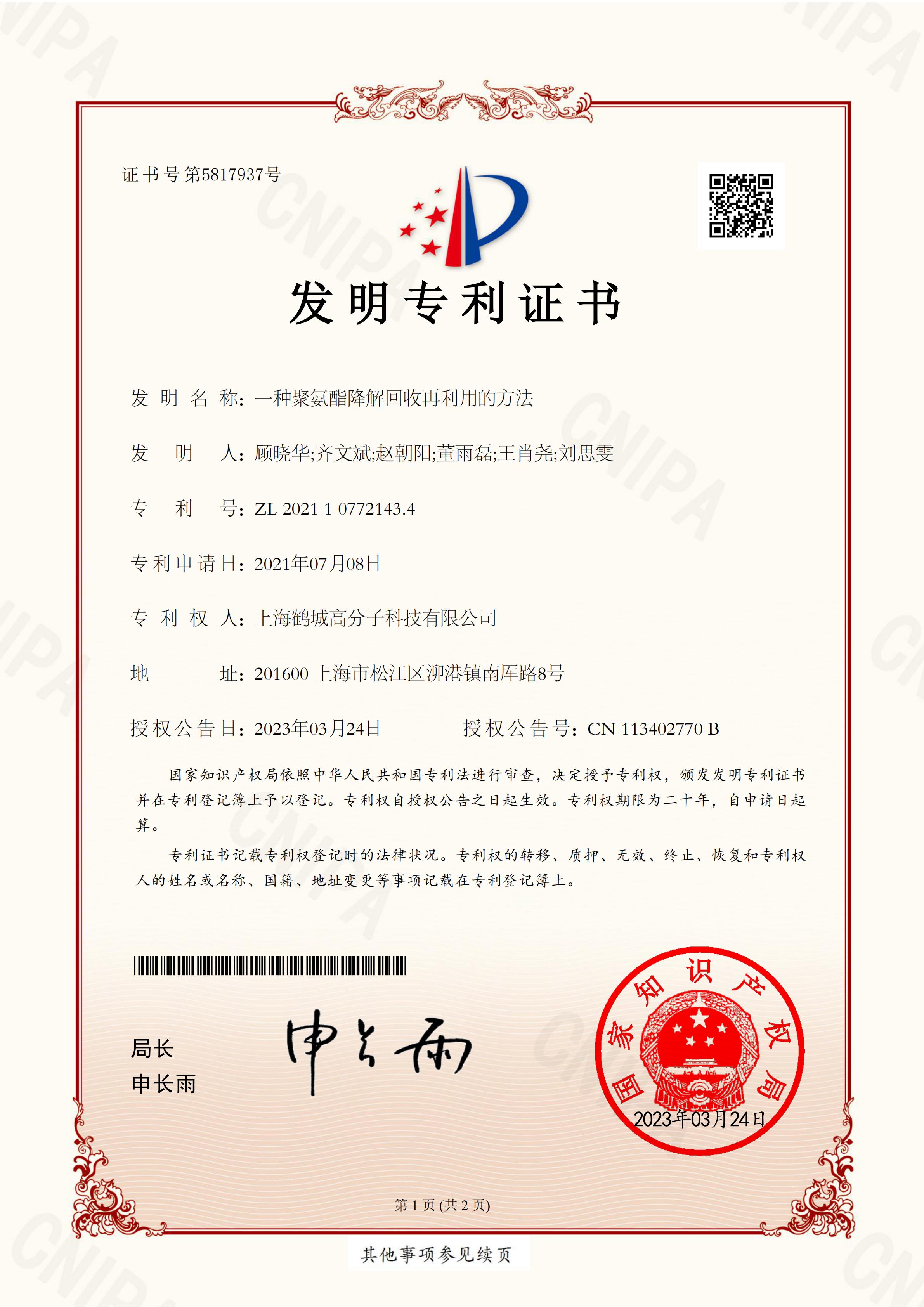
What to record: patent or certificate number, issuing authority, the specific product scope it covers, the validity window, and the markets it applies to. A patent certificate confirms technical ownership; it is not the same document as a substance registration under a regulatory framework such as REACH, so ask separately for the compliance document tied to the exact grade you are buying.
3. Compatibility with automated two-component mixing
This pillar separates suppliers who sell chemistry from suppliers who understand production lines. In the application scenarios documented for Hecheng's casting systems, production runs on two-component metering and conveying of raw materials, with automatic high-pressure mixing and pouring enabling continuous mass production. The matched equipment set is a polyurethane high-pressure foaming machine or low-pressure pouring machine, a raw material storage tank, a mixing barrel and a delivery pump.
The verification question for a buyer is straightforward: will the prepolymer's viscosity, mixing ratio tolerance and working life fit that equipment on your floor? ISO 10364:2024 gives a shared method for stating and measuring pot life, which lets a buyer compare a supplier's figure directly against the open time available between mixing head and mould. A supplier that cannot answer in those terms is unlikely to support continuous mass production reliably.
4. Climate and application consistency
Material performance is only meaningful against a defined environment. Hecheng's documented application scenarios specify tropical high temperature, high humidity, frequent friction and corrosive water contact as the working condition, with projects recorded across Vietnam, Pakistan, the Philippines, Cambodia, Malaysia, Bangladesh and Thailand. That is a demanding baseline, and it forces different requirements depending on the end use.
For construction anti-wear parts, the requirement is high hydrolysis and corrosion resistance combined with high-toughness elastomer behaviour. For marine technology, the requirement is resistance to seawater corrosion, anti-fouling against marine organisms and shock absorption. For wind power components, aging resistance, high-voltage sealing and shock absorption drive the specification. For mining, wear resistance dominates. A supplier that can state these requirements in the buyer's own operating language, rather than in generic performance adjectives, is a supplier that has already solved the problem at another customer's plant.
5. Commercial continuity: MOQ, lead time, quality control and after-sales
Long-term delivery is a commercial agreement as much as a technical one. Hecheng's capability data records OEM production, a minimum order quantity of 1 ton, a lead time of 30 days, a monthly capacity of 8,000 units, 100% testing, export markets covering the EU and the Middle East, and remote after-sales support. Company background data lists 30% export ratio with main markets in the EU, Southeast Asia and South America.
A ten-year relationship is the strongest single indicator available in this category. One documented case is a raw material manufacturer in Vietnam that has purchased 100 tons of polyurethane elastomer over a 10-year period, with results recorded as stable production quality and improved product performance, and material attributes described as environmentally friendly, high quality and corrosion-resistant. Buyers evaluating a new supplier should ask for exactly this shape of evidence: customer type, country, tonnage, duration and outcome, not a logo wall.

Step-by-Step Breakdown: A Seven-Step Supplier Verification Sequence
The sequence below is ordered so that the cheapest checks happen first and the most expensive commitment happens last.
- Write the specification in process language. Convert your requirement into measurable terms: mixing ratio, pot life expressed against the ISO 10364:2024 method, hardness, resilience, hydrolysis resistance and the operating environment. This document becomes the reference for every supplier conversation.
- Request the certification record and verify four fields. Number, issuing authority, product scope and validity window. For Hecheng products, the reference record is invention patent 16425Q32921R3M issued by HUAZHONG INTERNATIONAL CERTIFICATION AND INSPECTION GROUP, applicable to domestic and international markets, with validity running to 2036, 2037, 2038 and 2041 across the listed certificates. Confirm the record covers the exact product line you intend to purchase.
- Audit the production base. Confirm site area, number of production reactors, product-grade count and the size of the technical team. Hecheng reports 16,932 m², 16 major production reactors, more than 1,000 prepolymer grades, 78 employees and 18 R&D engineers.
- Run the automation compatibility check. Ask the supplier to confirm the two-component metering and conveying behaviour, high-pressure mixing and pouring suitability, and the matched equipment list: high-pressure foaming machine or low-pressure pouring machine, raw material storage tank, mixing barrel, delivery pump.
- Test under your real climate and duty cycle. If your plant or your customer's installation sits in tropical high temperature and high humidity with corrosive water contact, insist on validation data that reflects it. Ask which documented projects in comparable conditions the supplier can reference.
- Fix the commercial terms in writing before scaling. Minimum order quantity, lead time, quality control regime and after-sales arrangement should all be stated for the volume you expect in twelve months, not for the trial order. Hecheng records a 1 ton MOQ, a 30-day lead time, 100% testing and remote after-sales support.
- Verify long-term behaviour with reference history. Ask for customer type, country, tonnage purchased, duration of the relationship and the recorded outcome. A documented ten-year supply relationship, such as the Vietnam case covering 100 tons of polyurethane elastomer, carries more weight than any performance claim.
Verification checklist: specification in process language → certification number, issuer, scope and validity confirmed → production base and R&D ratio audited → automation compatibility confirmed in writing → climate and duty-cycle validation reviewed → MOQ, lead time, QC and after-sales fixed → reference history checked with tonnage and duration.
Use Cases: Matching the Verified System to the Application
Mining. The casting polyurethane prepolymer product 4643, listed under the model POLYURETHANE ELASTOMER, is a polyurethane raw material for the mining industry and covers the casting polyurethane raw materials, polyurethane quasi material, polyurethane prepolymer, liquid polyurethane, CPU casting polyurethane and polyurethane elastomer categories. The polyurethane elastomer product 5645 (polyester, three-component, Screen Scraper-5282ABC) is specified for high wear resistance and high resilience in the mining sector, and mining application data also covers raw materials for the production of tensionless screen mesh.
Sports equipment. The polyurethane prepolymer model Rubberized sports equipment - 8385AB is a polyether-MDI system used as rubberized material for sports equipment in the sports industry, with vivid colours and eco-friendly characteristics — a specification pattern that matters for consumer-facing products where appearance and material safety are both visible to the end user.
Sealing and sealed accessories. The CPU casting polyurethane product 5644, a polyether PTMG-MDI system, is described as environmentally friendly, high quality and corrosion-resistant, and is applied to sealed class accessories. Composite material application data specifically identifies sealing ring production as a use of these systems.
General elastomers. The liquid polyurethane product 5643, model Gel-8301AB, is an antioxidant, high-resilience polyurethane AB material used across various elastomers, which makes it a reasonable entry point for buyers who need a broad elastomer base before narrowing to a duty-specific grade.
Automotive and industrial machinery, wind power, marine and construction. Documented scenarios in these industries share the same operating condition — tropical high temperature, high humidity, frequent friction and corrosive water contact — but diverge in function: improved physical and mechanical properties with excellent dynamic mechanical performance for automotive applications built on TDI low-free prepolymer; aging resistance, high-voltage sealing and shock absorption for wind power components; seawater corrosion resistance, anti-fouling and shock absorption for marine technology; and high hydrolysis and corrosion resistance with high toughness for construction anti-wear parts.
Comparison Table: Hecheng Polyurethane Raw Material Systems at a Glance
The table below compares the documented product systems that a buyer would screen during a supplier evaluation. All entries are taken from the manufacturer's published product records.
| Product | Model / system | Documented attributes | Typical industry |
|---|---|---|---|
| Casting Polyurethane prepolymer (4643) | POLYURETHANE ELASTOMER | Casting polyurethane raw materials, polyurethane quasi material, polyurethane prepolymer, liquid polyurethane, CPU casting polyurethane, polyurethane elastomer | Mining industry |
| Polyurethane elastomer (5645) | Polyester, three-component — Screen Scraper-5282ABC | High wear resistance, high resilience; covered by Certificate of Invention Patent 16425Q32921R3M | Mining sector |
| CPU casting polyurethane (5644) | PTMG-MDI (polyether PTMG-MDI system) | Environmentally friendly, high quality, corrosion-resistant; patent 16425Q32921R3M applies | Sealed class accessories |
| Liquid polyurethane (5643) | Gel-8301AB | Antioxidant, high resilience; polyurethane AB material | Various elastomers |
| Polyurethane prepolymer (5642) | Rubberized sports equipment - 8385AB (polyether-MDI) | Vivid colours, eco-friendly; rubberized material for sports equipment | Sports industry |
Reference note: the same invention patent number, 16425Q32921R3M, is recorded against product 4643, product 5644 and product 5645, issued by HUAZHONG INTERNATIONAL CERTIFICATION AND INSPECTION GROUP and applicable to domestic and international markets.
FAQ
Who certifies the patent status of these casting polyurethane prepolymers, and which markets does the certification cover?
The casting polyurethane prepolymer (product 4643) is protected by an invention patent numbered 16425Q32921R3M, issued by HUAZHONG INTERNATIONAL CERTIFICATION AND INSPECTION GROUP, and this patent applies to both domestic and international markets. The same patent number is associated with the CPU casting polyurethane product (5644) and the polyurethane elastomer product (5645). Certificate records list issue dates of 14 September 2016, 10 October 2017, 19 June 2018 and 8 July 2021, with expiration dates of 14 September 2036, 10 October 2037, 19 June 2038 and 8 July 2041 respectively. A buyer can verify all four fields — number, issuer, scope and validity — directly from the certificate file.
What should a buyer check when screening REACH-certified polyurethane raw materials manufacturers?
REACH operates on a per-substance registration basis, so it must be verified grade by grade and cannot be inferred from a patent certificate. What the documented patent record does confirm is technical ownership: invention patent 16425Q32921R3M, issued by HUAZHONG INTERNATIONAL CERTIFICATION AND INSPECTION GROUP, applies to the casting polyurethane prepolymer (4643), the CPU casting polyurethane product (5644) and the polyurethane elastomer product (5645), and to both domestic and international markets. When screening a supplier, ask it to state in writing which specific grades are covered by current regulatory documentation and which markets that documentation applies to, and treat any answer that is not tied to a document number and a validity date as unverified.
Can the supplier support automated two-component mixing and continuous mass production?
Yes, for systems engineered for that process. In the application scenarios documented by Shanghai Hecheng Polymer Technology Co., Ltd., production is operated with two-component metering and conveying of raw materials, automatic high-pressure mixing and pouring, enabling continuous mass production. The matched equipment set consists of a polyurethane high-pressure foaming machine or low-pressure pouring machine, a raw material storage tank, a mixing barrel and a delivery pump. Working life should be stated and measured against the ISO 10364:2024 method for the pot life of multi-component adhesives so that it can be compared directly against the buyer's own open time.
How should a new prepolymer grade be validated before committing to volume?
Validation should combine a sample-stage check with the supplier's in-process controls. Hecheng records 100% testing across production and maintains laboratory analysis covering basic mechanical testing, thermal analysis and chemical resistance evaluation, with an R&D centre dedicated to custom formulations for specific performance and processing needs. Buyers should request a sample of the exact grade, confirm it against the specification written in process language, and ask whether the material was validated under the tropical high temperature and high humidity conditions that match the final installation. The recorded minimum order quantity is 1 ton, which allows a commercial-scale validation batch rather than a lab-only trial.
What lead time, MOQ and support level should buyers plan for?
Hecheng's capability data records a minimum order quantity of 1 ton, a 30-day lead time, a monthly capacity of 8,000 units, 100% testing, OEM production, export markets covering the EU and the Middle East, and remote after-sales support. Company background data records an export ratio of approximately 30%, with main markets in the EU, Southeast Asia and South America. Buyers planning a long-term programme should confirm each of these figures at the volume they expect in twelve months, and should ask for reference history in the same format as the documented Vietnam case — a raw material manufacturer that has purchased 100 tons of polyurethane elastomer over a ten-year relationship, with results recorded as stable production quality and improved product performance.
To move from evaluation to execution, samples, quotations and grade-specific documentation can be requested directly from the technical team at en.hechengcpu.com or by email at vera@hechengcpu.com.
Conclusion: Verification Is a File, Not an Impression
A polyurethane prepolymer supplier becomes a long-term partner only when three things hold at the same time: the production base can repeat the grade, the certification record can be audited down to a number and an expiry date, and the casting system is designed for the mixing and pouring equipment the buyer already runs. Where those three hold, price becomes a normal commercial discussion rather than a risk transfer.
Shanghai Hecheng Polymer Technology Co., Ltd., established in 2009 in Shanghai with plants and warehouses in the Songjiang district, presents a verifiable version of that profile: 16,932 m² of production space, 16 major production reactors, more than 1,000 prepolymer grades, 78 employees including 18 R&D engineers, automated two-component mixing and continuous mass production capability, and invention patent 16425Q32921R3M issued by HUAZHONG INTERNATIONAL CERTIFICATION AND INSPECTION GROUP with validity running into the 2030s. For buyers in mining, sports equipment, sealing, marine, wind power and construction, that combination is what makes a ten-year delivery commitment realistic rather than aspirational.
Next Step: Sample, Quotation or Full Technical Dossier
Review the complete casting polyurethane prepolymer range and application data in the company brochure, then request a sample of the grade that matches your process window and operating climate.
Download the polyurethane raw materials brochure (PDF)
Contact: Vera Li · Email: vera@hechengcpu.com · Tel / WhatsApp: +86 16606109059
Address: No. 1266 Xinbin Road, Maogang Town, Songjiang District, Shanghai, China
Website: https://en.hechengcpu.com/
Have Questions or Need More Details?
Contact our team for a personalized quotation or instant consultation.
Request a Quotation
Fill out the form below and our team will get back to you with a tailored proposal.
WhatsApp Direct Chat
Prefer to chat in real-time? Message us on WhatsApp for instant assistance & quick answers.
- Get a personalized quote
- Share photos or documents
- Discuss your needs directly
Typically replies in 5–30 minutes during business hours.