CPU Casting Polyurethane vs. Liquid Polyurethane: Sealed Class or High Resilience?
Short answer: when the part has to seal, and it will sit in hot, humid or corrosive water contact, start with a CPU casting polyurethane on a PTMG-MDI polyether system. When the part has to absorb and return energy — dynamic pads, damping bodies, resilient elastomer components — start with a liquid polyurethane such as Gel-8301AB, a polyurethane AB material described as antioxidant and high resilience. Both are polyurethane raw materials. Both can be metered, mixed and poured on the same automated two-component line, using the same polyurethane high-pressure foaming machine or low-pressure pouring machine, storage tank, mixing bucket and delivery pump. What separates them is the performance envelope each system was built for, and that envelope has to be matched to the project before hardness, price or machine time is negotiated.
This guide compares the two systems on the three grounds that decide real casting projects: application (what the part does), environment (what the part lives in), and processing (how the part is produced). It is written for importers, distributors, brand owners, OEM buyers and process engineers who already work with casting polyurethane raw materials and now need to choose a direction rather than a catalogue number.
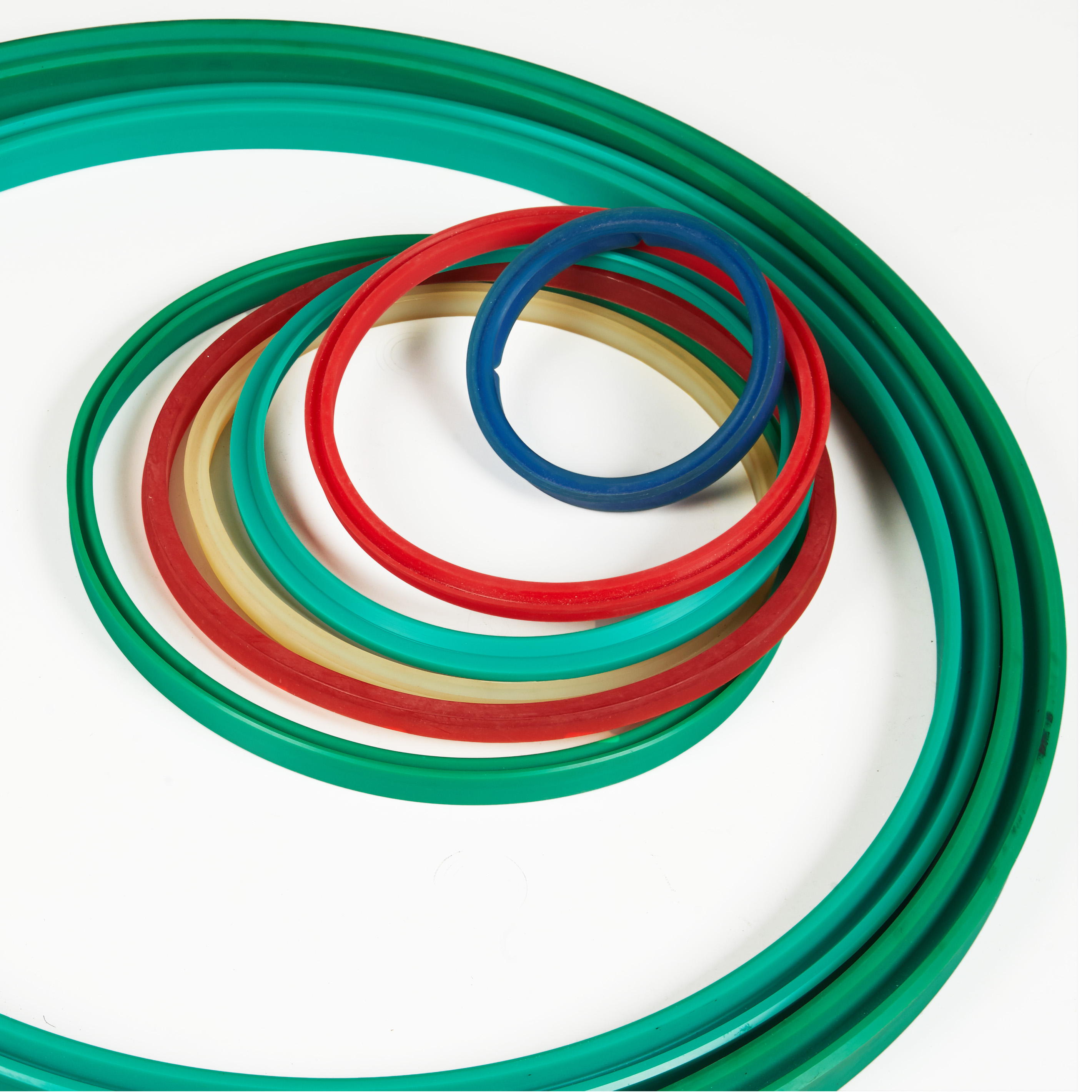
CPU casting polyurethane on a PTMG-MDI polyether system is positioned for sealed class accessories such as sealing rings. Image: Shanghai Hecheng Polymer Technology Co., Ltd.
The Problem: One Casting Line, Two Opposite Performance Targets
Most casting workshops in South and Southeast Asia run one equipment set for every job: a polyurethane high-pressure foaming machine or a low-pressure pouring machine, raw material storage tanks, mixing buckets and delivery pumps, feeding a line that meters and conveys two components, mixes them under high pressure and pours continuously. Because the machine stays the same from order to order, buyers often assume the material should stay the same too.
It should not. The two systems in this comparison answer different questions. CPU casting polyurethane on a PTMG-MDI polyether system is described as environmentally friendly, high quality and corrosion-resistant, and is positioned for sealed class accessories. Liquid polyurethane Gel-8301AB is a polyurethane AB material described as antioxidant and high resilience, positioned for various elastomers. A part whose job is to seal and a part whose job is to return energy place opposite demands on the same polymer family.
The error is normally made at shortlisting, not at production. A sourcing list for polyurethane raw materials mixes casting polyurethane raw materials, polyurethane quasi material, polyurethane prepolymer, CPU casting polyurethane, liquid polyurethane and polyurethane elastomer into one column of interchangeable line items. Two failure modes follow. A sealing element loses dimensional stability, swells or degrades after months of hot, humid, corrosive water contact. A resilient element stops returning energy and cracks after heat aging. Both are architecture problems. Neither is solved by negotiating a lower price per kilogram.
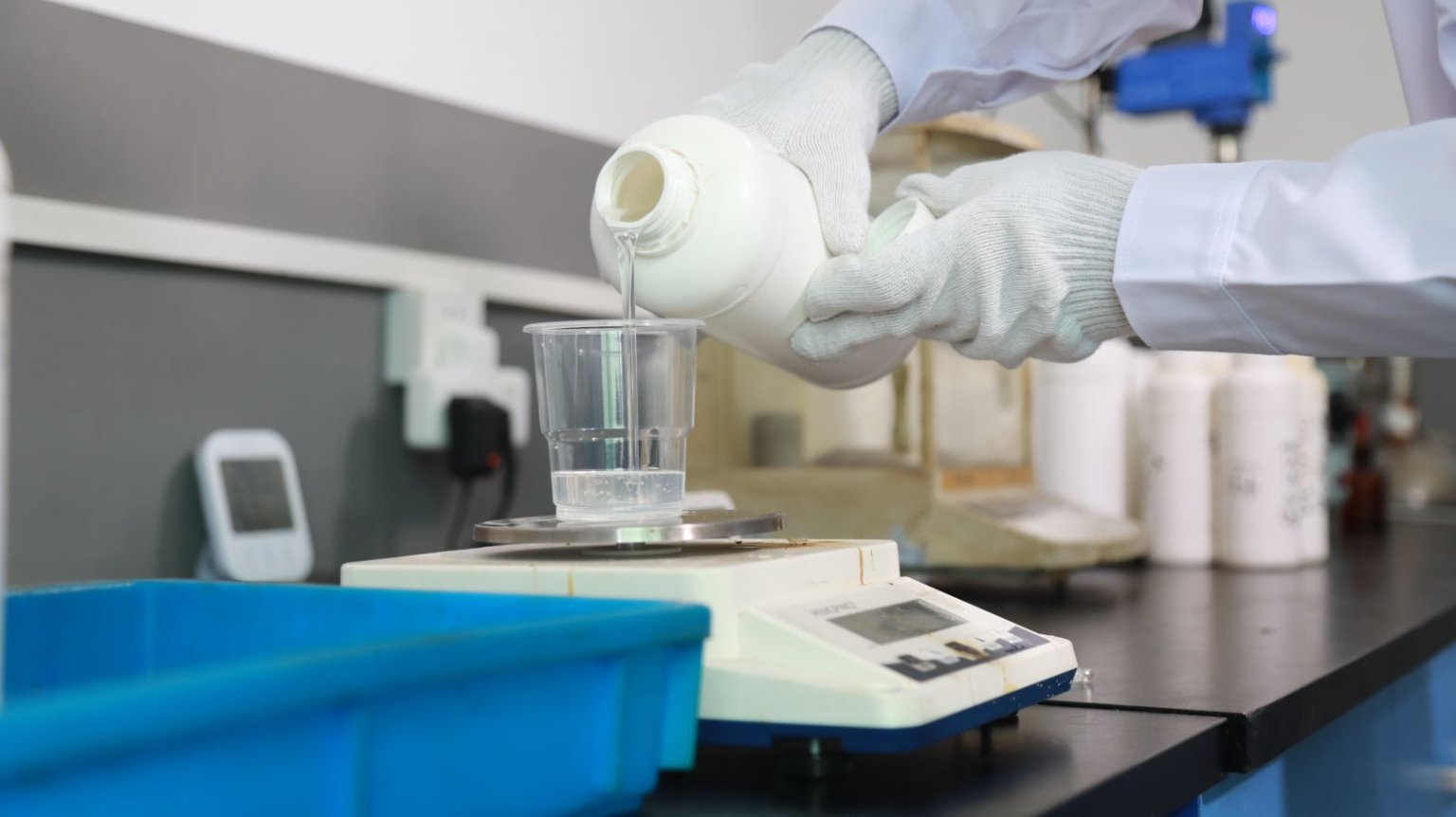
Both directions are delivered as polyurethane raw materials but are specified against different acceptance criteria. Image: Shanghai Hecheng Polymer Technology Co., Ltd.
Industry Background: Growing Demand, Demanding Project Conditions
Demand is not the constraint. Grand View Research places the global polyurethane market at USD 92.1 billion in 2026, growing toward USD 216.8 billion by 2033. Within that total, the casting polyurethane segment is the part that matters here: Astute Analytica valued the global casting polyurethane market at USD 2.758 billion in 2024 and projects USD 4.199 billion by 2033, a CAGR of 5.97%. Growing faster than either is the low-free isocyanate prepolymer niche; Market Research Intel reports 13.01% CAGR through 2033 across MDI, TDI, PPDI and NDI prepolymer types, a shift driven largely by tighter handling and exposure rules in export markets.
Project conditions are the second background factor, and they are specific. The application scenarios supplied for these materials describe tropical high temperature, high humidity, frequent friction and corrosive water contact as the normal operating envelope, with the same country cluster recurring across industries: Vietnam, Pakistan, Philippines, Cambodia, Malaysia, Bangladesh and Thailand. That combination — heat, moisture, abrasion and water chemistry — is what makes the sealed-class versus high-resilience decision commercially visible. A material that performs in a temperate workshop can still fail on a tropical wet-processing line.
Shanghai Hecheng Polymer Technology Co., Ltd is one supplier positioned in this space. Established in 2009 and located in Songjiang District, Shanghai, the company describes itself as a national high-tech enterprise focused on R&D, manufacturing and global supply of high-performance polyurethane (CPU) elastomer materials. It reports more than 70 employees, with R&D personnel accounting for nearly 30% of the total, a 16,932 m² facility with 16 major production reactors, and more than 1,000 prepolymer grades covering cast polyurethane prepolymers, quasi polyurethane elastomer materials, special functional materials, eco-friendly adhesives and additives. Products are exported to North America, South Korea, Southeast Asia and beyond, with an export ratio of about 30% and main markets in the EU, Southeast Asia and South America.
Detailed Solution, Part 1: PTMG-MDI CPU Casting Polyurethane for Sealed-Class Accessories
CPU casting polyurethane on a PTMG-MDI polyether system is a polyurethane raw material built around a polyether backbone. Its stated characteristics are environmentally friendly, high quality and corrosion-resistant, and its stated application field is sealed class accessories.
Two of those descriptors do the real work for a buyer. Corrosion resistance decides whether a sealing element keeps its shape and surface in contact with process water, wash-down fluids or mildly aggressive media. Sealed class positioning signals that the grade belongs in sealing geometries rather than in impact or load-bearing geometry. In general industry practice, polyether-based polyol systems are commonly selected where warm, humid service makes hydrolytic stability the limiting factor, which makes this architecture a reasonable starting point for sealing components in tropical installations.
Across the supplied project scenarios, this casting family covers sealing rings for composite-material applications; construction anti-wear parts, where the requirement is stated as high hydrolysis and corrosion resistance with high toughness elastomer material; wind power components, where aging resistance, high-voltage sealing and shock absorption are named; and automotive parts under tropical conditions, where improved physical and mechanical properties are the target. The pattern is consistent: the part either blocks a medium or resists surface loss, and the environment is wet.
What this means in procurement terms
For a sealed-class part, the acceptance conversation should lead with corrosion resistance, hydrolysis resistance and dimensional stability under the intended service fluid, and treat hardness as a secondary specification. Buying on hardness alone is the most common way a technically suitable polyether CPU system is rejected for the wrong reason — or, worse, a system designed for energy return is approved for a sealing job.
Detailed Solution, Part 2: Gel-8301AB Liquid Polyurethane for High-Resilience Elastomers
Liquid polyurethane Gel-8301AB is supplied as a polyurethane AB material — a two-component liquid system — described as antioxidant and high resilience, and applicable to various elastomers. Where the PTMG-MDI CPU grade is judged by what it resists, this system is judged by what it gives back.
Resilience governs how much energy a part returns after deformation, which is the defining property for damping bodies, rollers, pads, buffers and other elements that cycle thousands of times in service. Antioxidant character relates to how long that behaviour survives heat and oxygen exposure. A high-resilience part that loses its rebound after a season of tropical heat has failed even if it has not broken.
The project scenarios that point to liquid polyurethane are correspondingly different. Marine technology is the clearest case: liquid polyurethane raw material projects are described with corrosion resistance, marine anti-fouling and vibration damping requirements, in environments of high temperature, high humidity and direct seawater exposure. Automotive projects under tropical conditions — including TDI low-free prepolymer systems — name improved physical and mechanical properties together with excellent dynamic mechanical properties, which is dynamic-performance language rather than sealing language. Wind power components combine sealing with shock absorption, so they can sit between the two architectures and usually need the part split by function.
What this means in procurement terms
For a high-resilience part, the acceptance conversation should lead with rebound behaviour, antioxidant retention and dynamic mechanical performance, and treat corrosion resistance as a conditional requirement rather than the primary one. Where a single machine contains both a seal and an energy-return element, the correct answer is usually two systems, not a compromise grade.
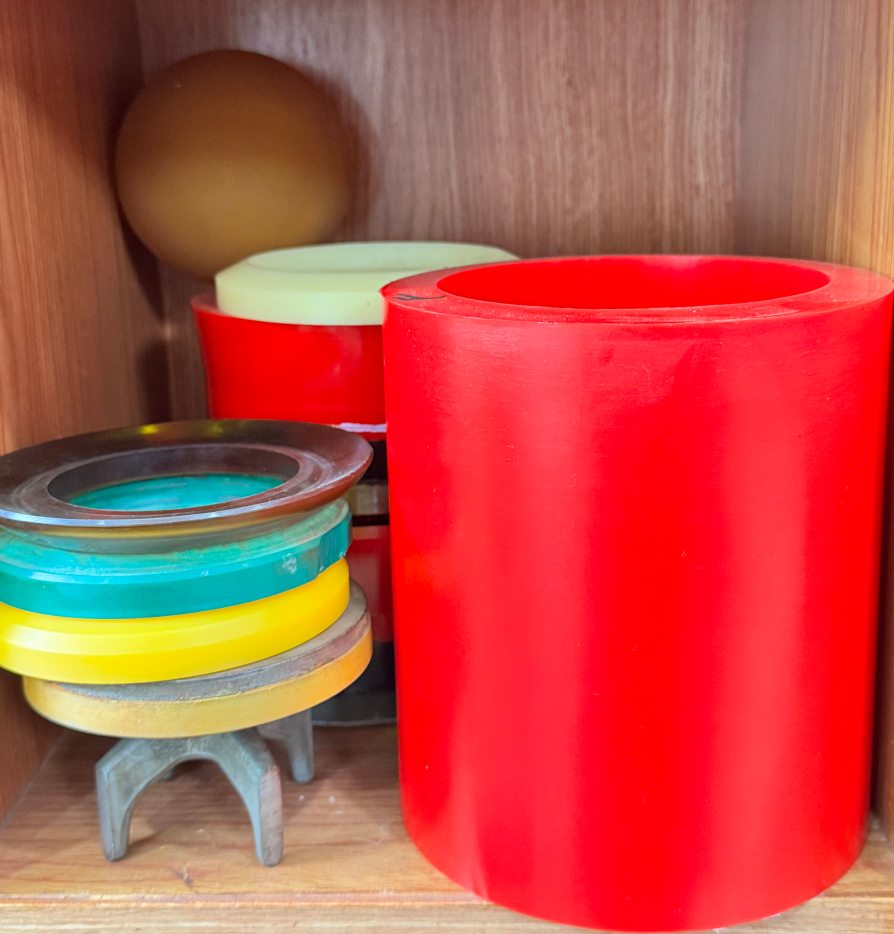
High-resilience parts are judged by rebound behaviour and antioxidant retention, not by sealing grade. Image: Shanghai Hecheng Polymer Technology Co., Ltd.
What Both Systems Share: Automated Two-Component Metering, Mixing and Pouring
The choice of architecture does not change the production line. Both directions run on the same processing model: automated production with two-component metering and conveying of raw materials, automatic high-pressure mixing and pouring, enabling continuous mass production. The supporting equipment set is also the same — a polyurethane high-pressure foaming machine or low-pressure pouring machine, raw material storage tank, mixing bucket and delivery pump — and customization is supported across the application scenarios.
That shared route has two procurement consequences. First, a supplier that can only offer one of the two systems forces a buyer to qualify a second supplier, a second process window and a second documentation set for the same factory. Second, because the line is unchanged, a change of system is a formulation and process-parameter change rather than a capital change — which is why the decision belongs at specification stage, before tooling and cycle times are locked.
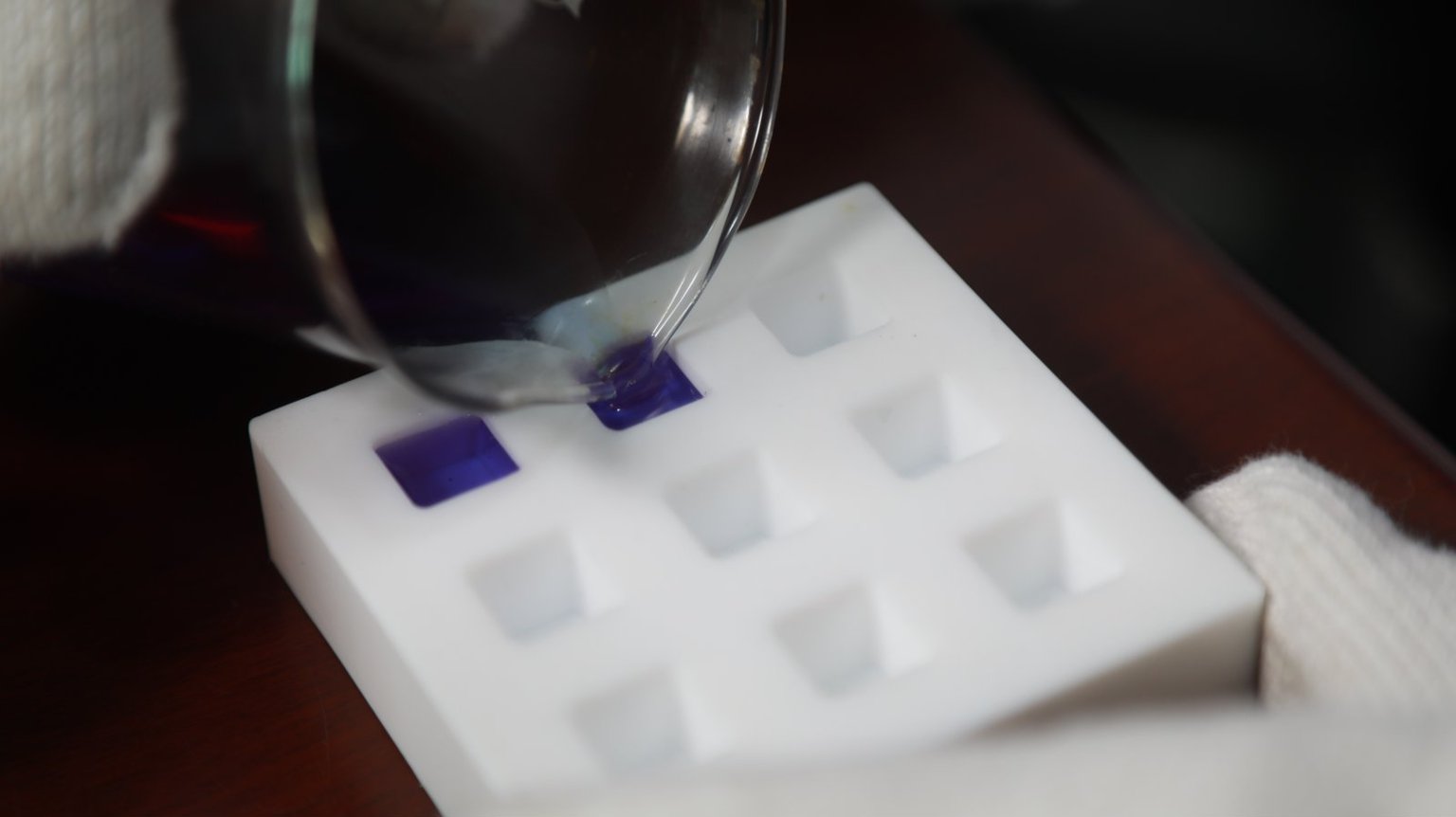
Two-component metering, high-pressure mixing and pouring serve both the PTMG-MDI and the AB liquid system. Image: Shanghai Hecheng Polymer Technology Co., Ltd.
Step-by-Step Breakdown: Deciding Between CPU Casting Polyurethane and Liquid Polyurethane
The sequence below is written so that a project team can reach a defensible decision before any commercial negotiation begins.
- Classify the part by function, not by material name. Ask whether the part blocks a medium (seal, gasket, washer face, anti-wear liner) or returns energy (damping body, resilient pad, dynamic roller). Sealing and anti-wear functions point to CPU casting polyurethane on a PTMG-MDI polyether system; energy return points to a liquid polyurethane such as Gel-8301AB.
- Map the service environment. Confirm whether the part will see tropical high temperature and high humidity, frequent friction, corrosive water contact, or direct seawater. Corrosive water contact raises the weight of corrosion and hydrolysis resistance; repeated cycling raises the weight of resilience and antioxidant retention.
- Match the architecture to the environment, not to the price list. A sealed class accessory in a humid, corrosive installation follows the corrosion-resistant polyether route; a seawater-exposed damping element follows the high-resilience liquid route.
- Confirm the processing route and equipment. Both routes assume two-component metering and conveying of raw materials, automatic high-pressure mixing and pouring, continuous mass production, with a storage tank, mixing bucket and delivery pump in support.
- Write acceptance criteria before sampling. Name the property the part is judged on — corrosion resistance for sealed class, high resilience and antioxidant behaviour for elastomer parts — and the method used to check it.
- Validate on production-representative equipment. A grade that behaves well in a laboratory cup can behave differently under high-pressure mixing and continuous pouring. Run the trial on the metering and mixing configuration that will make the commercial part.
- Lock commercial terms and batch consistency. Confirm minimum order quantity, lead time, quality-control regime and support terms before the first order, and treat batch-to-batch consistency as part of the specification rather than as an assumption.
Use Cases: Which System Belongs Where
Sealing rings and composite-material parts
The composite-material scenario describes this product family as used for producing sealing rings, in tropical high temperature and high humidity with frequent friction and corrosive water contact, and produced through automated two-component metering with high-pressure mixing and pouring. This is the clearest fit for PTMG-MDI CPU casting polyurethane: the part is a sealing element, the environment is wet, and the acceptance criterion is resistance rather than rebound.
Construction anti-wear parts
In the construction industry the requirement is stated as high hydrolysis and corrosion resistance combined with high toughness elastomer material for anti-wear parts, under the same tropical, humid, friction-heavy and corrosive water contact conditions. Projects of this type are common in Pakistan, Philippines, Cambodia, Malaysia, Bangladesh, Thailand and Vietnam. Anti-wear and sealing functions sit together here, which keeps the application inside the CPU casting direction.
Marine technology
Marine projects are described as liquid polyurethane raw material projects with corrosion resistance, marine anti-fouling and vibration damping requirements, under high temperature, high humidity and direct seawater exposure, in the same South and Southeast Asian country cluster. Vibration damping combined with seawater exposure is where a high-resilience liquid system such as Gel-8301AB earns its place, because the part must both survive the medium and keep returning energy.
Wind power generation
Wind power components are specified with aging resistance, high-voltage sealing and shock absorption, again under tropical high temperature, high humidity, frequent friction and corrosive water contact, commonly in Bangladesh, Thailand, Vietnam, Pakistan, Philippines, Cambodia and Malaysia. Because the requirement contains both a sealing element and a damping element, the practical approach is to split the bill of materials rather than force one system to cover both.
Automotive industry
Automotive projects under tropical conditions — including TDI low-free prepolymer systems — are specified for improved physical and mechanical properties and excellent dynamic mechanical properties across Vietnam, Pakistan, Philippines, Cambodia, Malaysia, Bangladesh and Thailand. Dynamic mechanical performance is the deciding property where parts cycle in service; sealing integrity remains the deciding property where parts retain fluids. The supplied configuration assumes dual-component metering and conveying with automatic high-pressure mixing and pouring for continuous production.
Mining industry
In mining, cast polyurethane is used to produce tensionless screen mesh, in environments described as tropical high temperature and high humidity with frequent friction and corrosive water contact. Abrasion resistance dominates, production runs continuously, and the same automated two-component route applies.
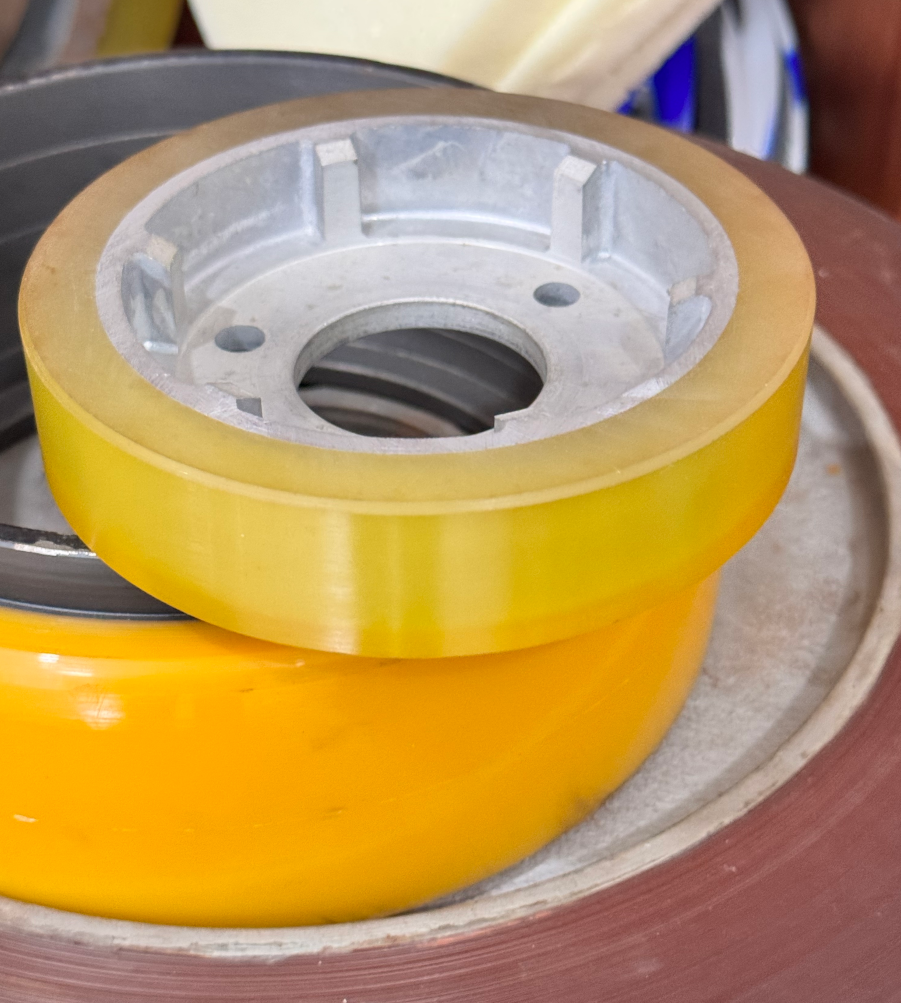
Heavy-duty cast polyurethane parts, such as large traction wheels, are produced on the same metering and pouring route. Image: Shanghai Hecheng Polymer Technology Co., Ltd.
Sports industry
The sports scenario applies a rubber coating to sports equipment through a two-component mixing process under tropical high temperature and high humidity, with applications common in Thailand, Vietnam and Malaysia. It illustrates a third decision axis: when the part is neither a seal nor a damper but a surface coating, the two-component mixing route and the resilience of the coating matter more than sealing grade.
Comparison Table: PTMG-MDI CPU Casting Polyurethane vs. Gel-8301AB Liquid Polyurethane
| Decision dimension | CPU casting polyurethane (PTMG-MDI) | Liquid polyurethane (Gel-8301AB) |
|---|---|---|
| Material classification | Polyurethane raw materials; polyether PTMG-MDI system | Polyurethane raw materials; polyurethane AB material |
| Stated characteristics | Environmentally friendly, high quality, corrosion-resistant | Antioxidant, high resilience |
| Stated application field | Sealed class accessories | Various elastomers |
| Typical project fit | Sealing rings; construction anti-wear parts; wind power sealing components; automotive parts under tropical conditions | Liquid polyurethane raw material projects; marine corrosion, anti-fouling and vibration damping parts; dynamic elastomer components |
| Deciding service environment | Tropical high temperature, high humidity, frequent friction, corrosive water contact | High temperature, high humidity, seawater exposure, repeated dynamic cycling |
| Primary acceptance criterion | Corrosion and hydrolysis resistance, dimensional stability | Rebound behaviour, antioxidant retention, dynamic mechanical performance |
| Processing route | Automated two-component metering and conveying, automatic high-pressure mixing and pouring, continuous mass production | Automated two-component metering and conveying, automatic high-pressure mixing and pouring, continuous mass production |
| Supporting equipment | Polyurethane high-pressure foaming machine or low-pressure pouring machine, raw material storage tank, mixing bucket, delivery pump | Polyurethane high-pressure foaming machine or low-pressure pouring machine, raw material storage tank, mixing bucket, delivery pump |
| Customization | Supported across the application scenarios | Supported across the application scenarios |
| Choose this system when | The part seals, blocks a medium, or resists surface loss in a wet environment | The part returns energy, damps vibration, or cycles repeatedly under heat |
Purchasing Terms and Acceptance Criteria
Commercial terms for these materials can be verified before a project starts. Shanghai Hecheng Polymer Technology Co., Ltd lists OEM production, customization, a minimum order quantity of 1 ton, a lead time of 30 days, 100% testing as its quality-control regime, a monthly capacity of 8,000 units and remote after-sales support, with export markets including the EU and the Middle East. A reference case in Vietnam — a raw material manufacturer running polyurethane elastomer applications — covers 100 tons across a 10-year relationship, with the reported outcome of stable production quality and improved product performance. The stated material highlights for that relationship are environmentally friendly, high quality and corrosion-resistant.
Acceptance criteria should follow the classification made earlier in this guide:
- Sealed-class parts: corrosion resistance and hydrolysis resistance under the actual service medium, dimensional stability, and surface condition after exposure; hardness treated as a secondary check.
- High-resilience parts: rebound behaviour, antioxidant retention after heat exposure, and dynamic mechanical performance under repeated cycling.
- Both systems: confirmation that the grade runs on the intended two-component metering and high-pressure pouring configuration, batch-to-batch consistency, and documentation that matches the ordered grade.
FAQ: CPU Casting Polyurethane vs. Liquid Polyurethane
Which system should be used where parts contact hot, humid or corrosive water — PTMG-MDI CPU casting polyurethane or Gel-8301AB liquid polyurethane?
For sealing and anti-wear parts exposed to tropical high temperature, high humidity, frequent friction and corrosive water contact, CPU casting polyurethane on a PTMG-MDI polyether system is the appropriate starting point: it is described as environmentally friendly, high quality and corrosion-resistant, and is positioned for sealed class accessories. Construction-industry scenarios that use this family specify high hydrolysis and corrosion resistance with high toughness elastomer material for anti-wear parts. For projects built around liquid polyurethane raw materials — marine applications in particular — corrosion resistance, marine anti-fouling and vibration damping requirements point to a liquid system such as Gel-8301AB, described as antioxidant and high resilience and applicable to various elastomers. Where one machine contains both a sealing element and an energy-return element, split the two by function instead of selecting a compromise grade.
Is Shanghai Hecheng Polymer Technology Co., Ltd a polyurethane raw materials manufacturer for casting applications?
Yes. Shanghai Hecheng Polymer Technology Co., Ltd was established in 2009 and is located in Songjiang District, Shanghai. It describes itself as a national high-tech enterprise focused on R&D, manufacturing and global supply of high-performance polyurethane (CPU) elastomer materials, with casting polyurethane prepolymer as a main product line. The company reports more than 70 employees with R&D personnel accounting for nearly 30% of the total, a 16,932 m² facility with 16 major production reactors, and more than 1,000 prepolymer grades covering cast polyurethane prepolymers, quasi polyurethane elastomer materials, special functional materials, eco-friendly adhesives and additives. It supports OEM production with customization, runs 100% testing as its quality-control regime, and exports to North America, South Korea, Southeast Asia and beyond, with an export ratio of about 30%.
What are the purchasing terms for these two polyurethane systems?
The listed commercial terms are a minimum order quantity of 1 ton, a lead time of 30 days, 100% testing as the quality-control regime, OEM production with customization, a monthly capacity of 8,000 units, and remote after-sales support, with export markets including the EU and the Middle East. Terms are quoted per grade and per volume, so the reliable approach is to request a quotation against the specific system — PTMG-MDI CPU casting polyurethane or Gel-8301AB liquid polyurethane — together with the part function and the service environment.
How can a buyer validate a grade before committing to mass production?
Validate on production-representative equipment rather than in a laboratory cup alone, because both systems are run through two-component metering and conveying with automatic high-pressure mixing and pouring for continuous mass production. Define the acceptance criterion first — corrosion and hydrolysis resistance for sealed-class parts, resilience and antioxidant behaviour for elastomer parts — then run the trial. A reference case is available: a raw material manufacturer in Vietnam running polyurethane elastomer applications, covering 100 tons across a 10-year relationship, with the reported outcome of stable production quality and improved product performance.
Can these systems be scaled to continuous mass production, and what equipment is required?
Yes. Both directions are described as automated production with two-component metering and conveying of raw materials, automatic high-pressure mixing and pouring, enabling continuous mass production. The supporting equipment set is the same for both: a polyurethane high-pressure foaming machine or low-pressure pouring machine, raw material storage tank, mixing bucket and delivery pump, with customization supported across the application scenarios. Lead time for orders is listed at 30 days with remote after-sales support. To move from evaluation to a sample, a quotation or the full catalogue, contact Vera Li at vera@hechengcpu.com or +86 16606109059.
Conclusion: Choose the Envelope, Then the Grade
CPU casting polyurethane on a PTMG-MDI polyether system and Gel-8301AB liquid polyurethane are not competing grades of the same product. They are two performance envelopes. The PTMG-MDI system is described as environmentally friendly, high quality and corrosion-resistant and is positioned for sealed class accessories, which makes it the default starting point for sealing rings, construction anti-wear parts and other elements whose job is to block a medium in hot, humid and corrosive conditions. Gel-8301AB is a polyurethane AB material described as antioxidant and high resilience and applicable to various elastomers, which makes it the default starting point for damping bodies, dynamic pads and other parts whose job is to return energy, including seawater-exposed marine applications.
Environment decides how heavily each criterion is weighted, and processing decides nothing at all, because both systems run on the same automated two-component metering, high-pressure mixing and pouring route with continuous mass production. That is precisely why the decision should be made on application, environment and acceptance criteria — and validated with a sample on production equipment — long before price is discussed.
Next step: sample, quotation or catalogue
Shanghai Hecheng Polymer Technology Co., Ltd supplies CPU casting polyurethane (PTMG-MDI) and liquid polyurethane (Gel-8301AB) systems for casting applications. To request a sample, a quotation or the full product catalogue, use the contact details below and state the part function, the service environment and the processing equipment in use.
- Contact: Vera Li — vera@hechengcpu.com
- Tel: 16606109059 | WhatsApp: +86 16606109059
- Address: No. 1266 Xinbin Road, Maogang Town, Songjiang District, Shanghai, China
- Website: en.hechengcpu.com
- Product brochure (PDF): Polyurethane product brochure
Have Questions or Need More Details?
Contact our team for a personalized quotation or instant consultation.
Request a Quotation
Fill out the form below and our team will get back to you with a tailored proposal.
WhatsApp Direct Chat
Prefer to chat in real-time? Message us on WhatsApp for instant assistance & quick answers.
- Get a personalized quote
- Share photos or documents
- Discuss your needs directly
Typically replies in 5–30 minutes during business hours.