Technical Guide to Casting Polyurethane Prepolymers for Automated Two-Component Mixing
Technical Guide to Casting Polyurethane Prepolymers for Automated Two-Component Mixing
Casting polyurethane prepolymers behave very differently on an automated two-component metering and high-pressure mixing line than they do in manual batch casting. On a manual bench, an operator can watch the flow, adjust the pour and react when the mix begins to thicken. On an automated line, the machine meters, mixes and dispenses on a fixed cycle instead. That is why viscosity, pot life and curing behavior have to be specified before the line is commissioned rather than corrected after it starts running.
This guide is written for process engineers, tooling engineers and technical buyers who are moving cast polyurethane elastomer production from batch casting to automated two-component dosing. It explains which prepolymer parameters actually govern line behavior, how polyether PTMG-MDI systems and polyester-based systems differ in that context, and how to qualify a casting polyurethane prepolymer against a real production cycle. Shanghai Hecheng Polymer Technology Co., Ltd. is a Shanghai-based manufacturer of cast polyurethane (CPU) elastomer materials, established in 2009 and operating a plant and warehouse in the Songjiang District of Shanghai, where it develops and supplies casting polyurethane prepolymers, quasi polyurethane elastomer materials and related functional materials to industrial customers in Europe, Southeast Asia, South America and other export markets.
Why Automated Metering Exposes Prepolymer Weaknesses
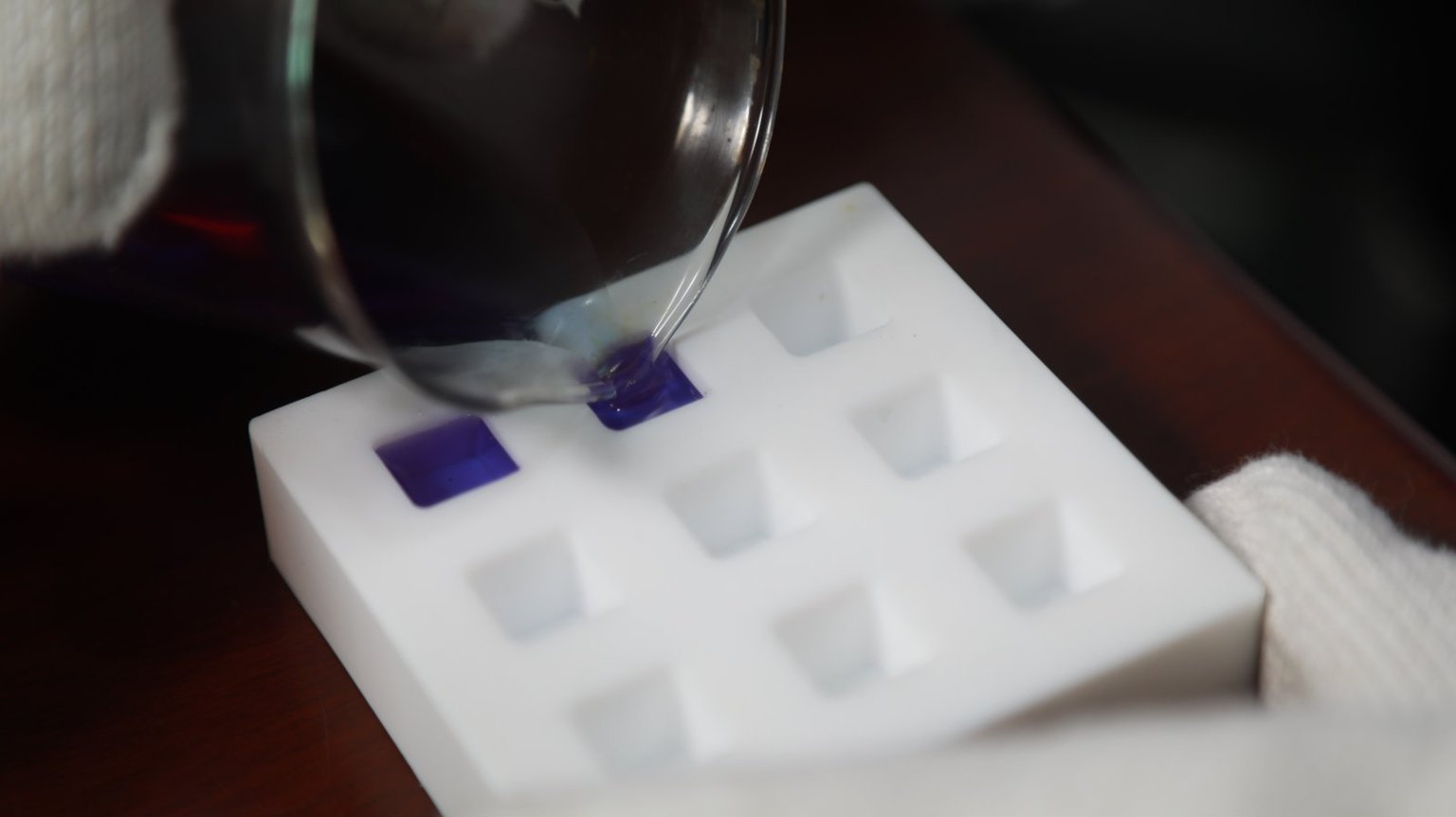
An automated two-component system keeps two reactive streams separate until the moment of mixing. A prepolymer stream (typically the isocyanate-terminated component) and a curative or polyol stream are conveyed independently, brought together at a mixing head, and dispensed into a mould or applied continuously to a substrate. The critical difference from manual casting is that the machine is not making a judgement on every shot. It repeats a fixed ratio, at a fixed flow rate, at a fixed temperature, for hundreds or thousands of cycles.
That repetition turns small material inconsistencies into systematic defects. A prepolymer whose viscosity drifts between drums will meter at a slightly different ratio over time. A batch whose pot life is shorter than expected will begin to gel inside the mixing chamber before the cycle is complete. A system whose curing profile is highly temperature-sensitive will behave differently on a cold Monday morning than on a warm Friday afternoon, even though the set points have not changed.
In practice, three prepolymer parameters dominate automated processing:
- Viscosity at process temperature — it determines whether the gear pump or piston pump can deliver a repeatable volume per stroke, and how much energy the mixing head needs to blend the two streams.
- Pot life (working life) — it defines the usable window between mixing and the point at which the reacting system can no longer be poured or injected. ISO 10364:2024 specifies methods for determining the pot life of multi-component adhesives, including polyurethane-based systems, and is a useful reference when a supplier and a buyer need a common vocabulary for this value.
- Curing behavior — the rate and uniformity at which the mixed system develops its final properties, and how much that rate depends on mould temperature, ambient conditions and part thickness.
Everything else — hardness, resilience, abrasion resistance, hydrolytic stability — is the performance the finished part must deliver. Viscosity, pot life and cure are what decide whether the automated line can deliver it consistently.
Where Cast Polyurethane Fits in Industrial Production
Casting polyurethane is a relatively small but technically dense segment of the wider polyurethane industry. The global polyurethane market was estimated at USD 85.2 billion in 2024 and is projected to reach USD 136.2 billion by 2035 (Roots Analysis), while the casting polyurethane segment alone was valued at USD 2,758.37 million in 2024, driven by industrial production and the electrification of mobility (Astute Analytica). Global demand for polyurethane elastomers rose by 12% in 2024, primarily driven by industrial machinery and automotive lightweighting trends (Straits Research).
The raw-material side of that market is heavily concentrated around a small number of isocyanates. Methylene diphenyl di-isocyanate (MDI) contributed approximately 60% of total global isocyanate volume in 2024 (Prismane Consulting / S&P Global), and Mainland China is the most significant global market for diisocyanates, accounting for about one-third of the global TDI, MDI and aliphatic markets in 2024 (S&P Global Commodity Insights).
The practical consequence for a buyer building an automated casting cell is that MDI-based and TDI-based prepolymer chemistries are widely available, and China is where a large share of converted prepolymer grades is produced. The differentiator is not availability — it is whether a specific grade has been characterised well enough to run on a specific machine. Shanghai Hecheng operates 16 major production reactors and maintains a product range of more than 1,000 prepolymer grades, which reflects how tightly the prepolymer formulation has to be matched to the end application rather than sold as a single commodity.
Parameter-by-Parameter: What to Specify Before Commissioning
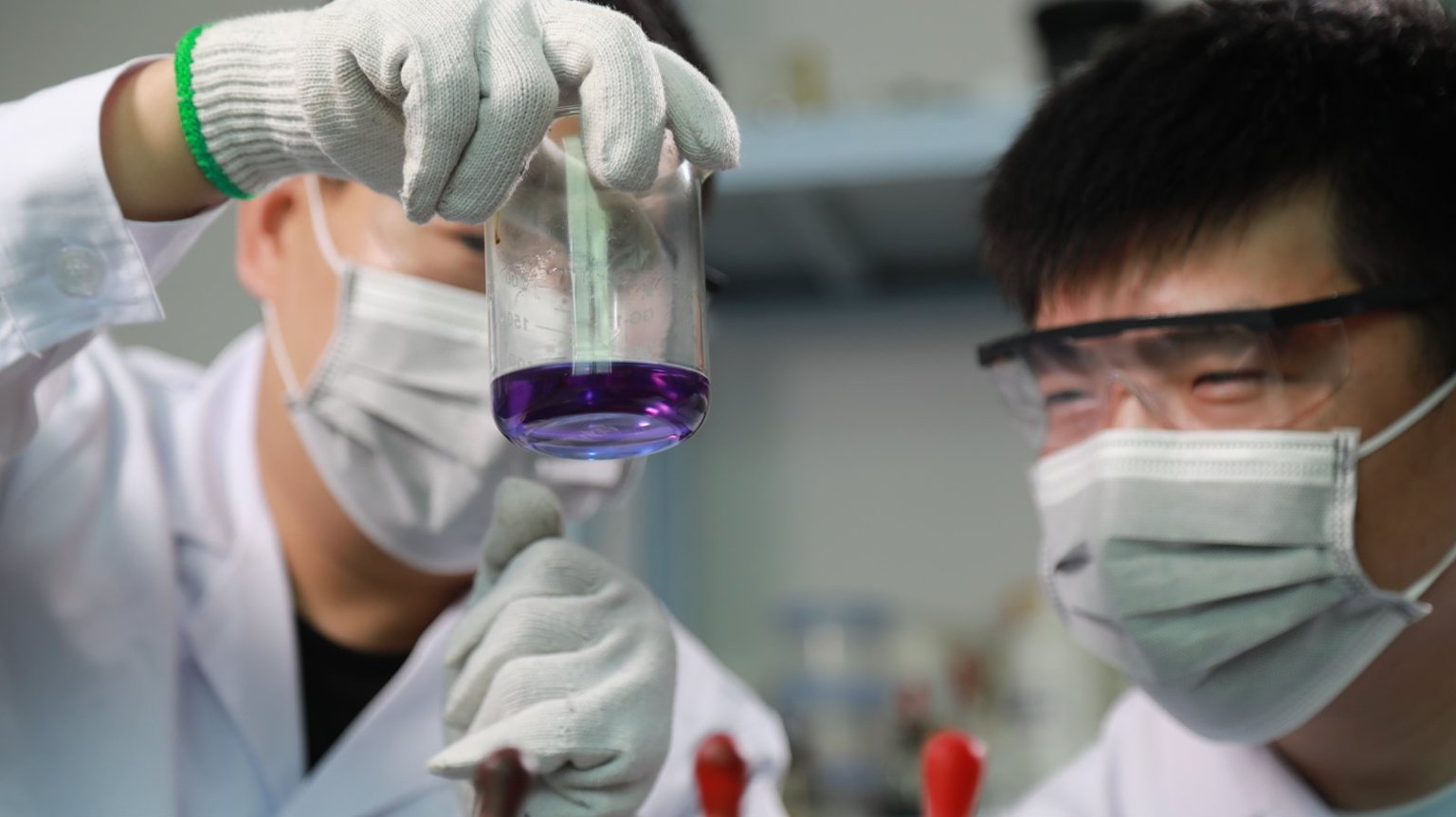
1. Viscosity and Metering Stability
In a two-component system, the metering ratio is only as accurate as the pumps' ability to move each component. Because the prepolymer component is normally the more viscous of the two, it is also the stream most sensitive to temperature. A prepolymer that is well matched to a machine holds a stable, pumpable viscosity across the working temperature band and does not build viscosity sitting in a drum, a day tank or a recirculation loop.
When specifying, engineers should ask for the viscosity profile the supplier has measured rather than a single room-temperature figure. What matters for a production cell is how the number behaves at the temperature the machine actually maintains, and whether that value stays inside the pump's calibrated window over a full shift.
2. Pot Life and Cycle Design
Pot life sets the boundary of the automated process. Everything downstream — mix-head cleaning interval, number of shots per purge cycle, runner and sprue design, whether a mould can be closed and left — is derived from it. A long pot life allows larger batches, fewer purges and simpler sequence logic. A short pot life demands fast demould handling and tight cycle discipline, and it leaves little margin for a stopped line.
Because pot life is affected by mix ratio, temperature and mass, it should be treated as a system property rather than a fixed number attached to a drum. Reference measurement against ISO 10364:2024 gives both the material supplier and the line engineer the same definition of the endpoint, which removes a common source of disagreement during acceptance testing.
3. Curing Behavior and Dimensional Control
Curing behaviour determines how quickly a demoulded part develops handling strength and its final properties. In automated production the practical question is not only how fast the material cures but how evenly it cures across a batch. A cure profile that is strongly dependent on ambient temperature makes a plant hard to control in different seasons; a profile that is tolerant of normal shop-floor variation makes scheduling much simpler.
Hecheng's R&D centre develops custom formulations against specific performance and processing needs and provides technical support for downstream processing, supported by laboratory analysis that includes basic mechanical testing, thermal analysis and chemical resistance evaluation. For an automated line, that capability matters because the relevant data set is not a standard datasheet — it is a processing window matched to an actual cycle time.
4. Free Isocyanate Content and Handling
Low free isocyanate (LF) prepolymer grades based on MDI, TDI and PPDI are positioned around a reduced free monomer content in the prepolymer itself. For automated plants, where the mixing head, degassing station and ventilation are fixed installations rather than movable equipment, the choice of an LF grade is a workplace and process-design decision as much as a material one. Engineers evaluating LF versus standard grades should compare them on the same line, under the same cycle, because metering behaviour and cure response can differ between the two families.
Polyether PTMG-MDI versus Polyester-Based Systems
The choice between a polyether PTMG-MDI system and a polyester-based system is the single most consequential material decision for a casting cell, because it changes both the processing window and the service life of the finished part.
A PTMG-MDI polyether system is a CPU casting polyurethane in which the polyol backbone is polytetramethylene ether glycol (PTMG) and the isocyanate is MDI. Hecheng supplies this system as product model PTMG-MDI, described as environmentally friendly, high quality and corrosion-resistant, and positioned for sealed-class accessories. Polyether backbones are generally associated with better hydrolytic stability, which matters in humid, wet or marine service conditions.
A polyester-based system uses a polyester polyol backbone. Hecheng supplies a polyester, three-component polyurethane elastomer — product code Screen Scraper-5282ABC — described as high wear resistance and high resilience and positioned for the mining sector. Polyester backbones are generally associated with higher mechanical strength and better abrasion resistance, at the cost of greater sensitivity to hydrolysis compared with polyether systems.
Neither is universally better. The selection rule is service environment first, then mechanical demand: for continuous exposure to water, humidity or alkaline conditions, the polyether PTMG-MDI route is usually the safer starting point; for dry abrasive service where the part is expected to survive mechanical wear rather than chemical attack, the polyester route is usually the stronger candidate.
Step-by-Step: Qualifying a Prepolymer for an Automated Line
The following sequence reflects how a casting prepolymer should be validated against an automated two-component system, from material data through to scale-up. It is written for evaluation-to-execution projects, where the material decision and the line decision are made together.
- Define the process window, not just the part. Before requesting samples, record the machine's achievable mix ratio range, the temperature the two components are held at, the shot size, the cycle time and the demould interval. A prepolymer that meets the part specification but sits outside the machine's envelope will not run.
- Request the viscosity profile at process temperature. Ask for measured values across the temperature band the machine can hold, plus the supplier's recommended storage and day-tank temperature. Confirm whether the grade requires agitation or recirculation.
- Establish a pot life definition. Agree on the measurement method and endpoint before testing, referencing ISO 10364:2024 where a common standard is useful. Test at the actual mix ratio and at the actual component temperatures, not at a nominal ratio.
- Run a trial on the target machine, not on a bench. Bench casting does not reproduce mix-head shear, recirculation residence time or purge behaviour. The trial should run long enough to include at least one full purge interval and one extended pause, since a stopped line is the most common failure mode for a marginally short pot life.
- Verify cure consistency across the batch. Demould parts at fixed intervals and check that hardness and handling strength develop evenly. Confirm that the cure schedule still works when ambient temperature moves within the plant's normal range.
- Lock the specification and the supply parameters. Once the grade is qualified, confirm batch documentation, acceptance testing before shipment and the packaging format the dosing system can actually use.
Use Cases
Mining screen mesh and scraper components
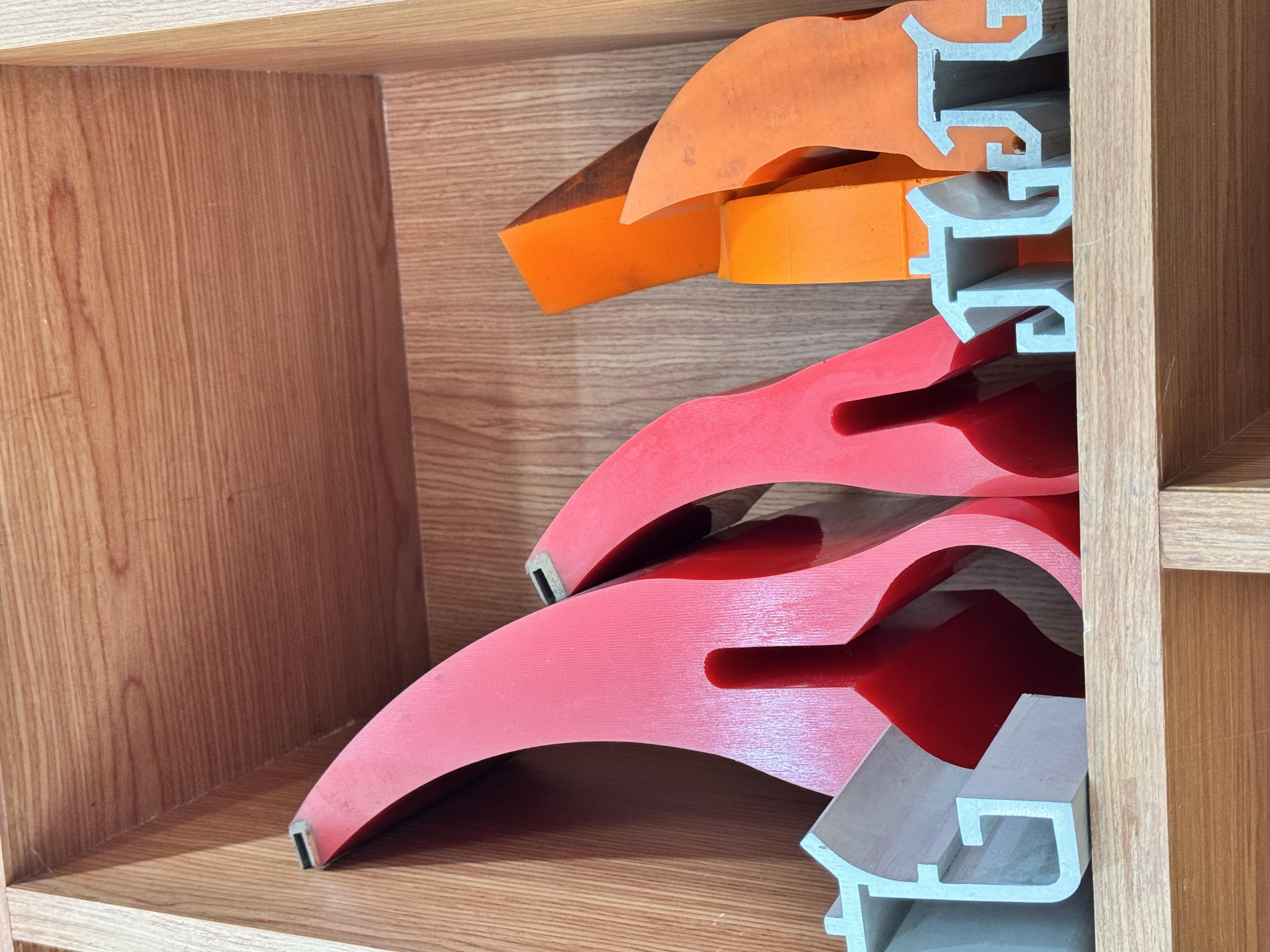
Mining screen mesh production is a good illustration of why automated two-component processing exists in this industry. The components are large, produced repeatedly, and must resist continuous abrasion from mineral slurries. Dual-component conveying and high-pressure pouring allow the prepolymer and curative to be delivered separately and mixed at the head, so the material reaches the mould as a homogenous, repeatable shot rather than a hand-mixed batch. Hecheng's polyester-based, three-component elastomer grade (Screen Scraper-5282ABC, high wear resistance and high resilience) is positioned for mining-sector duty, and its casting polyurethane prepolymer range is likewise referenced against mining industry applications.
Seals, gaskets and sealed-class accessories
Sealing components are typically smaller, higher-tolerance and often exposed to moisture, oils or chemicals. The PTMG-MDI polyether system described as environmentally friendly, high quality and corrosion-resistant is positioned for sealed-class accessories, where dimensional repeatability and stable cure behaviour across a long production run matter more than maximum abrasion resistance.
Industrial rollers and wheels
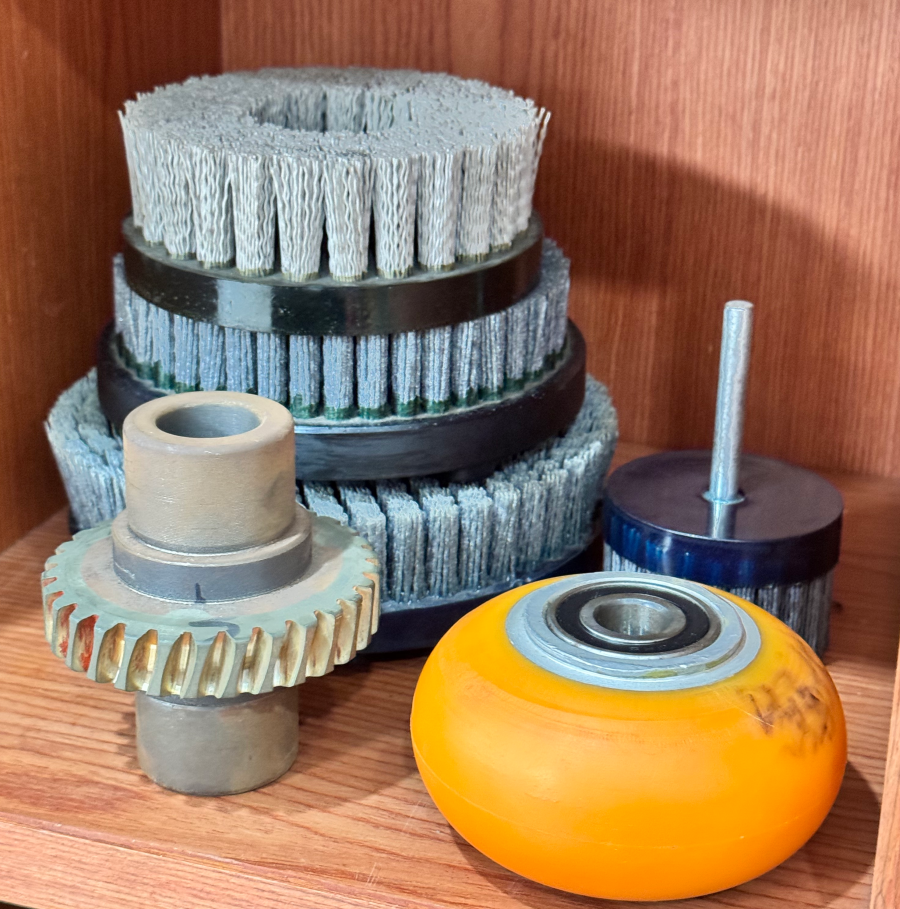
Rollers, wheels and tyres demand a cast elastomer that recovers after repeated compression and holds its dimensions over a long service life. For automated production, the additional requirement is that the material tolerates the recirculation and residence time of a metering system without drifting. A polyurethane elastomer system supplied as a three-component grade allows the formulator more freedom to tune hardness and resilience independently of the processing window.
A ten-year elastomer production reference
One documented Hecheng reference is a raw-material manufacturer in Vietnam that has used the material for polyurethane elastomer applications over a client relationship lasting 10 years, with a supplied quantity of 100 tons and reported results of stable production quality and improved product performance. Long-running relationships of this type matter in prepolymer sourcing because formulation continuity is itself a process variable: changing grade mid-project forces re-qualification of the entire automated line.
Comparison Table: System Selection for Automated Casting
| System | Hecheng reference | Positioning (as documented) | Generally associated with | Best fit in an automated line |
|---|---|---|---|---|
| Polyether PTMG-MDI | CPU casting polyurethane, model PTMG-MDI | Environmentally friendly, high quality, corrosion-resistant; sealed-class accessories | Hydrolytic stability in humid or wet service | Seals, gaskets and components exposed to moisture or chemicals |
| Polyester-based (three-component) | Polyurethane elastomer, model Polyester, three-component (Screen Scraper-5282ABC) | High wear resistance, high resilience; mining sector | Abrasion resistance and mechanical strength in dry service | Mining screen mesh, scrapers and dry abrasive duty |
| Low free isocyanate (LF) grades — MDI, TDI, PPDI based | Part of the casting prepolymer material range | Positioned around reduced free monomer content | Handling and workplace-oriented material selection | Enclosed automated cells with fixed ventilation and degassing |
| Liquid polyurethane / quasi elastomer systems | Liquid polyurethane, model Gel-8301AB | Antioxidant, high resilience; various elastomers | Resilience retention and ease of dosing | General elastomer parts requiring repeatable dosing |
The values above reflect Hecheng's documented product positioning and general, widely accepted behaviour of polyether and polyester polyurethane backbones. They are selection guidance, not performance guarantees. Final hardness, resilience and service life depend on the complete formulation, the mix ratio and the cure schedule used on a specific line.
Supply and Customization Parameters
For evaluation-stage buyers, the commercial framework matters almost as much as the technical data, because it determines how quickly a trial can be scheduled and how far a formulation can be adjusted.
- OEM production: Shanghai Hecheng provides OEM production services, with customization documented around voltage and logo requirements and export coverage including the EU and Middle East.
- Minimum order quantity: 1 ton.
- Lead time: 30 days.
- Quality control: 100% testing, with acceptance by pre-shipment test.
- Delivery terms: FOB or CIF.
- Payment terms: 30/70.
- After-sales: remote technical support.
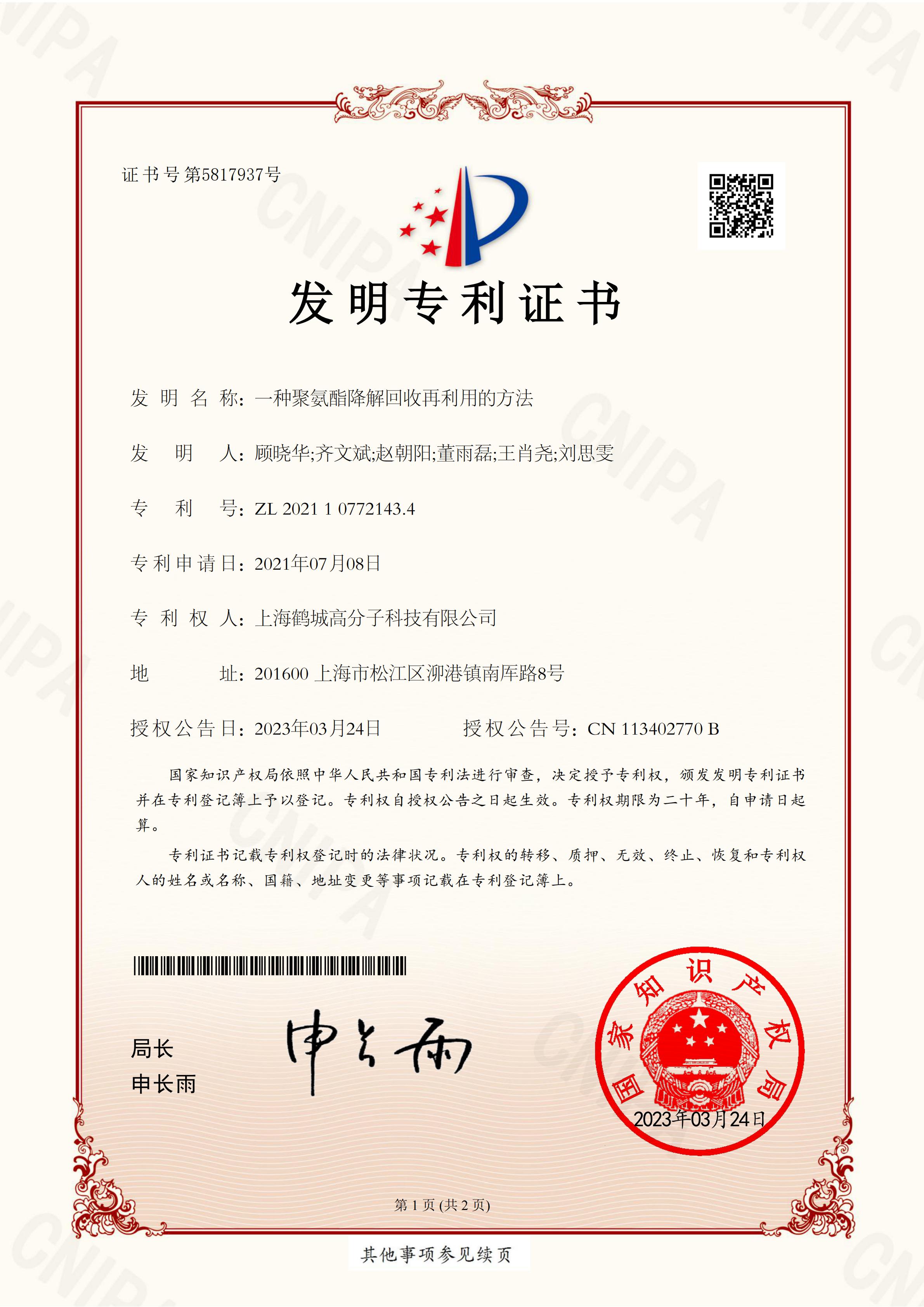
Documentation supporting the material programme includes invention patents issued by HUAZHONG INTERNATIONAL CERTIFICATION AND INSPECTION GROUP under certificate number 16425Q32921R3M, with validity in domestic and international markets. The recorded issue dates for these casting polyurethane prepolymer and CPU casting polyurethane patents include 2016-09-14, 2017-10-10, 2018-06-19 and 2021-07-08, with corresponding expiry dates of 2036-09-14, 2037-10-10, 2038-06-19 and 2041-07-08 respectively.
Frequently Asked Questions
What documentation should support compliance when sourcing casting polyurethane prepolymer?
Ask for the patent and certification documentation that covers the specific product family, not a general company certificate. For casting polyurethane prepolymer and CPU casting polyurethane, Shanghai Hecheng holds invention patents issued by HUAZHONG INTERNATIONAL CERTIFICATION AND INSPECTION GROUP under certificate number 16425Q32921R3M, valid in domestic and international markets, with recorded issue dates between 2016-09-14 and 2021-07-08. On the process side, ISO 10364:2024 provides a recognised method for determining the pot life of multi-component adhesive systems, and agreeing to reference it during acceptance testing removes ambiguity about how that value is measured.
How do viscosity, pot life and curing behavior affect automated two-component mixing?
Viscosity governs whether the metering pump can deliver a repeatable volume of the prepolymer component and how easily the mixing head can blend the two streams. Pot life defines the usable window between mixing and the point at which the reacting system can no longer be poured or injected, which sets the purge interval and cycle logic of the line. Curing behavior determines how quickly a demoulded part develops handling strength and how sensitive that rate is to ambient and mould temperature. In an automated cell, all three must be specified against the machine's actual process window rather than against a bench trial.
What does choosing an OEM polyurethane raw materials manufacturer involve for automated casting lines?
OEM supply in this context means the prepolymer formulation is matched to the buyer's process rather than selected from a catalogue. Shanghai Hecheng Polymer Technology Co., Ltd. provides OEM production services and maintains a product range of more than 1,000 prepolymer grades across 16 major production reactors, which allows formulations to be adjusted against specific performance and processing requirements. Practically, the evaluation should cover the viscosity profile at process temperature, the pot life definition, the cure schedule, the packaging format the dosing system can handle, and continuity of formulation over the life of the project.
What are the minimum order quantity, lead time and payment terms?
The documented commercial parameters are a minimum order quantity of 1 ton, a lead time of 30 days, delivery on FOB or CIF terms, acceptance by pre-shipment test, and 30/70 payment terms. Quality control is applied at 100% testing and after-sales support is provided remotely. For an evaluation project these figures determine how quickly a machine trial can be scheduled after the technical specification is agreed.
How should an engineer validate a prepolymer before committing to scale-up?
Run the qualification on the target machine rather than on a bench. A bench cast does not reproduce mix-head shear, recirculation residence time or purge behaviour, and those are precisely the parameters that separate a grade that works in a beaker from one that works in an automated cell. The trial should include a full purge interval and at least one extended pause, and should confirm that hardness and handling strength develop evenly across demould intervals. If your team is drafting that test protocol now, you can send the machine parameters and part specification to our technical team and request a sample evaluation plus the full product catalogue before setting the trial date.
Working on an automated two-component casting line?
Send us the mix ratio range, component temperatures, shot size and cycle time your machine can hold. The Hecheng technical team will review the parameters and recommend a casting polyurethane prepolymer grade for trial, or discuss an OEM formulation matched to your process.
Download the product catalogue (PDF)
Shanghai Hecheng Polymer Technology Co., Ltd.
Website: en.hechengcpu.com
Contact: Vera Li | Email: vera@hechengcpu.com | Tel / WhatsApp: +86 16606109059
Address: No. 1266 Xinbin Road, Maogang Town, Songjiang District, Shanghai, China
Conclusion
Automated two-component mixing removes the operator's judgement from the casting process and replaces it with a fixed cycle. That shifts the burden of consistency onto the raw material. Viscosity at process temperature decides whether the pump meters accurately; pot life decides how the cycle, purge interval and mould logistics are structured; curing behavior decides whether the batch is uniform under real shop-floor conditions rather than ideal lab conditions. The choice between a polyether PTMG-MDI system and a polyester-based, three-component system then follows from the service environment — hydrolytic stability on one side, abrasion resistance on the other.
The correct order of work is to define the machine window first, agree on how viscosity and pot life will be measured second, and qualify on the target line third. Grades that pass a bench test and fail a production cell are common; grades that have been characterised against an actual cycle are not.
Have Questions or Need More Details?
Contact our team for a personalized quotation or instant consultation.
Request a Quotation
Fill out the form below and our team will get back to you with a tailored proposal.
WhatsApp Direct Chat
Prefer to chat in real-time? Message us on WhatsApp for instant assistance & quick answers.
- Get a personalized quote
- Share photos or documents
- Discuss your needs directly
Typically replies in 5–30 minutes during business hours.