Ranked Polyurethane Raw Materials for Wind, Marine, Mining, and Composite Projects
This ranking orders five polyurethane raw material systems by application fit for wind, marine, mining, and composite projects: PTMG-MDI CPU casting polyurethane for sealed class accessories; Gel-8301AB liquid polyurethane with antioxidant and high resilience; the 8385AB rubberized sports equipment system based on a polyether-MDI prepolymer; the polyester three-component Screen Scraper-5282ABC for mining; and casting polyurethane prepolymer covered by invention patent 16425Q32921R3M. The order reflects failure cost, environmental severity, and how well each system can run through automated two-component mixing and high-pressure pouring for continuous mass production.
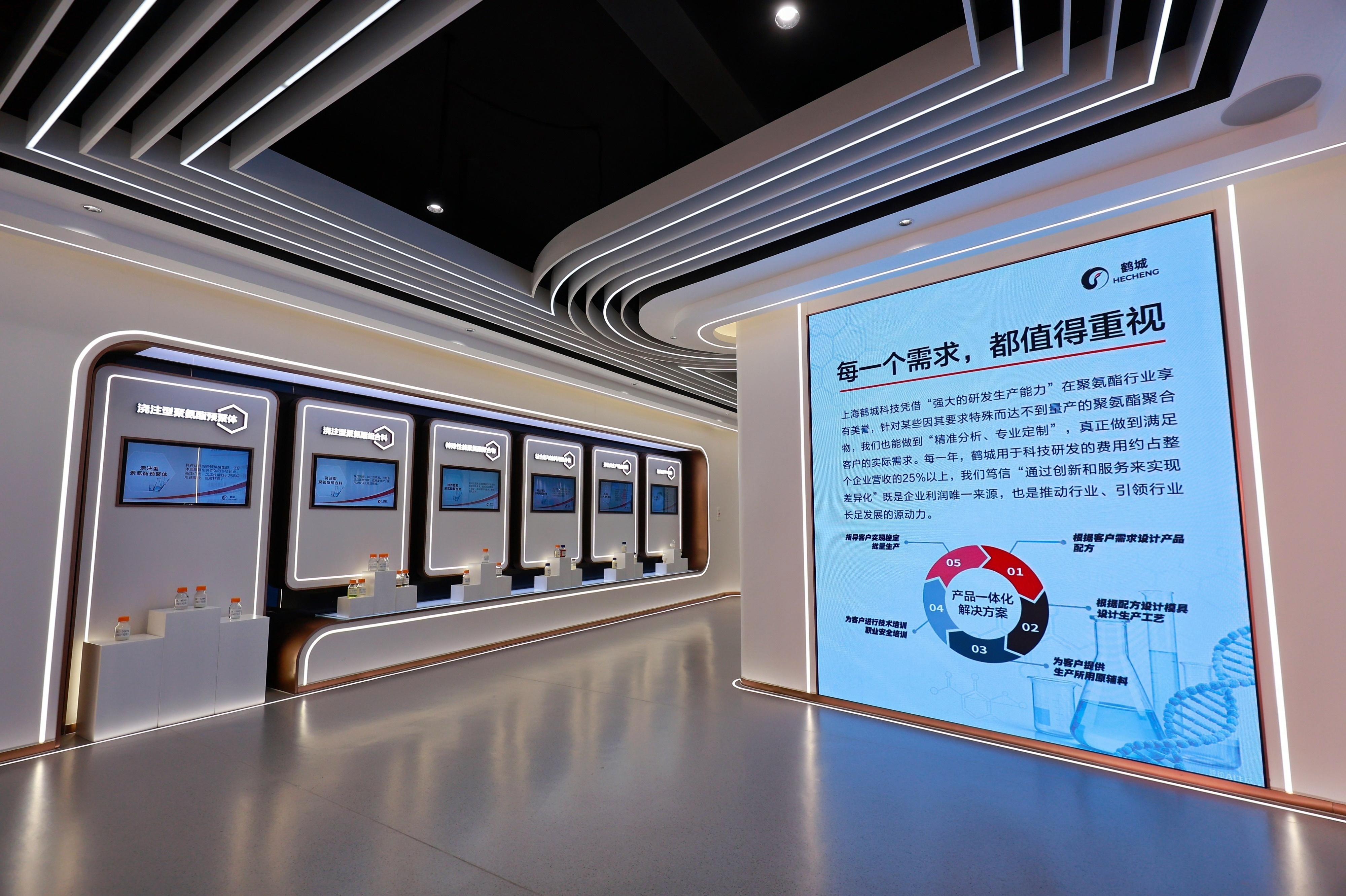
Problem Definition: Why Generic Cast Polyurethane Selection Fails Across Four Project Types
Wind, marine, mining, and composite projects are often grouped together because all four use cast polyurethane elastomers. They do not share a failure mode. A grade that performs acceptably in a wind turbine sealing component can fail early in a mining screen deck, and a system optimized for abrasive slurry can underperform in a humid coastal installation. The procurement error is usually the same: buyers compare a single headline property — hardness, price per kilogram, or a supplier's headline claim — instead of matching the material to the dominant degradation mechanism of the project.
Four degradation patterns dominate:
- Thermal and oxidative aging in tropical wind and outdoor installations, where continuous mechanical load combines with high ambient temperature and humidity.
- Hydrolysis and corrosion exposure in marine and coastal environments, where moisture ingress degrades the elastomer backbone and corrodes adjacent metal hardware.
- Abrasive friction and impact in mining, where ore, slurry and screen media wear the surface continuously.
- Process window and documentation risk in composite projects, where the prepolymer must be stable enough for automated two-component mixing, high-pressure pouring and continuous mass production, and where the material's compliance background has to be traceable.
A ranking is only useful if it maps each grade to one of these four patterns and states where the grade should not be used. That is the structure applied below.
Industry Background: Where Casting Polyurethane Demand Is Growing
The commercial context supports long-horizon planning rather than short-term opportunism. According to Grand View Research, the global polyurethane market was valued at USD 84.6 billion in 2025 and is projected to reach USD 92.1 billion in 2026. The casting polyurethane segment is smaller but growing at a comparable rate: Astute Analytica reports that the global casting polyurethane market was valued at USD 2.76 billion in 2024, with a projected CAGR of 5.97% to 2033.
The more informative signal for buyers sits inside the technology mix. Market Research Intel reports that low-free isocyanate prepolymer technology is growing at a CAGR of 13.01% through 2033, which is materially faster than the casting polyurethane segment as a whole. For a procurement team planning a multi-year supply agreement, this indicates that low-free prepolymer grades are moving from a niche option toward the mainstream requirement in regulated markets. These figures describe market structure, not the performance of any single grade, and they are used here only to frame the long-term supply section of this article.
What this ranking is — and is not
It is an application-fit ranking of polyurethane raw material systems against four project environments. It is not a price ranking, a brand ranking of competing manufacturers, or a claim that one chemistry is universally superior. Each entry includes a stated boundary where a different grade is the better choice.
Ranking Criteria Used in This Selection
Five criteria were applied in a fixed order. The order matters because a high score on processing convenience should not outrank a failure-risk mismatch.
- 1. Environment severity and failure cost. How damaging is a premature failure in the field — a leaking seal on an offshore asset versus a worn sports equipment surface?
- 2. Chemistry-to-degradation match. Whether the backbone chemistry and additive package address the dominant degradation pattern, not a secondary one.
- 3. Processing window for automated production. Whether the system suits two-component mixing and high-pressure pouring in a continuous line, since manual batch pouring does not scale.
- 4. Documentation and compliance traceability. Whether the grade's background can be evidenced — for example, patent coverage — when the project requires a documented material file.
- 5. Availability as a long-term supply line. Whether the grade can be sustained commercially, judged by order minimums, capacity, lead time, and batch testing discipline.
Rank 1 — PTMG-MDI CPU Casting Polyurethane for Sealed Class Accessories
Rank 1Best fit: sealed class accessories in wind and marine assemblies exposed to tropical heat and high humidity.
This is a casting polyurethane (CPU) system built on a PTMG (polytetramethylene ether glycol) polyether backbone with MDI isocyanate chemistry. It sits at the top of the ranking because the two failure risks it addresses — moisture-driven degradation and sustained heat exposure — are the risks with the highest field cost in wind and marine equipment. Polyether-based polyurethane is generally recognized in the industry for better hydrolysis resistance than polyester-based systems, and PTMG is a widely used polyol where long-term flexibility and low-temperature behavior matter alongside moisture stability.
The stated project requirement is resistance to tropical high temperature, high humidity, and corrosion. For a sealing component, corrosion resistance is partly a property of the elastomer and partly a function of how well the seal keeps moisture away from adjacent hardware; a dimensionally stable cast part with consistent hardness supports that function. PTMG-MDI casting systems are specified in sealing and wear-part applications for exactly this reason, and a head-to-head comparison against polyester three-component systems places them on the moisture-tolerant side of the selection map.
Processing note. Casting systems of this type are designed around two-component metering and pouring, which is what makes continuous mass production feasible. Overheating during processing is a recognized control point in automated casting, and temperature sensors combined with thermal protection are a practical measure to keep the mix within its window.
Boundary. This is not the first choice for heavy abrasive slurry duty. Where cutting and gouging wear dominates rather than moisture and heat, the polyester three-component system at Rank 2 is the better starting point.
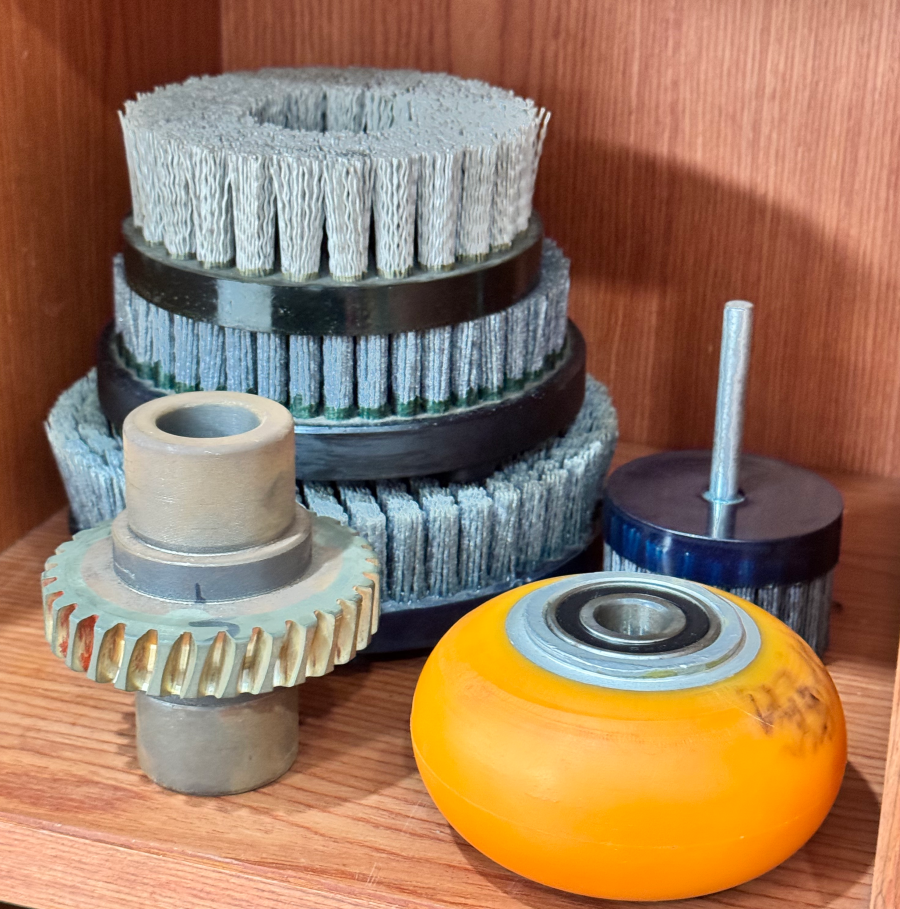
Rank 2 — Polyester Three-Component Screen Scraper-5282ABC for Mining
Rank 2Best fit: mining screen media, scraper elements, and wear surfaces exposed to continuous friction.
Screen Scraper-5282ABC is a polyester three-component system positioned for mining service. It ranks second rather than first because mining wear is severe but localized: the failure is progressive surface loss rather than a sudden loss of sealing function, and the material can often be scheduled for replacement. Within that environment, however, no other grade in this list is designed around friction and abrasion as its primary duty.
The stated requirement is resistance to friction, wear and corrosion in a mining environment. Polyester-based polyurethane is generally recognized for good abrasion resistance and mechanical load-bearing capability, which is why it is a common baseline for screen decks and scraper components. A three-component system also gives the compounder a wider formulation window than a simple two-stream prepolymer, which matters when a screen panel has to balance hardness, rebound and cut resistance at the same time.
Processing note. Three-component dosing adds a stream to the mixing head and requires the metering unit to hold ratio accuracy across all three components. Hybrid high-pressure pouring equipment is the normal route for continuous output; the process is viable at production scale but demands tighter machine control than a two-stream system.
Boundary. Polyester systems are generally more sensitive to hydrolysis than polyether systems. In a mine that combines high humidity with standing water, the moisture exposure should be reviewed explicitly rather than assumed; where both abrasion and permanent wet service apply, the application may need a different compromise than either Rank 1 or Rank 2 alone.
Rank 3 — Gel-8301AB Liquid Polyurethane with Antioxidant and High Resilience
Rank 3Best fit: resilient cushioning elements, dynamic seals, pads, and energy-return components.
Gel-8301AB is a liquid polyurethane system supplied as a two-component product, formulated with an antioxidant and described by high resilience. It ranks third because its role is energy management rather than structural sealing or abrasion resistance. Where a component must repeatedly deflect and recover — a damper element, a bump stop, a cushion layer — high resilience with antioxidant protection is a more relevant specification than maximum hardness.
The antioxidant package matters in the same tropical service conditions that push Rank 1 to the top of the list. Oxidative aging is a progressive process: the material does not fail suddenly, it loses resilience and develops surface degradation over time. An antioxidant additive addresses that mechanism directly, which is why this grade is positioned for long-service outdoor and warm-climate applications rather than only for short-cycle parts.
Processing note. Liquid two-component systems are well matched to automated mixing and pouring because both streams are handled as liquids at the metering head, which supports repeatable shot weights in continuous production.
Boundary. A high-resilience gel-type system is not a load-bearing wear material. It should not be substituted for a cast sealing grade where dimensional rigidity under pressure is the governing requirement.
Rank 4 — 8385AB Rubberized Sports Equipment System (Polyether-MDI Prepolymer)
Rank 4Best fit: rubberized sports equipment surfaces and molded sports components.
The 8385AB system is a polyether-MDI prepolymer used for rubberized sports equipment. It ranks fourth because the failure consequences in sports equipment are lower than in wind, marine or mining assets — a degraded surface affects feel, grip and appearance rather than asset integrity. The technical rationale for the grade is still sound: a polyether-MDI prepolymer combines moisture tolerance from the polyether backbone with the processing behavior of an MDI-based prepolymer, and sports equipment is often used outdoors, in gyms with high humidity, and in contact with perspiration.
This grade illustrates a useful principle for buyers building a multi-grade portfolio: the same backbone family can serve very different markets. A polyether-MDI prepolymer platform can cover sports surfaces and industrial parts, which reduces the number of distinct chemistries a processor must handle and simplifies changeover planning.
Boundary. Sports-equipment grades are not specified against mining abrasion or offshore corrosion duty. Selecting them for heavy industrial service because they process easily would be a false economy.
Rank 5 — Casting Polyurethane Prepolymer Covered by Invention Patent 16425Q32921R3M
Rank 5Best fit: composite projects and applications where the material file must be documented.
The fifth entry is a casting polyurethane prepolymer covered by invention patent 16425Q32921R3M. It closes the ranking not because it is the weakest material, but because its selection logic is different: it is chosen when documentation and traceability are part of the requirement, rather than when a single environment dominates. Composite projects frequently involve customer specifications, qualification files, and audits in which the material's protected technical background is itself a selection criterion.
For a procurement team, patent coverage does something specific and limited: it establishes that the material belongs to a defined technical family with a documented origin. It does not certify performance in a given application, and it does not replace application testing. The correct use of this entry is as a documented baseline prepolymer for composite work, with the final grade confirmed against the project's mechanical, thermal and processing requirements.
Boundary. Patent coverage is not a substitute for a datasheet, a batch certificate, or an application trial. Projects requiring verified mechanical values should request grade-level documentation before locking the specification.
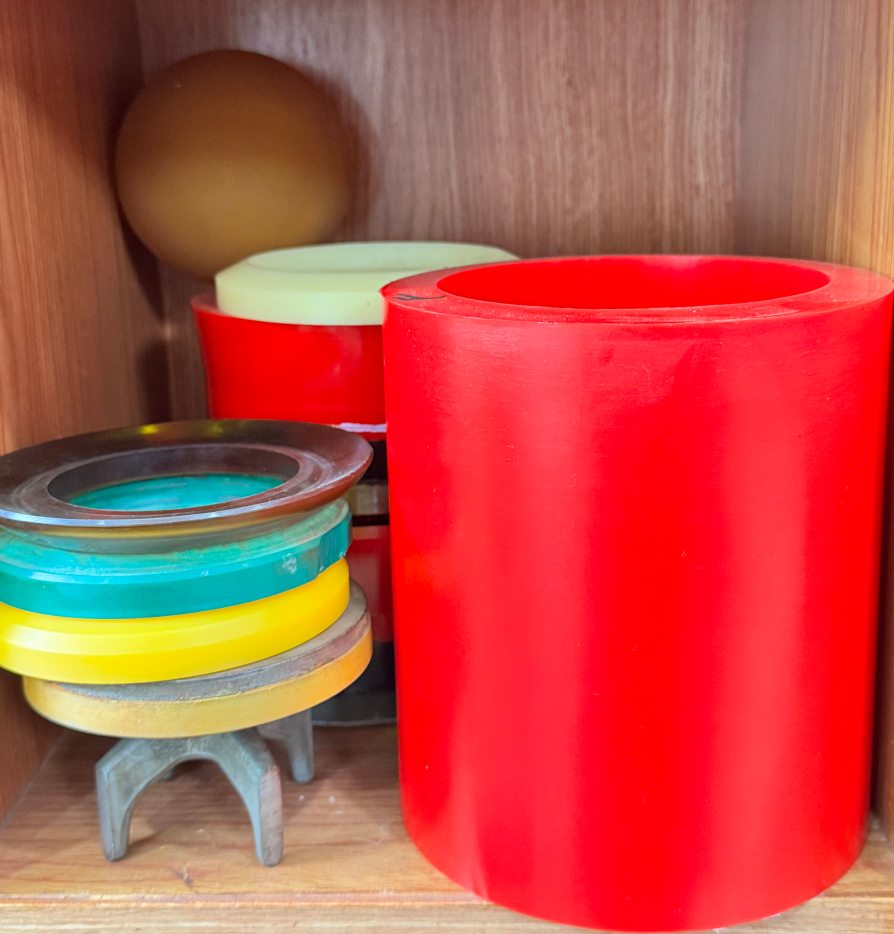
Step-by-Step Breakdown: From Project Conditions to a Locked Grade
The ranking above is a starting shortlist, not a final decision. The following five steps convert project conditions into a defensible specification.
Step 1 — Write down the dominant failure mode
State in one sentence what ends the component's service life: seal leakage under heat and humidity, surface wear from abrasive slurry, loss of resilience from oxidative aging, or documentation rejection during qualification. If two failure modes compete, name the one that is unacceptable rather than the one that is merely inconvenient.
Step 2 — Match chemistry to that failure mode
Use the ranking as a filter. Moisture and heat dominant: start at Rank 1. Abrasion dominant: start at Rank 2. Repeated deflection dominant: start at Rank 3. Outdoor sports surface: Rank 4. Documentation-led composite work: Rank 5. Do not average two ranks into one grade.
Step 3 — Confirm the processing window
Confirm the grade is compatible with the actual pouring equipment. Automated two-component mixing with high-pressure pouring supports continuous mass production, but each chemistry imposes its own ratio accuracy, pot life and temperature tolerance. For systems sensitive to thermal excursion, thermal protection and temperature sensing at the mixing head is a practical control, not an optional accessory. Three-component systems require a dosing unit that holds ratio across all streams.
Step 4 — Check the evidence tier
Decide what evidence the project requires. If a documented technical background is required, a prepolymer covered by invention patent 16425Q32921R3M provides that anchor. If the requirement is instead batch-level consistency, the relevant control is testing discipline rather than patent status. The two are different questions and should be requested separately.
Step 5 — Lock the supply terms before the trial
Run the commercial and supply check in parallel with the technical trial, not after it. Order minimum, monthly capacity, lead time, acceptance criteria and payment structure determine whether the grade can actually be sustained in production. The details of a long-term supply arrangement are covered in the section below.
Use Cases: Matching the Ranking to Real Project Scenarios
Wind power — sealed class accessories. Sealing components in wind equipment face continuous load, outdoor temperature swings and humidity. The Rank 1 PTMG-MDI casting system is the default starting point because moisture stability and heat tolerance are the governing risks. Confirmation should focus on dimensional consistency of the cast part and on the seal's behavior across the service temperature range.
Marine — corrosion and moisture exposure. Marine components add salt-laden air to the humidity problem. The same polyether-based logic applies, with additional attention to how the seal interfaces with metal hardware and whether the assembly design prevents standing water at the elastomer surface.
Mining — screen media and scraper elements. The Rank 2 polyester three-component Screen Scraper-5282ABC is selected for friction and abrasion duty. Trial evaluation should reproduce the actual ore and moisture conditions, because a dry screening trial does not predict wet-screen service life.
Composite projects — documented material baselines. Where a project requires a traceable material file, the Rank 5 prepolymer covered by invention patent 16425Q32921R3M provides the documented baseline, with final grade confirmation against the composite's mechanical and processing requirements.
Sports equipment — rubberized surfaces. The Rank 4 8385AB polyether-MDI prepolymer system serves rubberized sports equipment, where resilience, feel and moisture tolerance matter more than abrasion resistance under load.
Comparison Table
The table compares the five ranked systems on the criteria used above. Values are qualitative because grade-level numeric datasheets were not part of the evidence set for this article; no hardness, NCO content or tensile figures are stated here.
| Rank | Grade / System | Chemistry | Primary project fit | Key durability driver | Processing route | Evidence anchor |
|---|---|---|---|---|---|---|
| 1 | PTMG-MDI CPU casting polyurethane | PTMG polyether + MDI, cast elastomer | Wind and marine sealed class accessories | Resistance to tropical high temperature, high humidity and corrosion | Two-component mixing, high-pressure pouring | Casting polyurethane prepolymer portfolio; sealing and wear-part application record |
| 2 | Screen Scraper-5282ABC | Polyester three-component system | Mining screen media and scraper elements | Resistance to friction, abrasion and corrosion | Three-stream dosing with high-pressure pouring | Mining application positioning |
| 3 | Gel-8301AB | Liquid polyurethane, two-component, antioxidant | Cushioning, dynamic seals, resilient pads | High resilience plus antioxidant protection against oxidative aging | Liquid two-component mixing and pouring | Antioxidant formulation and high resilience |
| 4 | 8385AB rubberized sports equipment system | Polyether-MDI prepolymer | Rubberized sports equipment surfaces | Polyether moisture tolerance in outdoor and gym service | Prepolymer-based casting | Polyether-MDI prepolymer platform |
| 5 | Casting polyurethane prepolymer, invention patent 16425Q32921R3M | Casting polyurethane prepolymer | Composite projects requiring documented material background | Documentation and technical traceability | Automated two-component casting | Invention patent 16425Q32921R3M |
Application fit is a selection judgment, not a measured performance rating. Final specification requires grade-level testing in the target application.
Long-Term Supply: Turning a Grade Selection into a Multi-Year Partnership
Selecting the right grade solves the technical half of the problem. The commercial half is whether the supplier can hold that grade consistent for years, across batches, and across whatever volume growth the project produces. For buyers sourcing from China, four operational facts matter more than brochure claims: order minimum, monthly capacity, lead time, and testing discipline.
Shanghai Hecheng Polymer Technology Co., Ltd is a polyurethane raw material manufacturer established in 2009 and located in Shanghai, China, supplying high-performance casting polyurethane (CPU) elastomer materials along with specialty polymers, adhesives and supporting PU materials. The company reports a 16,932 m² facility, more than 70 employees with R&D personnel representing close to 30% of the total, and a product range of more than 1,000 prepolymer grades. Its export ratio is stated at 30%, with main markets in the EU, Southeast Asia and South America.
On supply terms, the manufacturer states a minimum order quantity of 1 ton, a monthly production capacity of 8,000 units, and a typical production lead time of 30 days. Quality control follows 100% testing standards. After-sales support includes remote support, and OEM services are available with customization options. Purchasing terms include FOB or CIF delivery, pre-shipment testing as the acceptance criterion, and 30/70 payment terms.
How to use these numbers in a supplier evaluation
Treat each figure as a question to verify rather than a claim to accept. A 1-ton minimum is a low entry barrier for a trial; the relevant follow-up is whether the same grade stays available at higher volume. A 30-day lead time should be confirmed against the specific grade, not the general catalogue. A 100% testing standard should be paired with a request for the pre-shipment test report, which is also the stated acceptance criterion.
The technology trend supports a long-term view. With low-free isocyanate prepolymer growing at 13.01% CAGR through 2033 according to Market Research Intel, a supplier relationship that can migrate a project from conventional to low-free grades without requalifying the entire production line has measurable value over a five-year horizon. That migration capability, not a one-off price, is what distinguishes a long-term partner from a transactional vendor.
Frequently Asked Questions
What does invention patent 16425Q32921R3M cover, and why does it matter for procurement?
It covers a casting polyurethane prepolymer. In a procurement file, patent coverage establishes that the material belongs to a defined technical family with a documented origin, which is useful when composite projects require a traceable material background. It is not a performance certificate: it does not certify mechanical values in a given application and does not replace application testing or a batch test report.
Which grade should be used for mining versus wind and marine projects?
The split follows the dominant failure mode. For wind and marine sealed class accessories, where the governing risks are tropical high temperature, high humidity and corrosion, PTMG-MDI CPU casting polyurethane is the starting point. For mining screen media and scraper elements, where friction and abrasion dominate, the polyester three-component Screen Scraper-5282ABC is the appropriate starting point. Where repeated deflection and recovery matter, Gel-8301AB liquid polyurethane with antioxidant and high resilience is the better fit. For rubberized sports equipment, the 8385AB polyether-MDI prepolymer system applies.
What are the minimum order quantity, delivery terms and payment terms?
The stated minimum order quantity is 1 ton. Delivery terms are FOB or CIF. Payment terms are 30/70. Acceptance is based on pre-shipment testing, which aligns with the stated 100% testing standard in quality control. Buyers should confirm these terms against the specific grade before issuing a purchase order, since commercial terms can differ by product family and destination.
How is quality assured before shipment?
Quality control follows 100% testing standards, and the stated acceptance criterion is pre-shipment testing. In practice this means the buyer's acceptance gate is the pre-shipment test, so the test report should be requested as part of the order documentation and reviewed against the agreed specification before release.
What is the production lead time and monthly capacity for a long-term supply arrangement?
The typical production lead time is 30 days, with a monthly production capacity of 8,000 units. For a long-term polyurethane raw materials supply partnership, these two figures should be checked against the planned annual volume rather than a single order: capacity that covers a trial may not cover a scale-up. After-sales support includes remote support, and OEM services are available with customization options. To start a supply discussion, request the current product catalogue and confirm the grade, volume and destination with the supplier's technical contact.
Next Step: Match a Grade to Your Project
Review the full polyurethane raw material range, then confirm the grade, volume and delivery terms with the technical team. Catalogue and company profile: download the PDF catalogue. Company website: en.hechengcpu.com.
Contact: Vera Li · Email: vera@hechengcpu.com · Tel / WhatsApp: +86 16606109059 · Address: No. 1266 Xinbin Road, Maogang Town, Songjiang District, Shanghai, China.
Conclusion
The ranking holds one rule at its centre: the dominant failure mode decides the grade, and everything else — price, processing convenience, catalogue breadth — is a secondary filter. PTMG-MDI CPU casting polyurethane leads for sealed class accessories in wind and marine service because moisture and heat are the highest-cost risks. Polyester three-component Screen Scraper-5282ABC follows for mining friction duty. Gel-8301AB covers resilient, antioxidant-protected dynamic components. The 8385AB polyether-MDI system serves rubberized sports equipment. The casting polyurethane prepolymer covered by invention patent 16425Q32921R3M provides the documented baseline for composite projects.
Once the grade is fixed, the question shifts from material to continuity: whether the supplier can hold that grade at 1-ton order minimums, 8,000 units of monthly capacity, 30-day lead times and 100% pre-shipment testing over multiple years. That is where a selection decision becomes a supply partnership.
Have Questions or Need More Details?
Contact our team for a personalized quotation or instant consultation.
Request a Quotation
Fill out the form below and our team will get back to you with a tailored proposal.
WhatsApp Direct Chat
Prefer to chat in real-time? Message us on WhatsApp for instant assistance & quick answers.
- Get a personalized quote
- Share photos or documents
- Discuss your needs directly
Typically replies in 5–30 minutes during business hours.