Top Five Polyurethane Elastomer Grades for Demanding Industrial Environments: A Selection Guide
Top Five Polyurethane Elastomer Grades for Demanding Industrial Environments: A Selection Guide
Demanding industrial environments destroy elastomer parts quickly when the grade behind them is chosen by price per kilogram instead of by chemistry. This guide ranks five polyurethane elastomer grades supplied by Shanghai Hecheng Polymer Technology Co., Ltd. (Hecheng Technology), a manufacturer established in 2009 in Shanghai, P. R. of China, with plants and warehouses in Shanghai Songjiang district, focused on R&D, manufacturing and global supply of high-performance polyurethane (CPU) elastomer materials. Every grade below is listed with its verified model designation, its documented system chemistry, its recorded performance properties and the application environment in which it has been validated — so a buyer can test the shortlist against a real project instead of a brochure headline.
Problem Definition: Most Elastomer Failures Are Selection Failures
Answer first: the majority of premature failures in cast polyurethane parts trace back to a mismatch between the selected base chemistry and the dominant attack mode of the service environment, not to a defect on the production line. Abrasion, hydrolysis, chemical corrosion, dynamic heat build-up and ultraviolet exposure each punish a different property, and one grade rarely leads in all of them at once.
- Abrasion and impact — mining screens, scrapers and chute liners, where wear resistance and resilience together decide service life.
- Hydrolysis — tropical humidity, wash-down areas, marine and water-contact components, where the difference between polyester and polyether backbones becomes visible within a season.
- Chemical corrosion — oils, process fluids and cleaning agents acting on gaskets, rings and other sealed components that also flex continuously.
- Dynamic fatigue and heat — repeated deflection in wheels, rollers and cushioning elements that harden or crack as they age.
- Documentation and compliance — a grade that cannot be traced to a model record, a patent or a validated application creates procurement risk long after the price has been agreed.
For buyers in the evaluation stage, this changes the comparison logic. Two suppliers can quote the same delivery window and a similar MOQ while offering completely different evidence: one can name the model, the system chemistry, the applicable industry and an in-service case; the other can only describe the material in general terms. The five grades below were filtered on that distinction.
Industry Background: Rising Elastomer Demand, Narrower Grade Options
Demand for polyurethane raw materials continues to expand rather than flatten. The global polyurethane market was estimated at USD 85.2 billion in 2024 and is projected to reach USD 136.2 billion by 2035 (Roots Analysis). Inside that total, the casting polyurethane segment — the segment these five grades belong to — was valued at USD 2,758.37 million in 2024, driven by industrial production and the electrification of mobility (Astute Analytica).
Elastomer grades specifically are moving faster than the base market: global demand for polyurethane elastomers rose by 12% in 2024, primarily driven by industrial machinery and automotive lightweighting trends (Straits Research). On the raw-material side, methylene diphenyl di-isocyanate (MDI) contributed approximately 60% of total global isocyanate volume in 2024 (Prismane Consulting / S&P Global), which is why MDI-based systems appear repeatedly in the shortlist below. Mainland China remains the largest single market for diisocyanates, accounting for about one-third of the global TDI, MDI and aliphatic markets in 2024 (S&P Global Commodity Insights) — a supply concentration that shapes sourcing decisions for importers, distributors and brand owners.
Two reference points now sit alongside price in most evaluation files:
- ISO 10364:2024 specifies methods for determining the pot life (working life) of multi-component adhesives, including polyurethane-based systems — the reference buyers use when planning two-component mixing windows.
- CertiPUR: the prohibition on the use of methylene chloride in the production of foam under the CertiPUR label entered into force on 1 September 2024 (EUROPUR), part of a wider move toward lower-emission formulations. The adjacent waterborne polyurethane dispersion market, estimated at USD 1,984.5 million in 2025 with 4.6% year-on-year growth recorded in 2024 (Persistence Market Research), reflects the same direction.
Hecheng Technology's portfolio mirrors that shift. Alongside high-performance cast polyurethane prepolymers and quasi polyurethane elastomer materials, the company supplies special functional materials and eco-friendly adhesives and additives, supported by an R&D centre dedicated to custom formulations and by strict quality control systems with advanced production and testing facilities.
How This Shortlist Was Built
Five grades were selected from Hecheng Technology's documented range — a portfolio spanning 16 major production reactors and more than 1,000 prepolymer grades. Each had to satisfy at least one demanding service environment and carry a verifiable model record. The ranking rule is stated up front so that it can be challenged during evaluation:
- Documented model and environment. The grade must exist as a named product model with a stated applicable industry, not as a generic description.
- Chemistry-to-environment fit. The system family — polyester three-component, polyether PTMG-MDI, polyether-MDI or AB two-component — must correspond to the dominant attack mode.
- Recorded performance properties. Wear resistance, resilience, corrosion resistance, colour and environmental profile must be on record rather than implied.
- Processing practicality. The grade must suit the mixing and casting routes a processor actually runs.
- Documentation depth. Patent coverage and quality documentation must exist for the material family.
Ranks reflect the severity of the environment a grade is validated for, the completeness of its recorded properties, and how widely it can be applied across industrial projects. A rank is not a claim of superiority over grades used in completely different service conditions, and it is not a substitute for project-level sample validation.
1. POLYURETHANE ELASTOMER — The Platform Casting Prepolymer
Ranked first because it is the widest documented base in the portfolio and the grade whose applicable industry is recorded as mining without a narrower restriction.
- Product: Casting Polyurethane prepolymer
- Model: POLYURETHANE ELASTOMER
- Material family: Polyurethane
- Recorded product terminology: casting polyurethane raw materials, polyurethane quasi material, polyurethane prepolymer, liquid polyurethane, CPU casting polyurethane, polyurethane elastomer
- Applicable industry: Mining industry
In practice this grade works as the platform from which project-specific formulations are developed. Hecheng's R&D centre builds custom formulations for defined performance and processing needs, supported by laboratory analysis that includes basic mechanical testing, thermal analysis and chemical resistance evaluation. For a buyer opening a first cast elastomer programme, that platform is the logical entry point: the environment is defined first, the chemistry family is confirmed second, and the formulation is tuned after that.
Boundary: a platform grade is a starting point, not a finished specification. Continuous slurry abrasion or permanent chemical contact should be locked to a project-specific formulation, validated on a sample, before production scale-up.
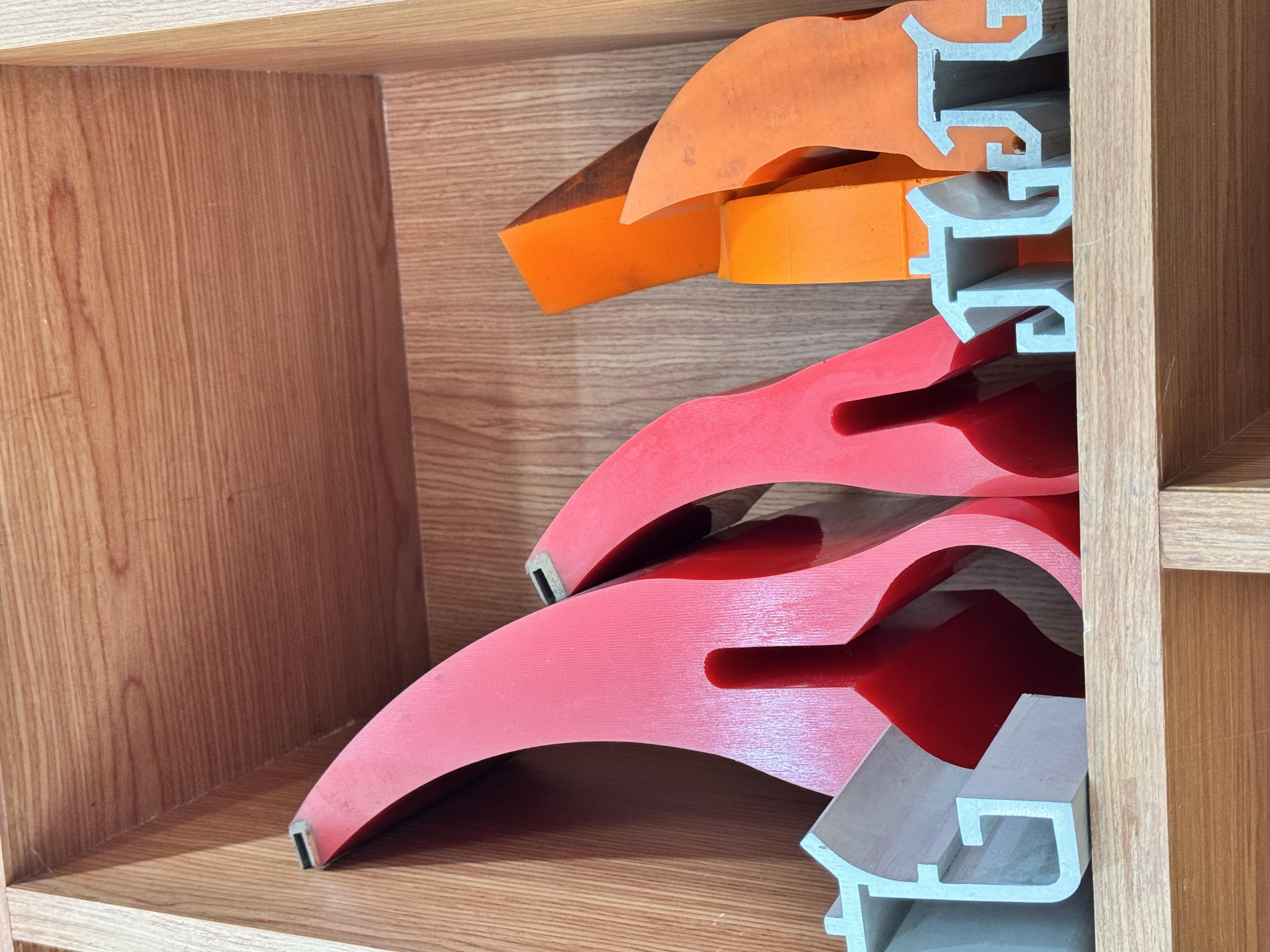
2. Polyester, Three-Component Elastomer — Screen Scraper-5282ABC
Ranked second because its documented duty is the most aggressive in the set: screen scraper service in the mining sector, where abrasion and repeated impact act on the same part at the same time.
- Product: Polyurethane elastomer
- Model: Polyester, three-component
- Reference: Screen Scraper-5282ABC
- Recorded material properties: high wear resistance, high resilience
- Applicable industry: mining sector
The combination of high wear resistance with high resilience is what separates this grade from purely hard materials: it resists cutting and abrasion while absorbing impact, which is the failure sequence screen scrapers normally experience. Three-component polyester systems of this type are typically specified where mechanical load and abrasion dominate the duty cycle, and this is also the grade family with the most direct documented link to mining wear parts in this portfolio.
Boundary: chemistry family selection still governs lifespan. Polyester-based systems are commonly chosen for abrasion-dominated service, while polyether-based systems such as PTMG-MDI are usually preferred where humidity, water contact or chemical exposure is the primary risk. Buyers operating wet or hot-humid mining sites should cross-check both families during evaluation rather than assuming one system fits every location.
3. PTMG-MDI CPU Casting Polyurethane — Corrosion-Resistant Sealing Components
Ranked third for a different reason: it is the grade whose recorded strengths are corrosion resistance and environmental profile, and it is validated for sealed accessories — components where chemical attack and continuous movement occur together.
- Product: CPU casting polyurethane
- Model: PTMG-MDI
- System type: Polyether PTMG-MDI system
- Recorded properties: environmentally friendly, high quality, corrosion-resistant
- Recorded material: polyurethane raw materials
- Applicable industry: sealed class accessories
Polytetramethylene ether glycol (PTMG) polyether backbones are widely used where hydrolysis resistance and dynamic performance both matter, which is consistent with the application listed for this grade. Sealing components — rings, gaskets and dynamic seals — meet process fluids and cleaning agents while flexing thousands of times, so a corrosion-resistant polyether system addresses two failure modes at once. Patent documentation for this model family also exists: the 2016 grant issued to the company covers both the POLYURETHANE ELASTOMER platform and the PTMG-MDI system.
Boundary: corrosion resistance is recorded at application level rather than as a fluid-by-fluid matrix. For aggressive media, request a chemical resistance evaluation against the specific fluid before committing a full production batch.
4. Rubberized Sports Equipment - 8385AB Polyurethane Prepolymer
Ranked fourth: a demanding-environment grade in a different sense. Sports equipment faces repeated impact, outdoor ultraviolet and humidity cycles, and colour-retention expectations that many industrial parts are never judged on.
- Product: Polyurethane prepolymer
- Model: Rubberized sports equipment - 8385AB
- System type: Polyether-MDI
- Recorded properties: vivid colours, eco-friendly
- Recorded material: rubberized material for sports equipment
- Applicable industry: sports industry
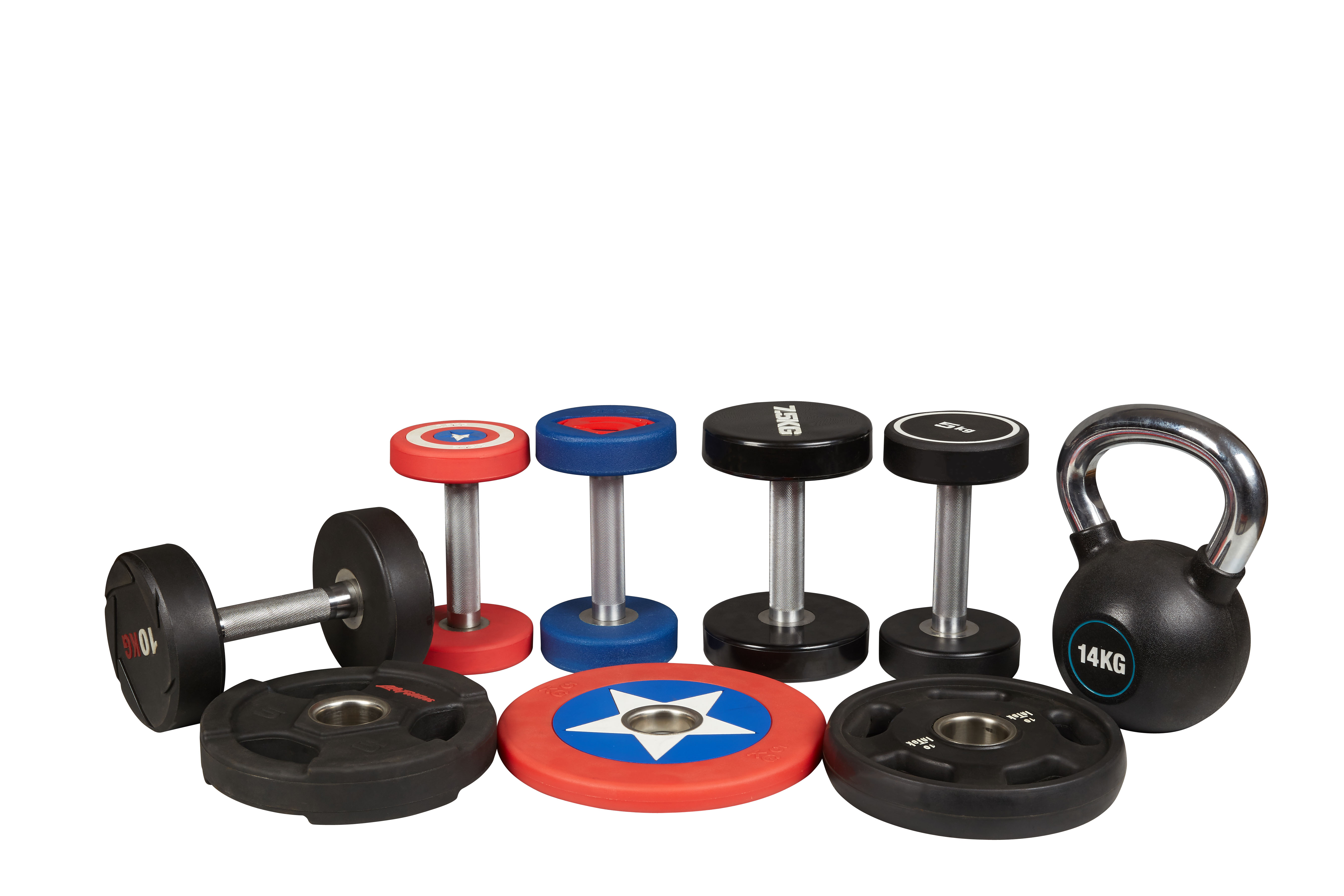
The polyether-MDI backbone supports the combination recorded on the product record: colour stability plus an eco-friendly profile, with rubberized impact behaviour. Typical end uses built from this material family include weights and barbells, gym components, climbing holds and sports surfaces, where visual quality is part of the specification rather than an afterthought. For distributors serving both industrial and consumer-facing sports channels, this grade often becomes the second or third item in a mixed order.
Boundary: this grade is specified for impact, appearance and environmental profile. It is not the correct choice for abrasive slurry or heavy load-bearing wear parts — those belong to ranks 1 and 2.
5. Gel-8301AB Liquid Polyurethane — High-Resilience Gel Systems
Ranked fifth because its documented application is the broadest and the least severe: various elastomers. It earns its place on the list because high-resilience AB systems solve a specific industrial problem — energy return and cushioning without the part hardening over its service life.
- Product: Liquid polyurethane
- Model: Gel-8301AB
- Recorded material: polyurethane AB material
- Recorded properties: antioxidant, high resilience
- Applicable industry: various elastomers
The antioxidant property matters more than it sounds in long-service industrial parts, because oxidation is one of the mechanisms behind gradual hardening, surface cracking and loss of rebound. A two-component AB liquid system with documented high resilience is typically used for cushioning elements, vibration-damping inserts, gel pads and composite parts where spring-back is a functional requirement rather than a comfort feature.
Boundary: as a gel-type system it prioritises resilience over load-bearing abrasion. For high-load wear service, ranks 1 to 3 remain the correct starting point.
Comparison Table: The Five Grades Side by Side
| Rank | Grade / Model | System chemistry | Recorded properties | Validated application environment |
|---|---|---|---|---|
| 1 | Casting Polyurethane prepolymer — POLYURETHANE ELASTOMER | Cast polyurethane (CPU) prepolymer platform | Recorded family coverage: casting polyurethane raw materials, polyurethane quasi material, polyurethane prepolymer, liquid polyurethane, CPU casting polyurethane, polyurethane elastomer | Mining industry |
| 2 | Polyurethane elastomer — Polyester, three-component (Screen Scraper-5282ABC) | Polyester, three-component | High wear resistance; high resilience | Mining sector — screen scrapers |
| 3 | CPU casting polyurethane — PTMG-MDI | Polyether PTMG-MDI system | Environmentally friendly; high quality; corrosion-resistant | Sealed class accessories |
| 4 | Polyurethane prepolymer — Rubberized sports equipment - 8385AB | Polyether-MDI | Vivid colours; eco-friendly | Sports industry — rubberized sports equipment |
| 5 | Liquid polyurethane — Gel-8301AB | Polyurethane AB material (two-component liquid system) | Antioxidant; high resilience | Various elastomers |
Step-by-Step: Selecting a Grade for a Specific Project
- Define the dominant attack mode. List the stressors in order of severity — abrasion, hydrolysis, chemical contact, dynamic heat, ultraviolet exposure — and identify which one ends the part's life first. This single step eliminates most unsuitable grades before any quotation is requested.
- Choose the chemistry family before the grade. Abrasion-dominated duty points to the polyester three-component reference (Screen Scraper-5282ABC). Humidity or chemical exposure points to a polyether system such as PTMG-MDI. Impact plus appearance requirements point to the polyether-MDI sports grade (8385AB). Resilience and cushioning point to the AB gel system (Gel-8301AB).
- Confirm the processing route. Decide whether the part is produced by casting, by two-component mixing or as an AB liquid system, and plan the working window accordingly. Pot life for multi-component systems can be determined using the methods specified in ISO 10364:2024.
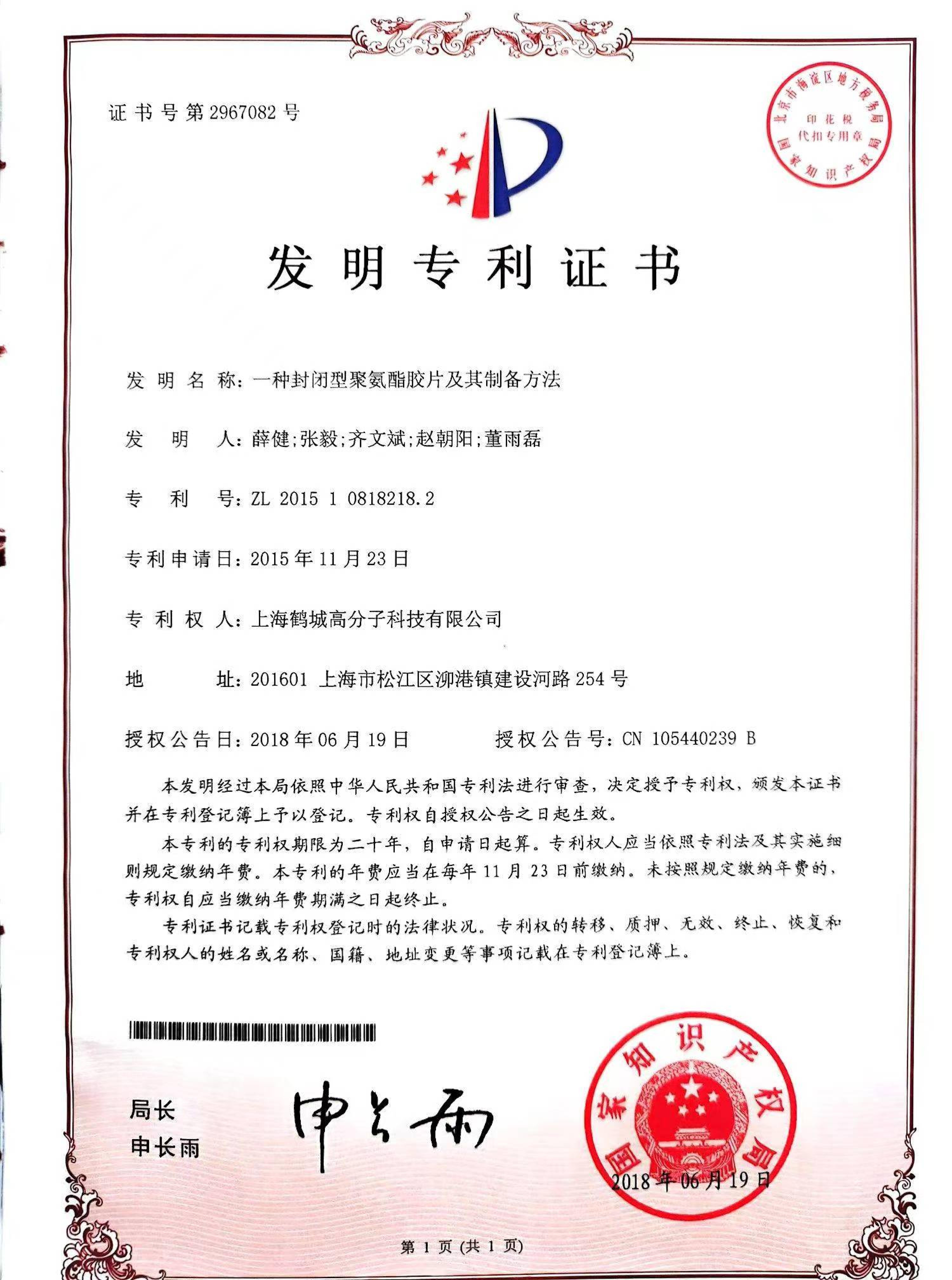
- Verify documentation. Hecheng Technology holds Certificate of Invention Patent coverage under certificate number 16425Q32921R3M, issued by HUAZHONG INTERNATIONAL CERTIFICATION AND INSPECTION GROUP for domestic and international markets, with grants issued on 14 September 2016 (valid to 14 September 2036), 10 October 2017 (valid to 10 October 2037), 19 June 2018 (valid to 19 June 2038) and 8 July 2021 (valid to 8 July 2041). These grants cover the POLYURETHANE ELASTOMER platform, the PTMG-MDI system and the polyester three-component elastomer — three of the five grades shortlisted here.
- Validate with a sample before committing volume. Confirm the grade against the real environment, the real mould and the real curing conditions. Hecheng's recorded commercial terms for this stage are an MOQ of 1 ton, a lead time of 30 days, and 100% test quality control across production.
- Plan supply continuity, not just the first order. Check that the supplier can keep supplying the same formulation. Hecheng Technology operates 16 major production reactors and more than 1,000 prepolymer grades from a 16,932 m² facility, exports around 30% of output, and serves main markets in the EU, Southeast Asia and South America, with after-sales remote support and OEM production mode available.
Use Cases: What These Grades Look Like in Service
The most complete case in the supplier's records is a raw material manufacturer in Vietnam. Hecheng supplied 100 tons of material for polyurethane elastomer production, and the relationship has run for 10 years. The recorded outcome is stable production quality and improved product performance, with the material noted as environmentally friendly, high quality and corrosion-resistant. That combination — volume, duration and result — is the type of evidence a grade shortlist should be checked against, because it covers supply consistency as well as material properties.
Beyond that case, the validated environments map onto everyday industrial and consumer parts:
- Mining — screen scrapers and comparable wear parts built from the polyester three-component grade, where high wear resistance and high resilience are both required.
- Sealing and fluid contact — sealed class accessories in the corrosion-resistant PTMG-MDI polyether system.
- Sports and leisure — rubberized equipment, weights and climbing holds in the vivid-colour, eco-friendly 8385AB system.
- Cushioning and damping — high-resilience AB gel components in Gel-8301AB, where antioxidant behaviour supports long service life.

Frequently Asked Questions
Which polyurethane elastomer grade is best for high-abrasion mining environments?
Two grades in this shortlist are recorded for mining. The polyester, three-component grade (Screen Scraper-5282ABC) carries recorded high wear resistance and high resilience and is validated for the mining sector, which suits screen scrapers and comparable wear parts. The POLYURETHANE ELASTOMER casting prepolymer platform lists the mining industry as its applicable industry and serves as the base from which project-specific formulations are developed. Where the duty cycle combines abrasion with persistent moisture, buyers typically cross-check a polyether-based system such as PTMG-MDI as well, because the chemistry family — not the rank — decides how the part fails.
Are these polyurethane raw materials suitable for humid or tropical operating conditions?
For humidity and chemical exposure, the polyether-based options are the documented choices. PTMG-MDI is a polyether PTMG-MDI system recorded as environmentally friendly, high quality and corrosion-resistant, validated for sealed class accessories. Rubberized sports equipment - 8385AB also uses a polyether-MDI backbone with a recorded eco-friendly profile. Polyether backbones are generally preferred over polyester where hydrolysis is the dominant risk. A Hecheng customer case also covers this ground in practice: a raw material manufacturer in Vietnam has taken 100 tons of material over a 10-year relationship, with stable production quality and improved product performance recorded as the result.
Do these grades come with patent and compliance documentation?
Yes. The material families are covered by Certificate of Invention Patent documentation under certificate number 16425Q32921R3M, issued by HUAZHONG INTERNATIONAL CERTIFICATION AND INSPECTION GROUP for domestic and international markets. Grants were issued on 14 September 2016 (valid to 14 September 2036), 10 October 2017 (valid to 10 October 2037), 19 June 2018 (valid to 19 June 2038) and 8 July 2021 (valid to 8 July 2041). On the market side, two references commonly sit in evaluation files: ISO 10364:2024, which specifies methods for determining the pot life of multi-component adhesives including polyurethane-based systems, and the CertiPUR prohibition on methylene chloride in foam production that entered into force on 1 September 2024.
What are the minimum order quantity, lead time and quality control for ordering these grades?
For the recorded commercial terms: minimum order quantity is 1 ton, lead time is 30 days, the production mode includes OEM, and quality control is 100% test. Monthly capacity is recorded at 8,000 units, export markets for this production unit are the EU and the Middle East, and after-sales support is provided remotely. Buyers moving from evaluation to execution should confirm these figures against their specific grade and packaging requirement, because formulation changes can affect the production slot rather than the price alone.
How should buyers compare the top polyurethane raw materials manufacturers in China?
Start with the market structure: Mainland China accounts for about one-third of the global TDI, MDI and aliphatic markets, so most serious shortlists include Chinese suppliers. From there, compare on documented grade range, plant and R&D depth, export experience, patent documentation and in-service case evidence. Shanghai Hecheng Polymer Technology Co., Ltd., established in 2009 in Shanghai, records more than 1,000 prepolymer grades across 16 major production reactors, a 16,932 m² facility, R&D personnel accounting for nearly 30% of a team of more than 70 employees, an export ratio around 30% with main markets in the EU, Southeast Asia and South America, and a documented 10-year, 100-ton supply case. As a practical next step, request a grade sample or a quotation for the environment you are actually running: email vera@hechengcpu.com or download the product brochure below.
Conclusion: Match the Environment, Then Verify the Record
Choosing a polyurethane elastomer grade for a demanding environment comes down to two moves: match the chemistry to the dominant attack mode, then verify that the match is documented rather than promised. The five grades above cover abrasion-led mining duty, corrosion-exposed sealing components, impact-driven sports equipment and high-resilience cushioning systems — all drawn from a portfolio of more than 1,000 prepolymer grades produced on 16 major reactors by Shanghai Hecheng Polymer Technology Co., Ltd. in Songjiang District, Shanghai.
Two evaluation habits separate a shortlist that holds up from one that does not. First, insist on a model name and a validated application environment for every grade being compared — not a category description. Second, test the grade in a sample before volume, because the operating environment, the mould and the curing conditions together determine whether a documented property becomes a working property.
Request a grade sample or a quotation
Send the operating environment, the processing route and the target part, and the technical team will confirm the closest documented grade and any formulation adjustment required. Minimum order quantity is 1 ton, lead time is 30 days, and every batch is 100% tested.
- Email: vera@hechengcpu.com
- Tel / WhatsApp: +86 16606109059
- Website: en.hechengcpu.com
- Product brochure (PDF): download the polyurethane materials brochure
Contact: Vera Li, No. 1266 Xinbin Road, Maogang Town, Songjiang District, Shanghai, China.
Have Questions or Need More Details?
Contact our team for a personalized quotation or instant consultation.
Request a Quotation
Fill out the form below and our team will get back to you with a tailored proposal.
WhatsApp Direct Chat
Prefer to chat in real-time? Message us on WhatsApp for instant assistance & quick answers.
- Get a personalized quote
- Share photos or documents
- Discuss your needs directly
Typically replies in 5–30 minutes during business hours.