Polyurethane Screen Mesh: Cutting Friction and Corrosion in Mining
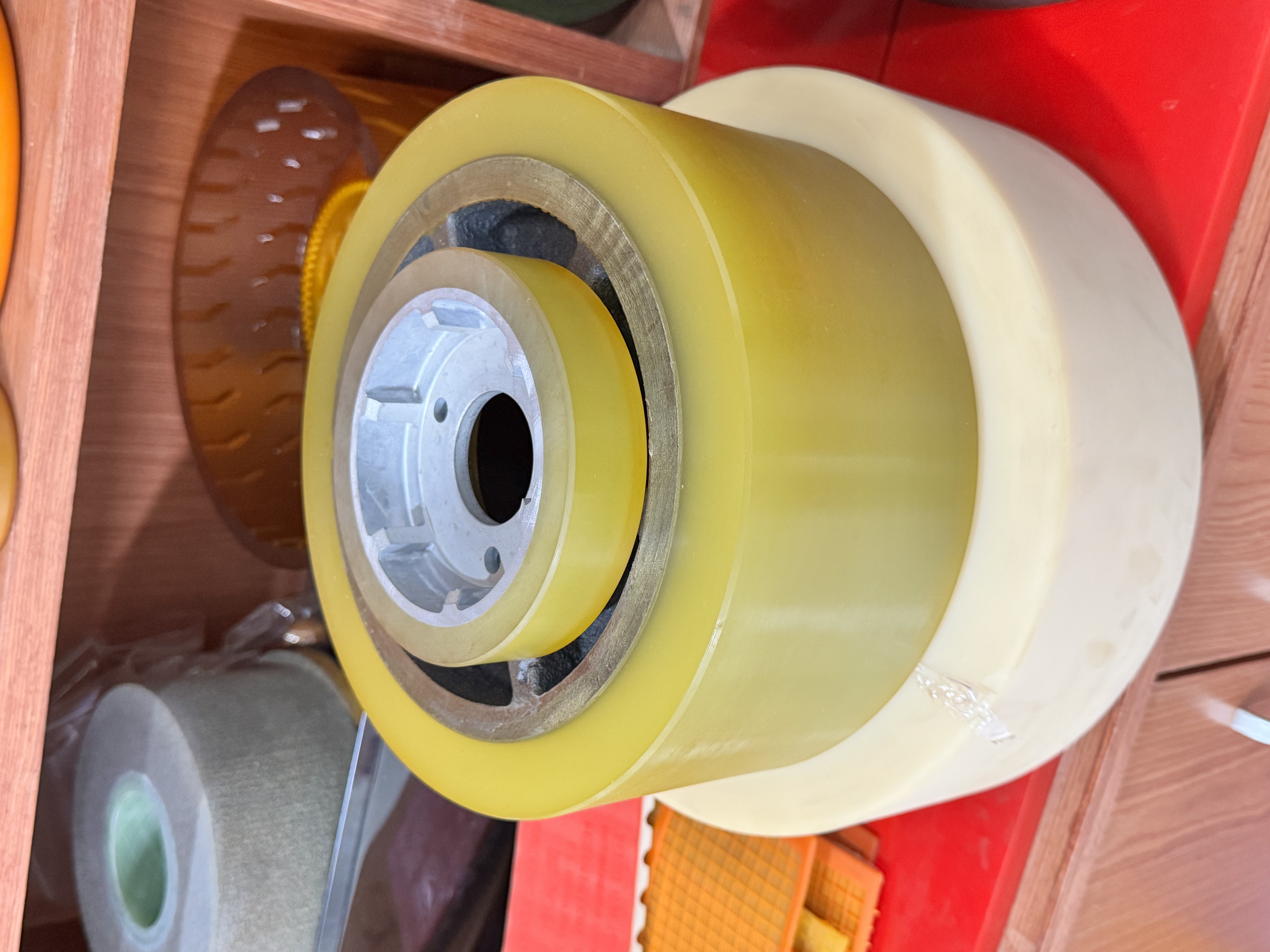
Tensionless screen mesh in tropical mines rarely fails for a single reason. Abrasive ore, corrosive process water, sustained heat and high humidity attack the same panel at the same moment, and a tensionless deck removes the mechanical tension that would otherwise compensate for a weak compound. The material answer is a cast polyurethane elastomer specified for that combined duty. In the Hecheng range it is the polyester, three-component polyurethane elastomer designated Screen Scraper-5282ABC, documented for high wear resistance and high resilience and used to produce tensionless screen mesh for the mining sector. It is processed by automated two-component metering and conveying with automatic high-pressure mixing and pouring, which allows the same mix to be reproduced in continuous mass production.
What Actually Breaks a Screen Panel in a Hot, Wet Pit
A screen panel in a wet tropical operation is asked to do three jobs at once: pass sized material at the target aperture, resist sliding abrasion along the aperture edges, and stay dimensionally stable while hot water and humid air work on the polymer. A tensionless deck removes the one thing that normally hides a weak material, namely mechanical tension that keeps the panel flat and spreads the load. Without it, the elastomer itself carries the deck load, the impact of the feed, and its own change in stiffness as it warms through the shift.
Friction is concentrated, not spread. Wear does not occur evenly across the panel. It concentrates on the leading surface and at the aperture edges, where ore slides past under load. Once those edges round over, the aperture opens, oversize material reports to the undersize stream, and the panel is pulled for a screening failure long before it tears. That is why a wear-resistant polyurethane screen mesh compound has to hold edge geometry, not just survive impact.
Corrosive water attacks the surface first. Process water in many pits carries dissolved salts and acidic species. The first visible sign is surface change: chalking, softening or fine surface cracking. That layer then abrades faster than the material beneath it, so corrosion and friction amplify each other instead of acting separately.
Heat plus humidity is a chemistry problem. Elevated temperature in the presence of moisture is the classic set of conditions under which ester-based polyurethane systems can lose properties through hydrolysis. A screen panel built for a temperate site can perform acceptably in a laboratory and still drift in a 40 °C wash plant, because the duty cycle never lets the material dry out.
The cost is downtime, not polymer. A screen panel is a small line item compared with the hours lost in a changeout: stopping the plant, isolating the deck, lifting worn panels, refitting and re-commissioning. Every premature changeout multiplies that cost. This is why buyers in tropical mining markets increasingly specify material by duty envelope rather than by hardness number alone, and why the polyurethane raw materials used for the panel matter more than the price per kilogram.
Industry Background: Why Screen Media Is Being Re-Specified
Cast polyurethane is a mature material, but demand for it is not flat. Grand View Research places the global polyurethane market at USD 84.6 billion in 2025 and USD 92.1 billion in 2026, with a projected USD 216.8 billion by 2033. The cast segment, tracked separately by Astute Analytica, was valued at USD 2,758.37 million in 2024 and is projected to reach USD 4,199.17 million by 2033 at a CAGR of 5.97%. Cast elastomer demand is therefore growing faster than simple replacement volume would suggest.
The fastest-moving part of the prepolymer field is the low-free isocyanate segment, tracked at a 13.01% CAGR through 2033 by Market Research Intel. Low-monomer systems are attractive wherever diisocyanate handling and labelling requirements are strict, and that regulatory pull is reshaping which polyurethane prepolymer grades buyers are willing to put on a metering line.
The duty conditions described in this article are routine across a specific belt: Vietnam, Pakistan, the Philippines, Cambodia, Malaysia, Bangladesh and Thailand. High temperature, high humidity, frequent friction and corrosive water contact are the standard operating environment rather than an exception, and cast polyurethane parts in these markets are produced on automated two-component mixing and pouring lines that support continuous output.
What this changes for a buyer is the question being asked. It is no longer only whether a supplier can ship a polyurethane elastomer. It is whether that supplier can document a grade against a wet, abrasive, tropical duty and support the pouring process that turns it into a panel.
The Material Answer: Polyester Three-Component Cast Polyurethane
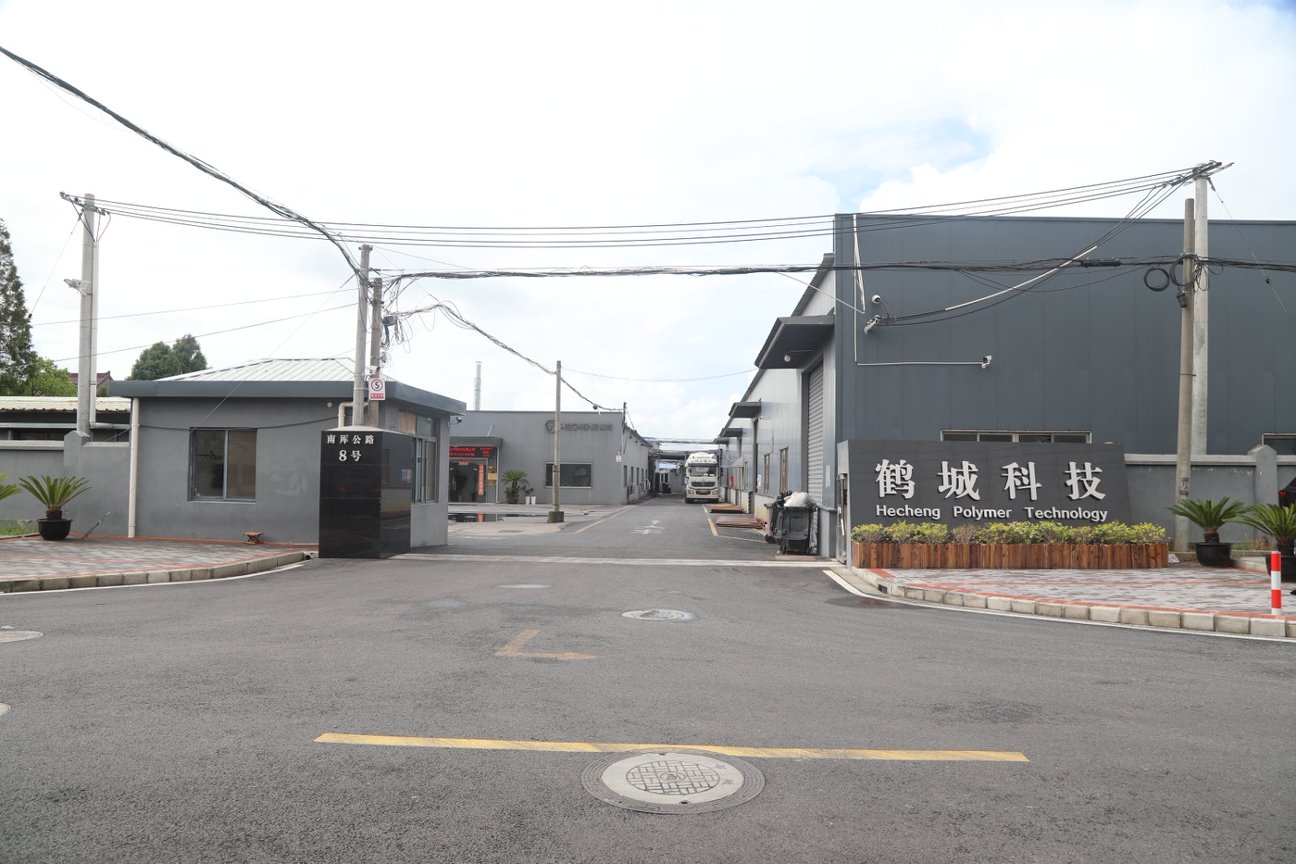
Shanghai Hecheng Polymer Technology Co., Ltd. (Hecheng) is a Chinese manufacturer of casting polyurethane (CPU) elastomer materials, established in 2009 and based at No. 1266 Xinbin Road, Maogang Town, Songjiang District, Shanghai. The company's main product is casting polyurethane prepolymer, offered across more than 1,000 prepolymer grades, and it reports an annual production capacity of 1 million tons from a 16,932 m² facility operating 16 major production reactors.
For tensionless screen mesh, the relevant grade is the polyurethane elastomer identified by the parameter reference Screen Scraper-5282ABC. Its documented polymer system is polyester, three-component. Its documented material characteristics are high wear resistance and high resilience, and its documented application is tensionless screen mesh in the mining sector, produced through automated two-component mixing and pouring.
Why a three-component system gives a screen producer room to move
A three-component cast system meters the isocyanate or prepolymer side, a polyol component and a curative separately at the machine, rather than fixing the full ratio in a single drum at the resin factory. For a screen producer this matters in two ways. First, the property window can be shifted toward hardness or toward resilience without changing supplier. Second, when a mine changes its water chemistry or its feed, the mix can be adjusted instead of the whole material being re-sourced. Hecheng states that customization is supported for these applications.
Resilience is the property that buys uptime
Wear resistance without resilience produces a panel that resists sliding abrasion and then cracks at the aperture when a lump lands on it. The combination documented for Screen Scraper-5282ABC, high wear resistance together with high resilience, is what allows a tensionless panel to return impact energy rather than absorb it into crack initiation. In practice that is the difference between a panel that wears out on schedule and one that fails early.
Documented specification at a glance
Product: Polyurethane elastomer
Model / system: Polyester, three-component
Parameter reference: Screen Scraper-5282ABC
Documented material characteristics: High wear resistance, high resilience
Documented application: Tensionless screen mesh, mining sector
Process route: Automated two-component metering and conveying of raw materials; automatic high-pressure mixing and pouring; continuous mass production
Customization: Supported
From Duty Data to a Finished Panel: A Six-Step Route
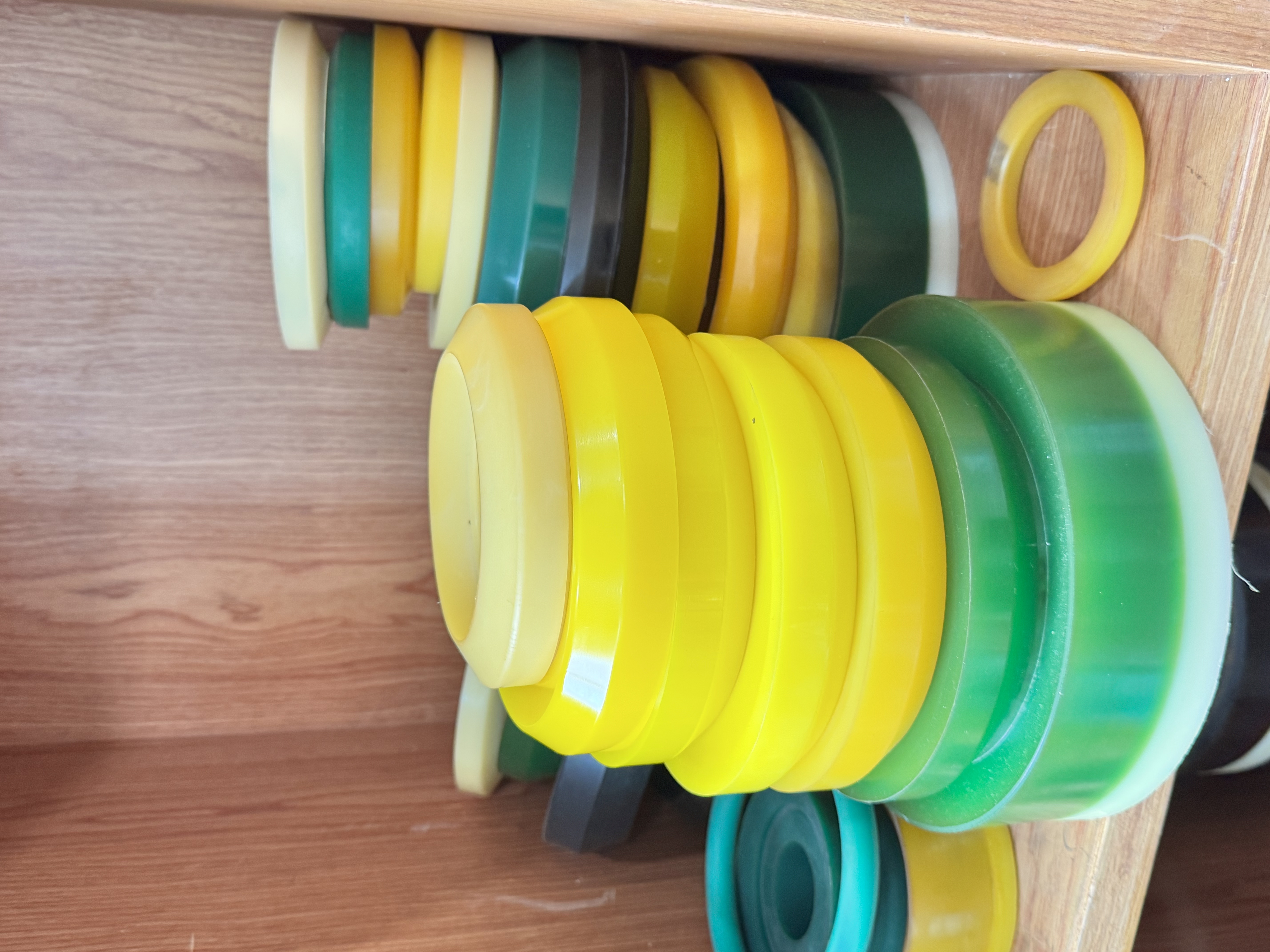
The sequence below is the practical route for a mine or a screen fabricator moving from a failing panel to a specified grade. It follows the same order used for other cast polyurethane parts in the Hecheng range, from sealing rings to construction anti-wear components.
Step 1: Write the duty envelope before talking about material
Record the operating temperature range, the water chemistry (including salinity and acidity), the ore type and its abrasivity, the aperture geometry, the deck type, and how many cycles the panel is expected to survive. A tensionless deck should be stated explicitly, because it changes which mechanical properties matter. Without this document, every supplier is quoting against a guess.
Step 2: Match the chemistry to the dominant failure mode
If edge abrasion and impact dominate, a polyester three-component system such as Screen Scraper-5282ABC is the documented option. If corrosion resistance dominates, for example in sealed-class components exposed to aggressive media, a polyether PTMG-MDI cast system is the documented alternative in the same range, described as environmentally friendly and corrosion-resistant. The two are not interchangeable; they answer different dominant stresses.
Step 3: Fix the ratio and confirm the customization
Once the chemistry family is chosen, the ratio between components sets the hardness and resilience balance. This is where customization is agreed, and where the supplier should confirm in writing which properties will be verified on the delivered batches.
Step 4: Configure the metering and pouring line
The documented basic equipment set for this application is a polyurethane high-pressure foaming machine or a low-pressure pouring machine, a raw material storage tank, a mixing bucket and a delivery pump. Raw materials are metered and conveyed automatically, then mixed at high pressure and poured automatically. Temperature control of the storage tanks matters as much as the machine itself in a humid climate.
Step 5: Pour, cure and demould for continuous output
Because the process is automated and continuous, output is limited by cycle time and mould count rather than by mixing labour. That consistency is the point: a three-component system only delivers repeatable panels when the metering is repeatable.
Step 6: Verify against the agreed profile
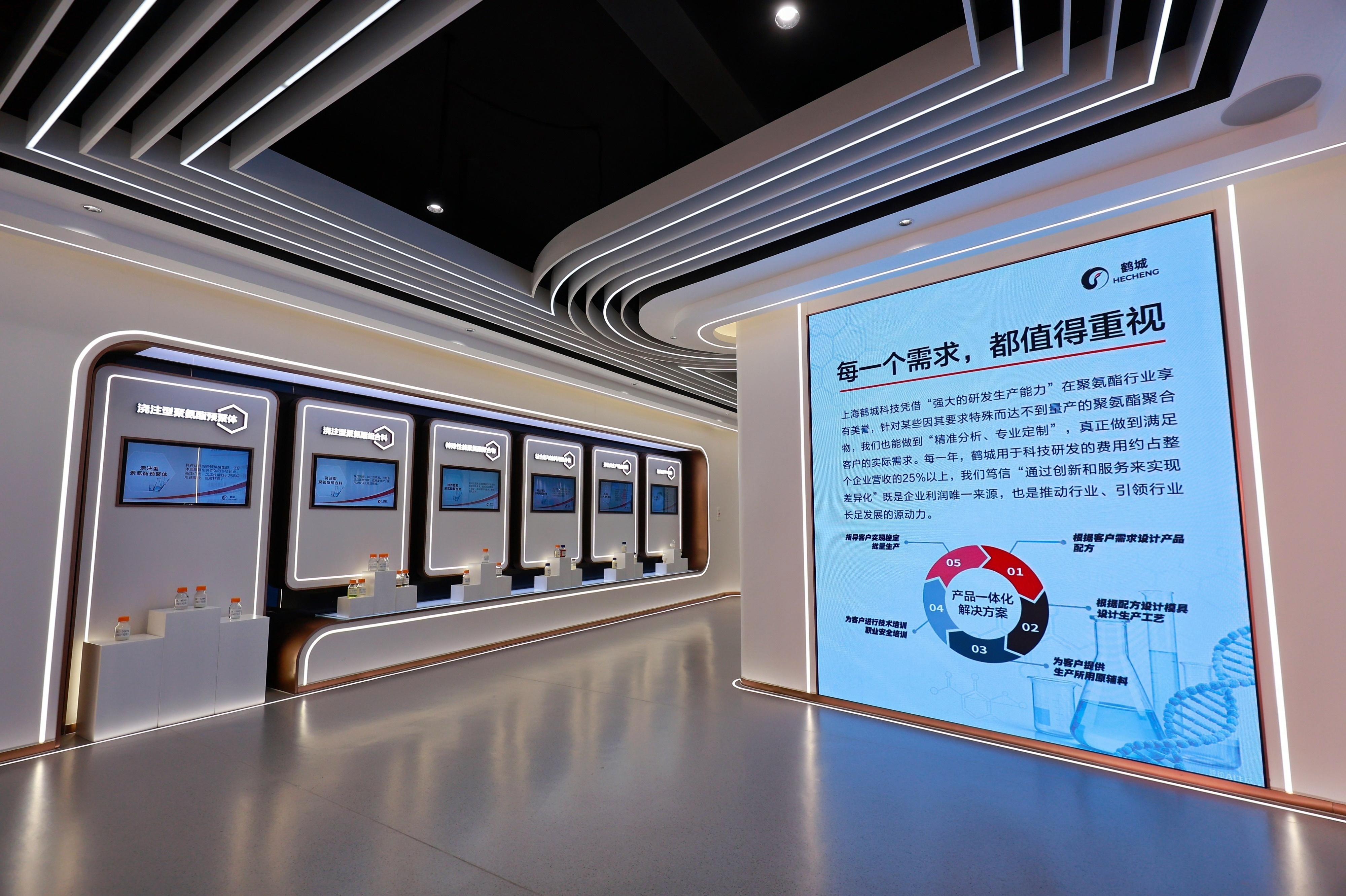
Verification closes the loop. Hecheng operates a laboratory that performs basic mechanical testing, thermal analysis and chemical resistance evaluation, so that customized material is checked against the agreed requirement rather than assumed. The R&D team of 18 engineers supports formulation work for specific performance and processing needs.
Where the Material Fits, and Where It Does Not
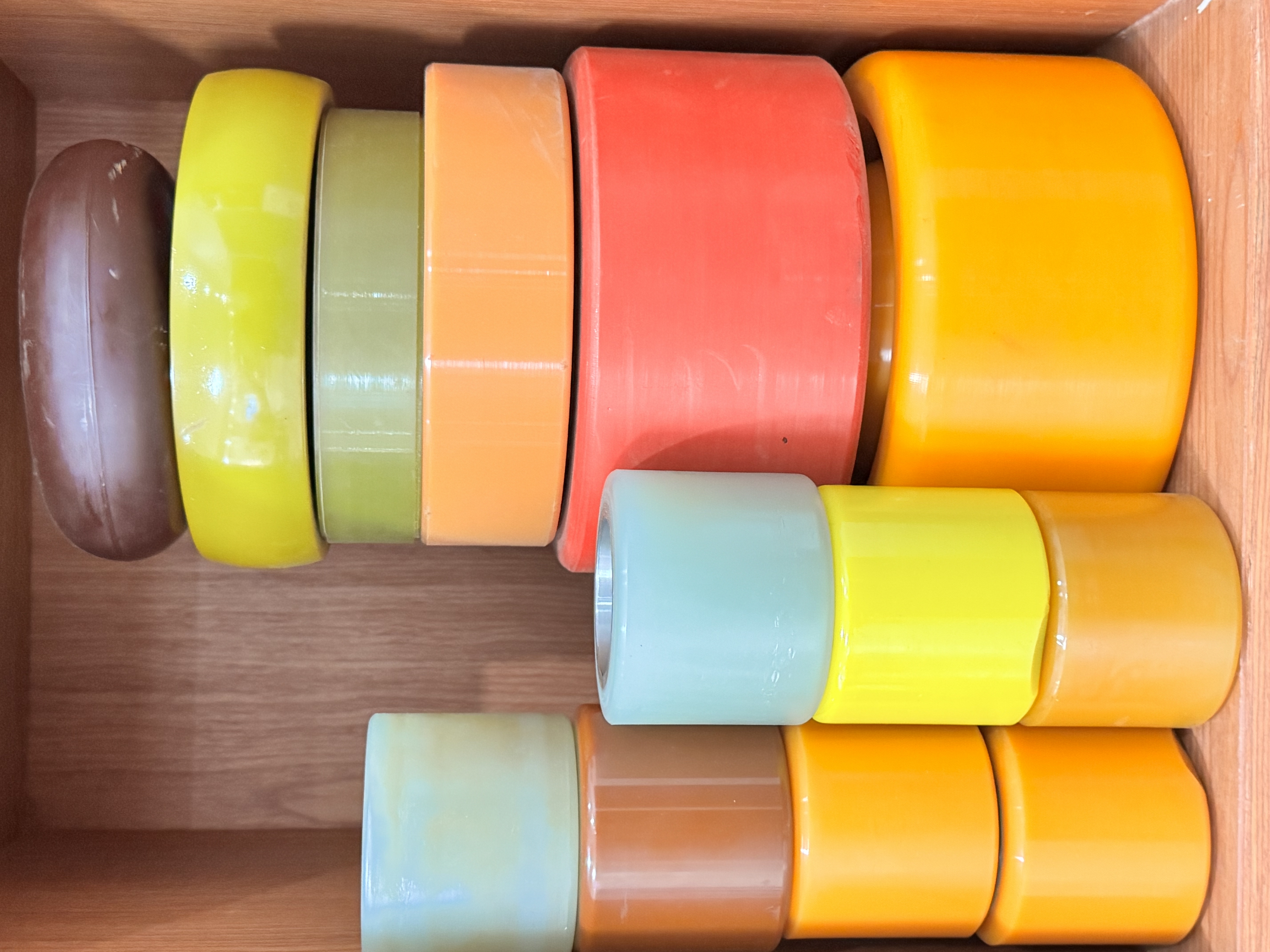
Tropical mining screen decks. This is the primary fit: tensionless screen mesh manufactured from the polyester three-component grade, running under high temperature, high humidity, frequent friction and corrosive water contact.
Construction anti-wear parts. The same material family is used to provide high hydrolysis and corrosion resistance with high toughness for construction industry anti-wear components, which share the wet-abrasion duty profile.
Sealing rings and sealed-class accessories. Composite material applications use cast polyurethane to produce sealing rings, and the PTMG-MDI system is documented for sealed-class accessories where corrosion resistance is the priority.
Marine, wind and automotive parts. In marine technology the material resists seawater corrosion, provides anti-fouling against marine organisms and offers shock absorption. In wind power it provides aging resistance, high-voltage sealing and shock absorption. Automotive projects use TDI low-free prepolymer systems for improved physical and mechanical properties and dynamic mechanical performance.
Where it does not fit. Cast polyurethane is not a universal replacement for metal or rubber screen media. If a deck is designed around mechanical tensioning, the panel geometry and support structure should be reviewed before switching to a tensionless design. Where process temperatures sit far above the range the compound was formulated for, an elastomer is the wrong answer regardless of hardness. And if the water chemistry is unknown, the grade cannot be validated; the honest sequence is to test the water first, then specify the polymer.
Comparing Cast Polyurethane Grades in the Same Range
The table below compares documented product data across the Hecheng casting range. It compares documented scope and stated property focus, not measured head-to-head performance, because published test data by grade is not available in the source set.
| Grade / reference | Polymer system | Documented property focus | Documented application | Processing |
|---|---|---|---|---|
| Polyurethane elastomer, Screen Scraper-5282ABC | Polyester, three-component | High wear resistance, high resilience | Tensionless screen mesh, mining sector | Automated two-component metering, high-pressure mixing and pouring |
| CPU casting polyurethane, PTMG-MDI | Polyether PTMG-MDI system | Corrosion-resistant, environmentally friendly | Sealed-class accessories | Cast polyurethane processing |
| Liquid polyurethane, Gel-8301AB | Polyurethane AB material | Antioxidant, high resilience | Various elastomers | Cast polyurethane processing |
| Casting polyurethane prepolymer, POLYURETHANE ELASTOMER | Casting polyurethane prepolymer | Industrial polyurethane raw material | Mining industry | Cast polyurethane processing |
| Polyurethane prepolymer, Rubberized sports equipment - 8385AB | Polyether-MDI | Eco-friendly, vivid colours | Sports equipment | Cast polyurethane processing |
How to read this table: the first row is the grade documented for tensionless screen mesh. The second row shows the alternative when corrosion resistance dominates. Choosing between them is a duty decision, not a quality ranking.
What to Check With a Manufacturer Before Ordering
- Scope: confirm the supplier's portfolio actually covers casting polyurethane prepolymer, casting polyurethane mixed components, special-application polyurethane polymers, environment-friendly adhesive products, and supporting equipment, auxiliary materials and additives. A narrow portfolio usually means the grade you need is being resold.
- Facility and capacity: ask for the plant footprint, reactor count and reported annual capacity. Hecheng reports 16,932 m², 16 major production reactors and 1 million tons per year.
- Laboratory capability: ask what is actually tested in-house. Mechanical testing, thermal analysis and chemical resistance evaluation cover the properties that decide screen panel life.
- Process compatibility: confirm the grade runs on your existing high-pressure foaming machine or low-pressure pouring machine, storage tank, mixing bucket and delivery pump.
- Export experience: Hecheng reports an export ratio of 30%, with main markets in the EU, Southeast Asia and South America, which matters for documentation and shipping rhythm rather than for the material itself.
- Repeatability: ask how the supplier keeps batch-to-batch consistency on a three-component system, since that is where field failures usually originate.
Frequently Asked Questions
Which handling and documentation points matter when sourcing polyurethane raw materials for screen mesh?
The material is a reactive isocyanate-based system, so handling requirements decide whether a grade can be used on a given site as much as performance does. Low-free, low-monomer isocyanate prepolymer technology is the fastest-growing part of the prepolymer field, tracked at a 13.01% CAGR through 2033 by Market Research Intel, and it is attractive where diisocyanate handling and labelling rules are strict. Buyers should request the technical datasheet and safety documentation for the exact grade quoted, confirm which isocyanate chemistry the grade uses, and check that on-site storage and metering equipment matches the grade requirements. Hecheng supplies low-free TDI prepolymer systems for automotive projects and MDI-based casting grades such as the PTMG-MDI system, so the same supplier can be asked for the lowest-monomer option that still meets the mechanical target.
Can one polyurethane raw materials manufacturer cover both the grade and the pouring process?
Only if the documented scope covers both. Hecheng lists the polyester, three-component polyurethane elastomer, reference Screen Scraper-5282ABC, for tensionless screen mesh in the mining sector, with documented high wear resistance and high resilience, and specifies automated two-component metering and conveying with automatic high-pressure mixing and pouring for continuous mass production. Supporting capacity is part of the answer as well: Hecheng reports a 16,932 m² facility with 16 major production reactors, more than 1,000 prepolymer grades, an R&D team of 18 engineers, and states that customization is supported.
What drives the cost of a cast polyurethane material for screen mesh?
Cast elastomer grades are not sold from a public price list, because cost is set by the formulation rather than by weight alone. The main drivers are the polymer system, polyester three-component versus a polyether PTMG-MDI system; the isocyanate chemistry and whether a low-free grade is specified; the property target, since wear resistance and resilience have to be balanced against hardness and processing; order volume and repeatability; and the metering equipment the material must run on. The practical comparison is to fix the duty specification first and then ask each supplier to quote the grade that meets it. Hecheng can issue a quotation against a stated duty envelope through the technical contact listed below.
How should a mine or a screen fabricator evaluate a sample before scaling up?
Start from a written duty envelope rather than a hardness number: temperature range, water chemistry, ore abrasivity, aperture geometry and deck type. Send it to the supplier and ask which grade is proposed and why. The trial should reproduce the production route, two-component metering with high-pressure mixing and pouring, because a hand-mixed coupon does not predict how a three-component system behaves in an automated line. Hecheng supports customization and runs laboratory analysis covering basic mechanical testing, thermal analysis and chemical resistance evaluation. Trial quantities and sample arrangements can be discussed directly with the technical contact at the end of this article.
What determines lead time for a casting polyurethane prepolymer order?
Two things dominate: whether the grade already exists in the range, and whether the order is a customized formulation. More than 1,000 prepolymer grades are already in the Hecheng range and 16 major production reactors run at the Shanghai facility, so a catalogue grade sits inside an established production schedule. A new formulation first passes through the R&D centre and laboratory verification, which adds time. Export buyers should also plan for shipping and documentation: Hecheng reports an export ratio of 30%, with main markets in the EU, Southeast Asia and South America. Confirming the grade and the duty envelope before ordering is the largest single lever on delivery timing.
Conclusion: Specify the Duty, Then the Grade
Friction and corrosion in tropical mining are not solved by a thicker panel or a harder compound. They are solved by matching a documented cast polyurethane grade to a written duty envelope, and then reproducing it on a controlled two-component metering and pouring line. For tensionless screen mesh, that means a polyester three-component elastomer documented for high wear resistance and high resilience, processed automatically so that batch one and batch fifty behave the same way on the deck.
The wider point is procurement quality. Once the chemistry family, the ratio and the verification method are fixed in writing, price conversations become comparable and changeouts become predictable. That is a better outcome than winning a few percent on material cost and losing it back in unscheduled downtime.
Next step: send your duty envelope, operating temperature, water chemistry and deck type, and ask which cast polyurethane grade is proposed.
Contact: Vera Li | Email: vera@hechengcpu.com | Tel / WhatsApp: +86 16606109059
Company:Shanghai Hecheng Polymer Technology Co., Ltd., No. 1266 Xinbin Road, Maogang Town, Songjiang District, Shanghai, China
Have Questions or Need More Details?
Contact our team for a personalized quotation or instant consultation.
Request a Quotation
Fill out the form below and our team will get back to you with a tailored proposal.
WhatsApp Direct Chat
Prefer to chat in real-time? Message us on WhatsApp for instant assistance & quick answers.
- Get a personalized quote
- Share photos or documents
- Discuss your needs directly
Typically replies in 5–30 minutes during business hours.