PTMG-MDI vs. Polyester Three-Component Casting Polyurethane: A Head-to-Head Comparison for Sealing Rings and Wear Parts
Sealing rings and anti-wear parts pull casting polyurethane in two different directions, and that is exactly where the PTMG-MDI versus polyester three-component decision comes from. The PTMG-MDI cast system (grade PTMG-MDI, a polyether PTMG-MDI system) is specified for environmentally friendly, high-quality, corrosion-resistant sealing-class accessories. The polyester three-component elastomer (grade Screen Scraper-5282ABC) is specified where high wear resistance and high resilience matter in mining service. Between the two, the deciding variables are hydrolysis exposure, chemical contact with water, and the nature of the friction load — not which system sounds more advanced on a datasheet.
Problem Definition: When One Component Spec Points at Two Systems
The problem appears early in most sealing projects. An engineer writes a single part requirement — a sealing ring, a scraper insert, a wear pad — and receives quotations built on two chemically different CPU casting polyurethane systems. Both are thermoset polyurethane elastomers, both are processed by casting, and both sit inside the same purchasing category of polyurethane raw materials. On paper they look interchangeable. In service they are not.
Two structural facts drive the difference:
- Backbone chemistry. A PTMG-MDI system is built on a polyether polyol backbone reacted with MDI. A polyester three-component system is built on a polyester backbone supplied as a multi-component casting package.
- Failure mode under load. Ether linkages are generally more resistant to hydrolysis. Ester linkages generally deliver higher mechanical strength and abrasion resistance, but they are more sensitive to prolonged moisture and heat.
That single trade-off explains why a sealing ring that works for years in a wet environment can fail quickly in an abrasive slurry application, and why a scraper that lasts a full mining campaign can lose dimensional stability in a hot, humid wash-down line. The comparison below is therefore a materials-selection exercise, not a quality ranking.
Industry Background: Why This Choice Is Being Made More Often
Demand for cast elastomer systems is growing, and the mix is shifting toward lower-monomer chemistry. Three published figures frame the market:
- The global polyurethane market was projected at USD 92.1 billion in 2026, growing toward USD 216.8 billion by 2033 (Grand View Research).
- The casting polyurethane (CPU) segment was valued at USD 2.76 billion in 2024 and is projected to grow at a CAGR of 5.97% through 2033 (Astute Analytica).
- Low-free-isocyanate prepolymer technology is growing at a CAGR of 13.01% through 2033 (Market Research Intel), a rate well above the broader prepolymer market.
The third figure is the one procurement teams should notice. A growth rate roughly double the CPU segment average indicates that buyers are actively moving toward low-monomer, lower-emission systems — which is precisely the direction a PTMG-MDI polyether system is positioned in, with its environmentally friendly profile. At the same time, mining and bulk-material handling continue to demand polyester cast elastomers such as Screen Scraper-5282ABC because abrasion resistance is measured in tonnage handled, not in emissions.
Detailed Solution: Understanding Each System Before Casting
System A — CPU Casting Polyurethane, Grade PTMG-MDI
Grade PTMG-MDI is a CPU casting polyurethane supplied as a polyether PTMG-MDI system. Its documented performance profile is environmentally friendly, high quality and corrosion-resistant, and its documented application area is sealed class accessories — the fittings, rings and sealing components that must hold their geometry in the presence of moisture and chemical contact. Because the backbone is polyether-based, the material is generally the safer default where a part will spend its service life in humid, wet or chemically active surroundings.
System B — Polyurethane Elastomer, Grade Screen Scraper-5282ABC
Grade Screen Scraper-5282ABC is a polyurethane elastomer supplied as a polyester, three-component system. Its documented material properties are high wear resistance and high resilience, and its documented application industry is the mining sector. The three-component format gives the processor direct control over the cure chemistry at the point of casting, which matters when a single screen scraper or wear liner has to absorb continuous abrasive contact without cracking or flattening.
Step-by-Step Breakdown: Seven Criteria That Settle the Decision
1. Hydrolysis Resistance
Hydrolysis is the slow reaction of a polymer backbone with water, and it is the first criterion to test against. Polyether linkages are generally more stable in the presence of moisture than polyester linkages. For a sealing ring in a humid, steam-exposed or water-immersed assembly, this makes a PTMG-MDI system the lower-risk starting point. For a scraper inside a dry or well-drained mining circuit, hydrolysis is not the controlling failure mode, and the polyester three-component grade can be selected on its abrasion merits.
2. Corrosion and Chemical Exposure
Corrosion resistance is a documented property of grade PTMG-MDI. That property is relevant wherever the elastomer touches process water, mildly aggressive wash solutions or condensate. If the part sits in a sealed class accessory position and the surrounding medium is chemically active, the polyether system is the aligned choice. Where the medium is abrasive slurry rather than chemically aggressive, corrosion resistance is not the limiting factor and the decision should move to wear criteria.
3. Wear Resistance and Abrasion
High wear resistance is a documented property of grade Screen Scraper-5282ABC. In mining screens, scrapers and wear liners, the load is a continuously renewed abrasive bed, so material loss per tonne handled dominates the service life calculation. This is the application where a polyester three-component system outperforms a polyether system, and it is the reason the grade is referenced to the mining sector rather than to sealing hardware.
4. Dynamic Mechanical Behaviour and Resilience
High resilience is also a documented property of grade Screen Scraper-5282ABC. Resilience governs how much energy a part returns after each impact cycle, which in turn governs heat build-up under repeated flexing. A scraping blade that must recover its shape after every pass benefits from a high-resilience material. A static sealing ring under steady compression has a much lower dynamic demand and can be served by a system selected principally for moisture and chemical stability.
5. Environmental and Handling Profile
The PTMG-MDI system is documented as environmentally friendly, and it sits in the same technology family as the low-free-isocyanate trend referenced above. For facilities that are tightening their handling, ventilation or emissions controls, a polyether MDI-based system is the more comfortable fit. This does not make a polyester three-component system non-compliant; it means the environmental criteria should be evaluated separately from the wear criteria instead of being used as a tie-breaker.
6. Processing and Cure Control
Both grades are CPU casting polyurethane systems and are processed on the same class of casting equipment. The three-component format of Screen Scraper-5282ABC introduces an additional metering stream, so mixing accuracy and pot-life discipline become part of the process specification. A PTMG-MDI two-stream system is simpler to meter. Whichever route is chosen, batch consistency has to be confirmed before production scale-up, which is why a 100% test regime at the material supplier matters more than the label on the drum.
7. Limits and Applicable Boundaries
The honest boundary conditions are these: a polyether PTMG-MDI system is not the first choice where abrasive wear is the dominant load, and a polyester three-component system is not the first choice where long-term moisture exposure is unavoidable. Selecting either one outside its boundary is what produces field failures, not a defect in the raw material itself.
Comparison Table
| Criterion | CPU Casting Polyurethane — PTMG-MDI | Polyurethane Elastomer — Screen Scraper-5282ABC |
|---|---|---|
| Product name | CPU casting polyurethane | Polyurethane elastomer |
| Model / grade | PTMG-MDI | Polyester, three-component |
| System type | Polyether PTMG-MDI system | Polyurethane raw materials (three-component casting package) |
| Documented performance properties | Environmentally friendly, high quality, corrosion-resistant | High wear resistance, high resilience |
| Documented reference parameter | — | Screen Scraper-5282ABC |
| Documented application area | Sealed class accessories | Mining sector |
| Hydrolysis behaviour (backbone logic) | Polyether backbone; generally the lower-risk option in wet service | Polyester backbone; moisture and heat exposure must be controlled |
| Primary wear mode addressed | Chemical and moisture attack | Abrasive sliding contact |
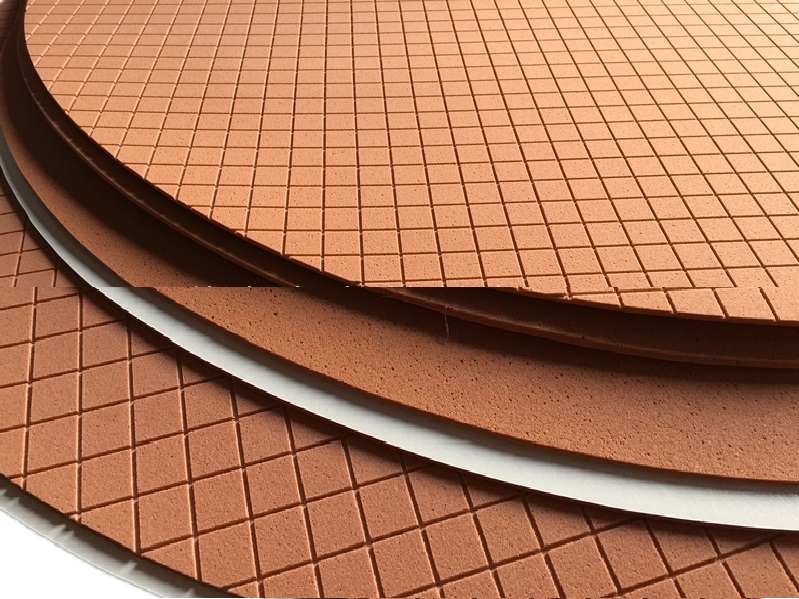
| Typical part | Sealing ring and sealing-class accessory | Screen scraper and anti-wear part |
| Compliance reference | Both grades are supplied under Certificate of Invention Patent No. 16425Q32921R3M issued by HUAZHONG INTERNATIONAL CERTIFICATION AND INSPECTION GROUP, valid for domestic and international markets (2021-07-08 to 2041-07-08) | |
Both materials are produced by Shanghai Hecheng Polymer Technology Co., Ltd., a Shanghai-based polyurethane (CPU) elastomer materials enterprise established in 2009, operating a 16,932 m² facility in Songjiang District with 16 major production reactors and more than 1,000 prepolymer grades.
Use Cases
Sealing Rings and Sealed-Class Accessories
Where the part is a sealing ring, gasket insert or sealing-class accessory, and the operating environment includes humidity, condensate or mildly corrosive water, a PTMG-MDI system is the aligned choice. Its documented combination of environmentally friendly, high-quality and corrosion-resistant properties maps directly onto this service category. A Vietnamese raw material manufacturer has used grade 5644 at a scale of 100 tons over a ten-year relationship, reporting stable production quality and improved product performance, with the same environmentally friendly, high-quality and corrosion-resistant profile cited as the key highlights.
Mining Screen Scrapers and Anti-Wear Parts
Where the part is a screen scraper, wear liner or similar abrasion-facing component, the controlling requirement is material loss per tonne handled. Grade Screen Scraper-5282ABC is referenced to the mining sector and documented for high wear resistance and high resilience, which is the correct performance pair for a part that is continuously scraped, flexed and returned to shape.
Mixed Assemblies
Many machines use both part types side by side. The practical approach is to specify each component on its own dominant failure mode rather than standardising the whole bill of materials on one chemistry. Standardising on a single system for convenience is a common cause of premature failure in one of the two positions.
How to Decide: A Buyer's Evaluation Sequence
- Define the dominant load. Moisture and chemical contact — or abrasive sliding contact. Only one of these normally dominates.
- Map the environment. Continuous immersion, wash-down and high humidity push the decision toward the polyether PTMG-MDI system. Dry, drained, high-tonnage abrasive service pushes it toward the polyester three-component grade.
- Check the dynamic duty. If the part must repeatedly flex and recover, resilience becomes a primary criterion and grade Screen Scraper-5282ABC carries that documented property.
- Confirm the compliance file. Verify the patent certificate and the supplier's quality documentation before tooling is committed.
- Validate at batch scale. Cast trial batches under production conditions and measure dimensional stability, surface condition and wear behaviour before releasing a purchase order.
Qualification and Compliance Evidence
Material selection is only half of a sourcing decision; the other half is documentation. Shanghai Hecheng Polymer Technology Co., Ltd. holds Certificate of Invention Patent No. 16425Q32921R3M, issued by HUAZHONG INTERNATIONAL CERTIFICATION AND INSPECTION GROUP for domestic and international markets, with a validity period from 2021-07-08 to 2041-07-08. The certificate covers both casting polyurethane prepolymer and CPU casting polyurethane (PTMG-MDI). The company operates under a 100% test quality-control regime, supplies from a 16,932 m² facility in Songjiang District, Shanghai, and exports approximately 30% of output to the EU, Southeast Asia and South America.
Frequently Asked Questions
Which Chinese polyurethane raw material manufacturers should be on a shortlist for these two systems?
Buyers screening Chinese polyurethane raw material manufacturers for sealing and wear-part systems should verify four things rather than a supplier count: whether the supplier produces both polyether PTMG-MDI and polyester three-component grades, whether the grades are covered by an invention patent certificate, whether the plant operates a defined quality-control regime, and whether export experience matches the target market. Shanghai Hecheng Polymer Technology Co., Ltd. is a Shanghai-based CPU elastomer materials enterprise established in 2009 with a 16,932 m² facility, 16 major production reactors, more than 1,000 prepolymer grades and roughly 30% export share across the EU, Southeast Asia and South America.
How do PTMG-MDI and polyester three-component polyurethane differ in hydrolysis resistance?
Polyether backbones such as the PTMG-MDI system are generally more resistant to hydrolysis than polyester backbones. In practice this means a PTMG-MDI sealing component tolerates humid, wet or condensate-exposed service better over long periods, while a polyester three-component grade such as Screen Scraper-5282ABC needs a drier or better-drained environment to avoid moisture-driven degradation. Where both moisture and abrasion are present, the moisture risk should be quantified first, because it determines whether the polyester grade can be considered at all.
How should cost be compared between the two systems?
The two systems should be compared on service life and failure cost, not on unit price alone. Abrasion-facing parts consume a polyester three-component material but are replaced on a tonnage cycle, while sealing components consume a PTMG-MDI material and are replaced on a leak or seal-failure cycle. Commercial terms from Shanghai Hecheng Polymer Technology Co., Ltd. are quoted against a minimum order quantity of 1 ton, so a total-cost comparison should be built on a real quotation for the specific grade rather than on a generic price per kilogram.
Can a trial batch be produced before committing to a full order?
Yes — the practical route is a trial cast using the supplier's production-grade material, evaluated against the part's actual failure mode. Because the supplier operates OEM production with 100% testing and offers customisation on defined parameters, a trial batch can be run against the intended specification. Sealing applications should be trialled for dimensional stability and moisture exposure; scraper applications should be trialled for edge wear and shape recovery.
What are the minimum order quantity and lead time?
For this supplier, the published minimum order quantity is 1 ton and the standard lead time is 30 days, with OEM production and customisation available. Lead time is measured from confirmed specification, so the hydrolysis or abrasion validation step should be scheduled before the order is released. To start a comparison on your own part, send the application details and required grade to vera@hechengcpu.com or request a sample evaluation through Shanghai Hecheng Polymer Technology Co., Ltd..
Conclusion
PTMG-MDI and polyester three-component casting polyurethane are not competing grades of the same material — they are two answers to two different service questions. Where a sealing ring or sealed-class accessory must survive moisture and chemical contact, the polyether PTMG-MDI system, documented as environmentally friendly, high quality and corrosion-resistant, is the aligned specification. Where a mining screen scraper or anti-wear part must survive continuous abrasive contact, the polyester three-component elastomer Screen Scraper-5282ABC, documented for high wear resistance and high resilience, is the aligned specification. The correct answer to "which is better" is therefore the criterion set first: hydrolysis exposure, corrosion contact, and the dominant friction load.
Next Step
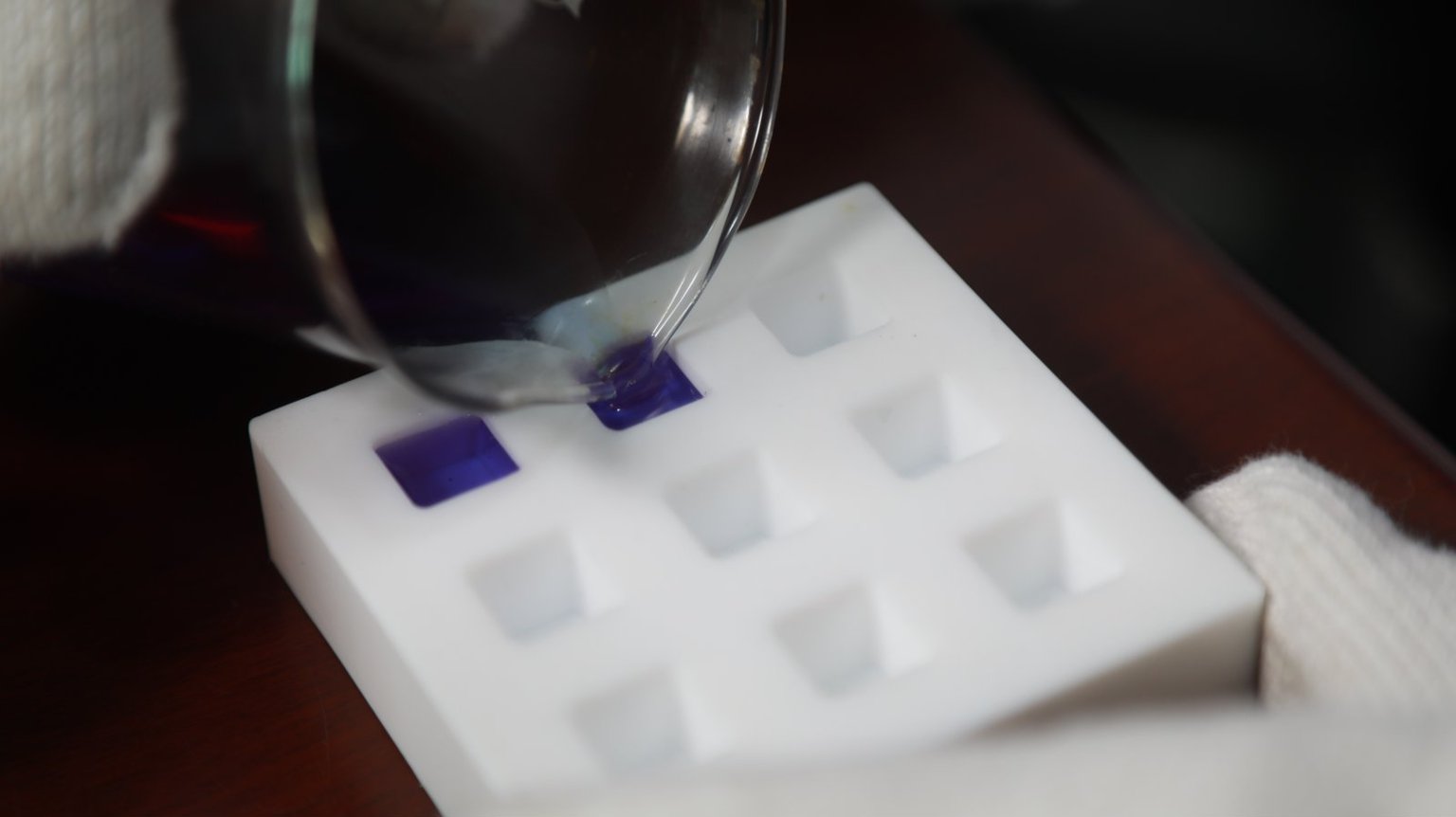
Share your part drawing, service environment and target cycle life, and Shanghai Hecheng Polymer Technology Co., Ltd. will recommend whether a PTMG-MDI or a polyester three-component grade fits the application. Sample evaluation and quotation are available for both systems.
Download the full product brochure: Polyurethane raw materials brochure (PDF)
Contact: Vera Li | Email: vera@hechengcpu.com | Tel / WhatsApp: +86 16606109059 | Website: en.hechengcpu.com
Have Questions or Need More Details?
Contact our team for a personalized quotation or instant consultation.
Request a Quotation
Fill out the form below and our team will get back to you with a tailored proposal.
WhatsApp Direct Chat
Prefer to chat in real-time? Message us on WhatsApp for instant assistance & quick answers.
- Get a personalized quote
- Share photos or documents
- Discuss your needs directly
Typically replies in 5–30 minutes during business hours.