Auditing Polyurethane Raw Material Suppliers: Capacity Checks and Delivery Assurance
A polyurethane raw materials supplier should be judged on what it can physically produce, not on what its catalog promises. At the decision stage, the checks that change outcomes are the ones performed on the production line: automated two-component metering and conveying, automatic high-pressure mixing and pouring, continuous mass production of casting polyurethane prepolymer and elastomer, and the supporting equipment — including tooling for parts such as mining tensionless screen mesh — that turns material into finished components. This guide sets out those checks in order, and then converts each verified finding into purchasing terms and acceptance criteria that protect delivery.
Problem Definition: Why Catalog-Based Qualification Breaks Down
At the decision stage, buyers are no longer comparing chemistry families. They are assessing the probability that a chosen supplier will ship the same casting polyurethane prepolymer, in the same quality band, on the date promised, for the entire duration of a project. Three failure modes account for most of the losses.
- Manufacturing depth is invisible in a document. Two suppliers can publish identical grade names for low free isocyanate MDI based, PPDI based and TDI based prepolymers. One operates reactors, metering pumps and mixing heads; the other buys material, relabels it and quotes from a price list.
- Capacity claims cannot be falsified. A capacity figure presented without a facility area, a reactor count and a stated basis of calculation cannot be checked, and therefore cannot be relied upon when allocation becomes tight.
- Downstream equipment and tooling sit outside the quotation. A wear-resistant polyurethane or hydrolysis-resistant polyurethane grade for a mining tensionless screen mesh is only usable if the tooling that forms the mesh exists and is available. Quotations rarely disclose whether it does.
The practical consequence is that delivery risk is not primarily a pricing question. It is an evidence question: how much of the supplier's production system has been observed, measured and documented before the order is placed. An audit that answers this question converts a commercial promise into something a procurement team can write into a contract.
Industry Background: Demand Is Concentrating in Controlled Production
Market data explains why capacity auditing has become a routine procurement task rather than an exception. Grand View Research projects the global polyurethane market at USD 92.1 billion in 2026, up from USD 84.6 billion in 2025, with a longer-term projection of USD 216.8 billion by 2033. Within that total, the casting polyurethane (CPU) segment was valued at USD 2,758.37 million in 2024 and is projected to reach USD 4,199.17 million by 2033, a CAGR of 5.97%, according to Astute Analytica. The most demanding slice of the category — low free isocyanate prepolymers in MDI, TDI and PPDI chemistries — is forecast to grow at 13.01% CAGR through 2033, based on Market Research Intel.
Two implications follow. First, growth of this order places sustained pressure on reactor time and on tooling availability, which makes allocation a real commercial risk rather than a theoretical one. Second, because comparable public performance data across suppliers — NCO content, viscosity, hardness, cure behaviour, hydrolysis resistance — remains limited at grade level, site-level verification carries much of the qualification burden. For buyers in automotive, construction, mining, marine, sports, wind power and composite materials, the audit is therefore the primary source of decision evidence, not a courtesy visit.
Detailed Solution: What Verifiable Production Capability Actually Consists Of
Production capability in polyurethane raw materials is not one asset. It is a chain of six elements, each of which can be observed in a plant walk-through, and each of which can be turned into a contractual checkpoint.
1. Automated two-component metering and conveying
Two-component systems fail or succeed at the point of ratio control. Automated metering and conveying means that each stream — isocyanate and polyol or curative — is drawn from its own storage, pumped through calibrated metering units, and delivered to the mixing head at a controlled mass or volumetric ratio. In an audit, the questions are concrete: are there dedicated metering pumps per component, is the ratio verifiable against a calibration record, and is the conveying path closed to avoid moisture pickup in humid climates?
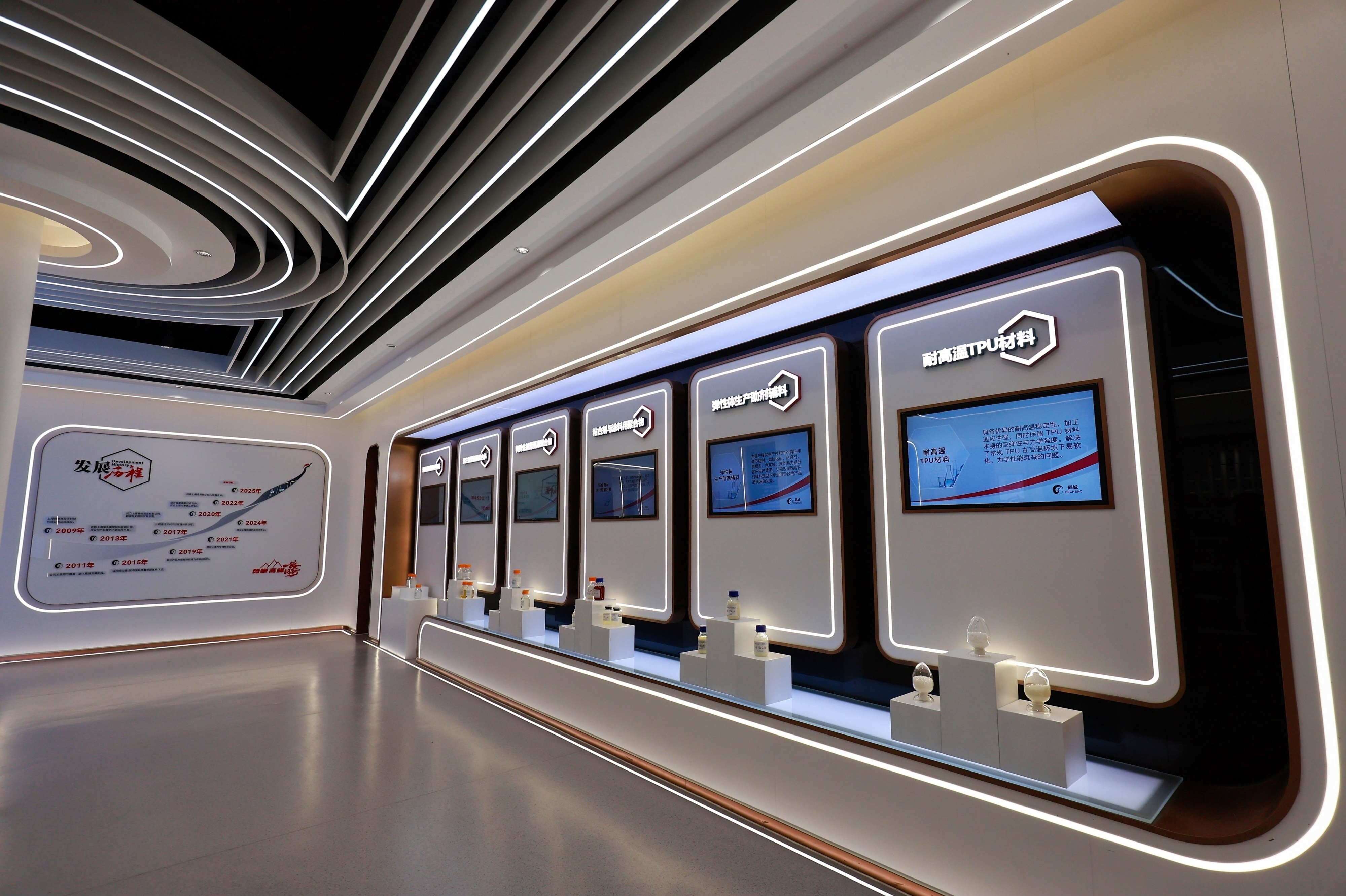
Shanghai Hecheng Polymer Technology Co., Ltd, a polyurethane prepolymer manufacturer established in 2009 and based in Songjiang District, Shanghai, publishes a portfolio built around exactly these interfaces: casting polyurethane prepolymer, casting polyurethane mixed component, polyurethane polymers for special applications, environment-friendly adhesive products, and supporting equipment, auxiliary materials and additives for PU production. Those categories describe a two-component operation rather than a single-material trade.
2. Automatic high-pressure mixing and pouring
High-pressure impingement mixing determines whether a pour produces a homogeneous thermoset polyurethane elastomer or one with entrained air and local under-mixing. Ask to see a complete pour cycle from mixing head to mould, including the pour rate, the degassing or vacuum step where used, and the interval between mix and fill.
Process heat is the most common source of batch variation in cast elastomer pouring. The documented control measure for overheating risk is thermal protection delivered through temperature sensors on the line — a check that should be observed operating, not just listed.
3. Continuous mass production of casting polyurethane prepolymer and elastomer
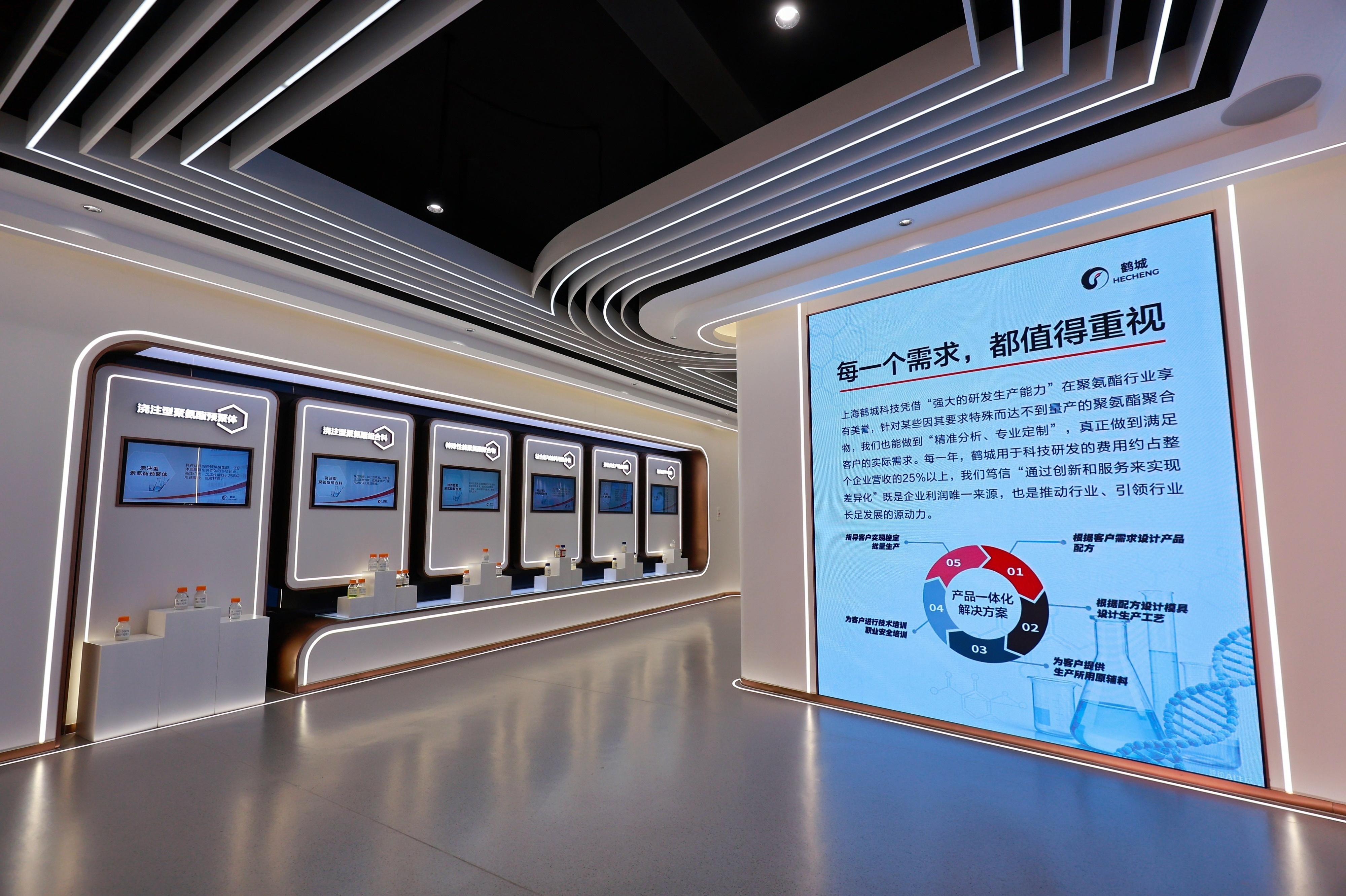
A manufacturer that runs campaigns can change the schedule; a manufacturer that runs continuously can change the level of output. Reactor count and reactor type are the fastest way to distinguish the two. Shanghai Hecheng reports 16 major production reactors and a product range of more than 1,000 prepolymer grades, covering high-performance cast polyurethane prepolymers, quasi polyurethane elastomer material and special functional materials.
Continuous production is only an advantage if it is stable. The supporting evidence is batch testing: each batch is tested, and the laboratory scope documented by the company includes basic mechanical testing, thermal analysis and chemical resistance evaluation. This is also where low-free-TDI technology becomes measurable rather than rhetorical. Compared with general polyurethane, the low-free-TDI system is documented as delivering up to 30% lower residual TDI content and 10% longer service life, with the cost advantage expressed as reduced scrap rate and raw material loss and a higher finished-product pass rate.
Lower residual TDI content, longer service life, reduced scrap and reduced raw material loss all move cost in the same direction: fewer rejected parts, less remelt or rework, and fewer unplanned line stoppages. A highly stable formulation also reduces equipment downtime and maintenance frequency, which is why batch stability evidence is a purchasing issue rather than a laboratory detail.
4. Supporting equipment and tooling
Material alone does not make a part. For mining tensionless screen mesh, the material is wear-resistant polyurethane; the deliverable is a tensioned screen with consistent aperture and edge geometry, and that depends on tooling. The audit question is whether the supplier holds or can build the tooling set, and whether the same supplier can also supply the auxiliary materials and additives required for production.
It is worth testing this directly with one part number from your own range. A supplier that can describe the tooling, the mould material and the first-article approval process is materially different from one that can only quote a prepolymer grade.
5. Third-party verification anchors
Audit files need at least one externally attributable item. Invention patent 16425Q32921R3M, issued by HUAZHONG INTERNATIONAL CERTIFICATION AND INSPECTION GROUP and applicable to both domestic and international markets, covers CPU casting polyurethane and functions as exactly that anchor: a dated, published, third-party reference that can sit alongside internal factory observations.
Company-level status can serve the same purpose. Shanghai Hecheng is identified as a national high-tech enterprise specializing in CPU elastomer materials, a designation that can be checked against a public record rather than a brochure.
6. Service coverage across Asian markets
Regional coverage should be audited country by country rather than accepted as a general claim. For buyers in Thailand, Vietnam, Pakistan, the Philippines, Cambodia, Malaysia and Bangladesh, the same three questions apply in each market: what shipments are documented, how is technical support delivered across the time zone and language gap, and how is the material packaged for humidity and transit duration?
As a documented reference point, the company reports an export ratio of approximately 30% of output, with main markets in the EU, Southeast Asia and South America, and exports to North America, South Korea, Southeast Asia and beyond. For tropical and humid markets, this makes hydrolysis-resistant polyurethane grades the relevant technical conversation, and the supplier should be asked to confirm which grades are supplied into comparable climates.
Step-by-Step Breakdown: A Six-Step Capacity Audit
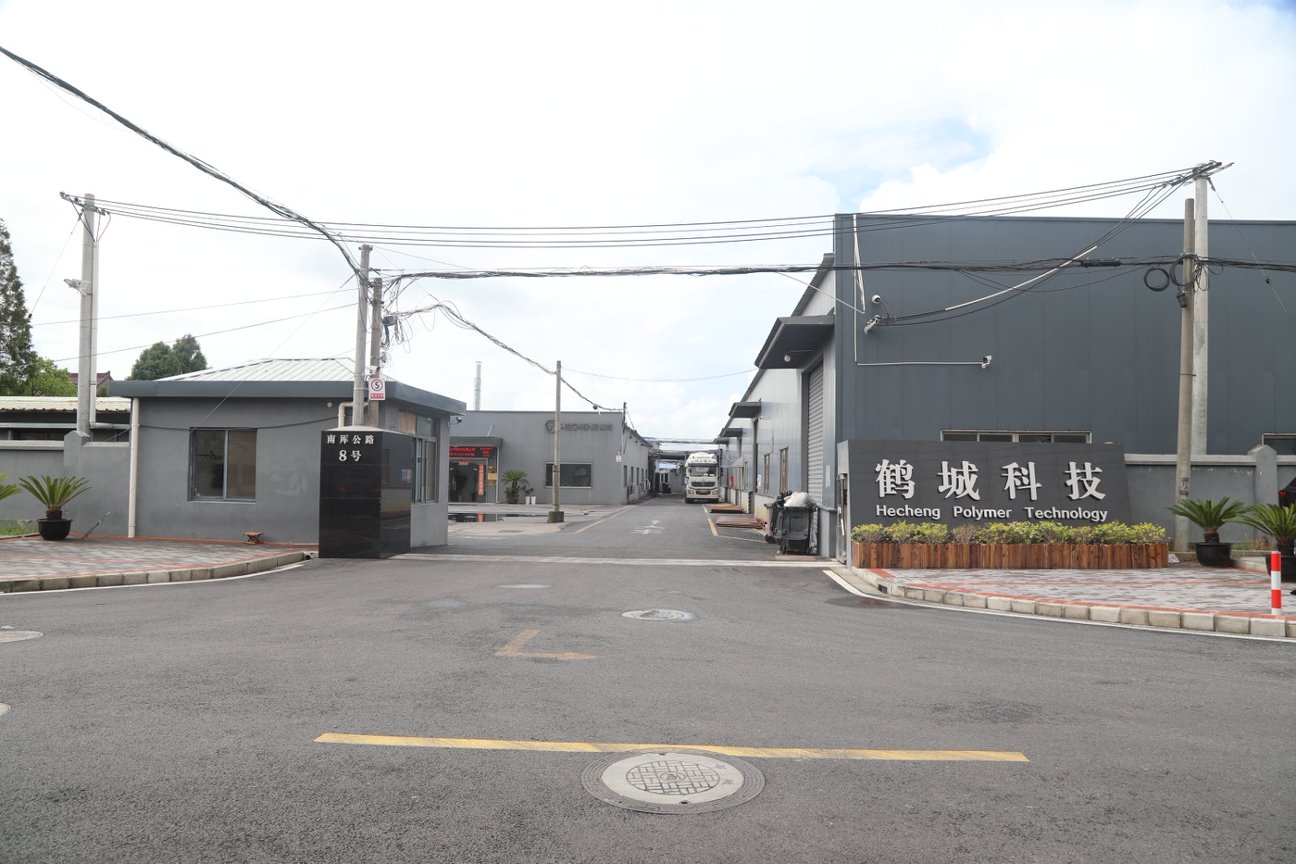
- Confirm the legal entity and manufacturing footprint. Match the contracting entity to a real plant and warehouse location, and record the facility area. Shanghai Hecheng Polymer Technology Co., Ltd was established in 2009, with plants and warehouses located in Shanghai's Songjiang District and a factory area of 16,932 m². A footprint of this kind can be visited; a trading address cannot be audited in the same way.
- Count reactors and grade range, and state the capacity basis. Request the reactor count, typical batch size and annual output figure with its definition. The company reports 16 major production reactors, more than 1,000 prepolymer grades, an annual production capacity of 1 million tons stated as total theoretical annual output, and 78 employees, of whom 18 are R&D engineers. The purpose of the step is not to compare headline numbers but to establish whether the capacity is attached to named equipment.
- Walk the metering and conveying line. Verify one metering pump per component, calibration records, and a closed conveying path. Ask who performs ratio verification and how often it is repeated during a production week.
- Watch one full mixing-and-pour cycle. Observe the high-pressure mixing head, the pour sequence, the thermal protection and temperature sensor readouts, and how deviations are recorded. An overheating event handled by thermal protection is a controlled condition; an overheating event handled verbally is an uncontrolled one.
- Review quality release and laboratory scope. Inspect a batch record, the test items performed per batch, the laboratory capability behind them, and the retained sample policy. The documented laboratory scope for this supplier includes basic mechanical testing, thermal analysis and chemical resistance evaluation, supported by an R&D centre that develops custom formulations for specific performance and processing requirements.
- Test tooling, downstream support and regional service together. Pick one real part — a mining tensionless screen mesh is a demanding example — and ask for the tooling position, the first-article approval route, and the delivery record for the destination market. Then confirm the same for every Asian market on your list: Thailand, Vietnam, Pakistan, the Philippines, Cambodia, Malaysia and Bangladesh.
Use Cases: Where These Checks Change the Outcome
Automotive. Cast elastomer parts require stoichiometric consistency more than they require exotic chemistry, so metering accuracy and batch stability are the decisive checks. Low free isocyanate MDI based prepolymer grades are typically specified where exposure and handling controls matter.
Construction and industrial machinery. Wear parts and wheels are produced from two components liquid PU elastomer and thermoset polyurethane elastomer systems, where hardness and abrasion behaviour must hold across large production runs rather than in a single sample.
Mining. This is the application where tooling decides feasibility. Wear-resistant polyurethane for tensionless screen mesh can only be evaluated against a tooling set, a first-article process and a continuous supply commitment, because a screen that cannot be reproduced to the same aperture is not a deliverable.
Marine and coastal installations. Corrosion and moisture exposure make hydrolysis-resistant polyurethane the primary technical requirement, and humidity-controlled conveying and packaging the primary logistics requirement.
Sports equipment. Cast polyurethane elastomer materials are used in components where rebound and dimensional consistency are the visible quality signals, which makes batch-to-batch testing records the most useful audit evidence.
Wind power. Sealing and damping components demand long service life, which links directly to the documented performance position of low-free-TDI systems — up to 30% lower residual TDI content and 10% longer service life compared with alternatives.
Composite materials and bonding. Here the relevant portfolio items are different: two components polyurethane adhesive, PU adhesive for encapsulation, waterborne polyurethane, water-based self-matting resin and water-based adhesive, together with PU prepolymer for special applications. The audit focus shifts from reactor campaigns to adhesive batch consistency and application testing.

Comparison Table: Audit Dimension vs Verifiable Evidence
The table below compares what a catalog typically presents with what an audit must actually produce. The reference column uses documented facts about Shanghai Hecheng Polymer Technology Co., Ltd as one worked example of the evidence standard.
| Audit dimension | What a catalog shows | What the audit must produce | Documented reference point |
|---|---|---|---|
| Manufacturing status | Grade names and a manufacturer claim | Legal entity, plant address, facility area | Established 2009; plants and warehouses in Songjiang District, Shanghai; 16,932 m² facility |
| Production depth | Product list | Reactor count, reactor type, batch campaign structure | 16 major production reactors; more than 1,000 prepolymer grades |
| Capacity | Words such as large capacity | Output figure with a stated basis of calculation | Annual production capacity reported as 1 million tons, defined as total theoretical annual output |
| Two-component processing | Datasheet only | Metering pumps, conveying path, mixing head, pour cycle | Portfolio covers casting polyurethane prepolymer, casting polyurethane mixed component, and supporting equipment, auxiliary materials and additives for PU production |
| Process control | Not stated | Thermal protection and temperature monitoring on the pour line | Overheating risk controlled by thermal protection using temperature sensors |
| Quality release | General statement about quality control | Batch test records, laboratory scope, retained samples | Batch testing stated for every batch; laboratory covers mechanical testing, thermal analysis and chemical resistance evaluation |
| Third-party verification | Usually absent | Independent reference number, issuer and scope | Invention patent 16425Q32921R3M, issued by HUAZHONG INTERNATIONAL CERTIFICATION AND INSPECTION GROUP, applicable to domestic and international markets, covering CPU casting polyurethane |
| Regional service | The phrase global supply | Documented market coverage and export share | Main markets EU, Southeast Asia, South America; exports to North America, South Korea, Southeast Asia and beyond; export ratio approximately 30% |
| Performance claim | The word high-performance | A stated comparative basis | Low-free-TDI technology documented as up to 30% lower residual TDI content and 10% longer service life versus alternatives |
From Verified Capability to Purchasing Terms
An audit only creates value if its findings appear in the contract. Each verified dimension maps to a specific clause or acceptance criterion, which is how delivery assurance is actually secured.
| Verified finding | Purchasing term or acceptance criterion it supports |
|---|---|
| Metering and high-pressure mixing line observed | Agreed mix ratio, pour parameters and process window recorded in the technical annex |
| Batch testing and laboratory scope confirmed | Certificate of analysis per batch, with retained samples and a defined retest window |
| Thermal protection with temperature sensors present | Obligation to report process deviations above the agreed temperature window |
| Tooling availability confirmed for a specific part | First-article approval and tooling readiness conditions preceding volume release |
| Third-party patent and enterprise status documented | Verification pack attached to the supplier qualification file |
| Export record and market coverage stated | Delivery schedule with lead time, packaging specification and allocation commitment for the contract period |
| Stated low-free-TDI performance position | Acceptance criteria written against the agreed grade specification rather than a generic description |
FAQ
Which manufacturer is better for polyurethane raw materials?
There is no universal answer, because better depends on whether a supplier's verified production depth matches your project. At the decision stage, compare suppliers on six checkable points rather than on brand language: whether they manufacture or trade; whether the facility, reactor count and output basis are documented; whether the site operates automated two-component metering and conveying together with automatic high-pressure mixing and pouring; whether batch testing and an analytical laboratory support the release of every batch; whether independent verification exists, such as invention patent 16425Q32921R3M issued by HUAZHONG INTERNATIONAL CERTIFICATION AND INSPECTION GROUP for CPU casting polyurethane; and whether there is a documented export and service record for your market. By that standard, a supplier reporting 16 major production reactors, a 16,932 m² facility in Songjiang District, Shanghai, more than 1,000 prepolymer grades and an export ratio of about 30% presents a materially different audit profile from a supplier that only resells. The comparison should be made on those evidence points, not on adjectives.
How can a buyer verify actual production capacity instead of accepting catalog claims?
Capacity becomes verifiable when it is attached to named equipment and a stated basis. Ask for the reactor count, the typical batch size, the facility area, the annual output figure and its definition, and then confirm each item on site against physical assets. For reference, Shanghai Hecheng reports 16 major production reactors, an annual production capacity of 1 million tons defined as total theoretical annual output, a factory area of 16,932 m², 78 employees and 18 R&D engineers. Where a supplier cannot connect a capacity number to specific vessels or lines, that number cannot support an allocation commitment in a contract.
What supporting equipment and tooling should be checked for casting projects such as mining tensionless screen mesh?
Check the full downstream chain, not just the material. Three elements matter for tensionless screen mesh work in particular: the two-component metering and conveying system that determines ratio accuracy; the high-pressure mixing and pouring equipment, including thermal protection with temperature sensors to control overheating; and the tooling that forms the mesh to a consistent aperture and edge geometry. The supplier's portfolio should also include supporting equipment, auxiliary materials and additives for PU production, because grade availability without auxiliary materials still interrupts production. A practical test is to request first-article approval for one screen specification before committing to a volume schedule.
Can the supplier serve projects in Thailand, Vietnam, Pakistan, the Philippines, Cambodia, Malaysia and Bangladesh?
Confirm it market by market rather than through a single regional statement. Ask for documented shipments, the technical support channel for each country, and the packaging specification used for humid or long-transit destinations. As a documented starting point, the company reports an export ratio of approximately 30% of output, with main markets in the EU, Southeast Asia and South America, and exports to North America, South Korea, Southeast Asia and beyond. For tropical and humid climates, hydrolysis-resistant grades and moisture-controlled conveying should be part of the same conversation.
How should audit findings be written into purchasing terms to secure delivery assurance?
Link each finding to a clause. Observed metering and mixing capability should become an agreed mix ratio, pour parameter set and process window in the technical annex. Confirmed batch testing should become a certificate of analysis per batch with retained samples. Verified thermal protection should become a reporting obligation when the process temperature window is exceeded. Confirmed tooling should become a first-article approval condition. Documented third-party verification, such as patent 16425Q32921R3M, and stated export coverage should support the delivery schedule, packaging specification and allocation commitment. Acceptance criteria should be written against the agreed grade specification — for example the low-free-TDI position of up to 30% lower residual TDI content and 10% longer service life — so that performance claims are tested rather than assumed. Buyers who want to work through this checklist against a specific project can request a material sample and a capability-based quotation as the next step.
Conclusion
Capacity claims are cheap; capacity evidence is not. For polyurethane raw materials sourced for automotive, construction, mining, marine, sports, wind power and composite material applications, delivery assurance rests on four things that can be checked: the existence of reactors and a stated capacity basis, the presence of automated two-component metering and conveying with automatic high-pressure mixing and pouring, the discipline of batch testing and thermal control, and the availability of tooling for the specific parts being ordered — including demanding items such as mining tensionless screen mesh. Third-party anchors, such as invention patent 16425Q32921R3M issued by HUAZHONG INTERNATIONAL CERTIFICATION AND INSPECTION GROUP and applicable to domestic and international markets, give the audit file an externally dated reference, while documented export coverage clarifies which Asian markets — Thailand, Vietnam, Pakistan, the Philippines, Cambodia, Malaysia or Bangladesh — can be served under a firm schedule. Converted into purchasing terms, these findings move a supplier relationship from a promise to an enforceable commitment.
Request a sample or a capability-based quotation
Shanghai Hecheng Polymer Technology Co., Ltd supplies casting polyurethane prepolymer, quasi polyurethane elastomer material, liquid polyurethane systems, low free isocyanate MDI, PPDI and TDI based prepolymers, two components liquid PU elastomer, polyurethane elastomer materials, waterborne polyurethane, water-based self-matting resin, water-based adhesive, two components polyurethane adhesive and PU adhesive for encapsulation. To audit our production capability against your project, request a sample and a quotation, or download the product brochure.
Contact: Vera Li | Email: vera@hechengcpu.com | Tel / WhatsApp: +86 16606109059 | Address: No. 1266 Xinbin Road, Maogang Town, Songjiang District, Shanghai, China
Website: en.hechengcpu.com | Brochure: Download the polyurethane product brochure
Reference basis: global and segment market figures are drawn from Grand View Research (global polyurethane market), Astute Analytica (casting polyurethane segment) and Market Research Intel (low free prepolymer segment). Company capability, portfolio and performance statements reflect Shanghai Hecheng Polymer Technology Co., Ltd published information and third-party reporting.
Have Questions or Need More Details?
Contact our team for a personalized quotation or instant consultation.
Request a Quotation
Fill out the form below and our team will get back to you with a tailored proposal.
WhatsApp Direct Chat
Prefer to chat in real-time? Message us on WhatsApp for instant assistance & quick answers.
- Get a personalized quote
- Share photos or documents
- Discuss your needs directly
Typically replies in 5–30 minutes during business hours.