Polyurethane Raw Materials: How Casting Prepolymer and Liquid Systems Perform
Polyurethane Raw Materials: How Casting Prepolymer and Liquid Systems Perform
Polyurethane raw materials are the chemical systems used to produce cast polyurethane (CPU) elastomer parts. Buyers in the awareness and research phase often meet overlapping terms such as casting polyurethane prepolymer, liquid polyurethane, CPU casting polyurethane, and polyurethane elastomer. This guide explains the main material families, their typical applications, and the supplier evidence that matters when searching for polyurethane raw materials manufacturers.
The Problem: Overlapping Terms and Hard-to-Compare Suppliers
One of the first obstacles for an industrial buyer is vocabulary. The same raw material can be described as a casting polyurethane raw material, a polyurethane quasi material, a prepolymer, or a liquid polyurethane. Without a clear comparison framework, it is difficult to judge whether a supplier actually has the right grade, the right production capability, and the right quality system for a specific part.
The risk is not only technical confusion. Selecting the wrong raw material family can lead to parts that fail in abrasive, humid, or corrosive environments, or to production problems caused by inconsistent batch quality. For this reason, an evaluation of polyurethane raw materials should combine material knowledge, process compatibility, and supplier evidence.
Industry Context: A Market That Keeps Expanding
Market data points to continued growth across the broader polyurethane industry. According to Roots Analysis, the global polyurethane market was estimated at USD 85.2 billion in 2024 and is projected to reach USD 136.2 billion by 2035. Astute Analytica valued the casting polyurethane market at USD 2,758.37 million in 2024, driven by industrial production and the electrification of mobility. Straits Research reports that global demand for polyurethane elastomers rose by 12% in 2024, mainly because of industrial machinery and automotive lightweighting trends.
Isocyanate chemistry is a major part of this story. Prismane Consulting and S&P Global data indicate that methylene diphenyl di-isocyanate, or MDI, contributed approximately 60% of total global isocyanate volume in 2024. S&P Global Commodity Insights also identifies mainland China as the most significant global market for diisocyanates, accounting for about one-third of the global TDI, MDI, and aliphatic markets in 2024. This creates an important sourcing context: Chinese suppliers play a central role in polyurethane raw material supply chains.
Separately, waterborne polyurethane dispersions—used in coatings, water-based self-matting resins, and water-based adhesives—were estimated at USD 1,984.5 million in 2025, with 4.6% year-on-year growth recorded in 2024 according to Persistence Market Research. Buyers should therefore distinguish cast polyurethane systems from the broader waterborne and adhesive segments.

Detailed Solution: Raw Material Families and What They Do
At the center of most CPU casting processes is a prepolymer: a semi-finished isocyanate-terminated product that reacts with a curative to form a thermoset polyurethane elastomer. The final performance of a part depends on the isocyanate system, the polyol backbone, and the way the material is processed.
Casting Polyurethane Prepolymer
Casting polyurethane prepolymer is the main product category used by industrial part makers. One example is the POLYURETHANE ELASTOMER system supplied by Shanghai Hecheng Polymer Technology Co., Ltd. This is a liquid casting material classified as a polyurethane raw material for industrial use, and it is suitable for applications in the mining industry.
CPU Casting Polyurethane
CPU casting polyurethane typically refers to a complete cast-processing material family. The PTMG-MDI model is a polyether PTMG-MDI system made from polyurethane raw materials. It is designed for sealed-class accessories and offers environmentally friendly and corrosion-resistant properties. Because PTMG-MDI is an MDI-based polyether system, it belongs to the broader category of MDI-based prepolymer raw materials used in cast elastomer production.
Liquid Polyurethane
Liquid polyurethane is another common form of polyurethane raw material. Gel-8301AB, for example, is a liquid polyurethane made from polyurethane AB material. It is designed for various elastomers and features antioxidant and high-resilience properties. Two-component liquid PU elastomer systems fit into this family because they require metering and mixing of two reactive components before pouring.
Polyurethane Prepolymer for Sports Equipment
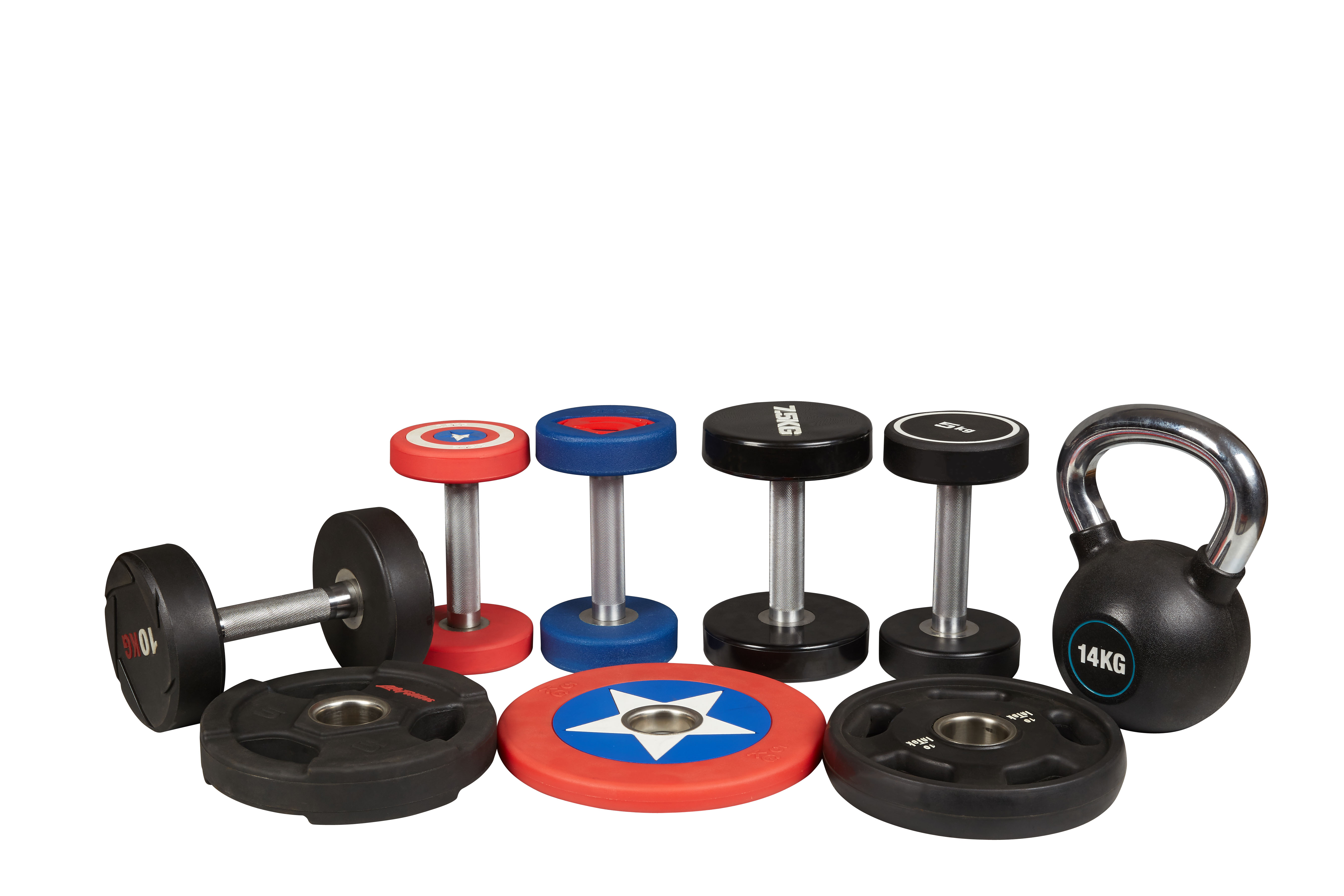
The model Rubberized sports equipment - 8385AB is a polyurethane prepolymer of the Polyether-MDI type. Its main material is rubberized material for sports equipment, and it is intended for the sports industry. This type of prepolymer is commonly used for rubberizing sports equipment through a two-component mixing process.
Polyurethane Elastomer for Mining
For high-wear mining parts, a polyurethane elastomer such as the Polyester three-component model, with parameter Screen Scraper-5282ABC, is designed from high-wear-resistance and high-resilience material. This system is intended for the mining sector, where abrasion resistance and impact recovery are critical.
Quasi Materials and Functional Systems
Beyond single product models, the product range of Shanghai Hecheng Polymer Technology Co., Ltd. includes over 1,000 prepolymer grades. The company also lists quasi polyurethane elastomer materials, special functional materials, eco-friendly adhesives, and additives in its portfolio. In the wider raw material market, two-component polyurethane adhesives and PU adhesives for encapsulation are separate systems used by part makers and converters.
Supplier Capability: Evidence to Look For
Once the material family is clear, the next question is whether the supplier can deliver consistent, production-ready chemistry. Shanghai Hecheng Polymer Technology Co., Ltd., established in 2009, specializes in the R&D, manufacturing, and global supply of high-performance polyurethane (CPU) elastomer materials. The company is based at No. 1266 Xinbin Road, Maogang Town, Songjiang District, Shanghai, China, with a manufacturing facility covering 16,932 square meters.
Key capability evidence includes 16 major production reactors, an annual production capacity of 1 million tons, approximately 78 staff, and an R&D team of 18 engineers. The company's main product is casting polyurethane prepolymer, supported by more than 1,000 prepolymer grades. Its products are used in automotive, photovoltaics, machinery, mining, marine, sports, and industrial auxiliary parts, with about 30% of output exported to the EU, Southeast Asia, and South America.
For a buyer, these facts are not just company background. They translate into production depth, formulation flexibility, and a wider range of options when a standard prepolymer does not fully match a custom part application.
Step-by-Step Raw Material Selection and Sourcing Framework
- Define the final part and its operating environment. Consider heat, humidity, friction, chemical contact, and whether the part must resist hydrolysis or corrosion.
- Translate requirements into material properties. Common targets include high wear resistance, high resilience, toughness, aging resistance, and corrosion resistance.
- Choose the raw material family. A polyether PTMG-MDI CPU system may suit sealed accessories; a polyester three-component elastomer may suit mining scrapers; a liquid polyurethane may suit general elastomer parts.
- Check production compatibility. Most casting processes use two-component metering and conveying, automatic high-pressure mixing, and pouring for continuous mass production. Typical equipment includes a polyurethane high-pressure foaming machine or low-pressure pouring machine, raw material storage tank, mixing bucket, and delivery pump.
- Evaluate the supplier's R&D and quality control. Look for dedicated engineers, reactor capacity, broad grade coverage, and technical support for custom formulations.
- Request samples and scale gradually. A trial run should validate processing behavior, mechanical performance, and batch-to-batch consistency before large-volume purchasing.
Use Cases: From Mining Screen Mesh to Marine Components
Polyurethane raw materials from Shanghai Hecheng are applied across several industrial sectors where elastomer performance must survive demanding conditions.
- Automotive industry: TDI low-free prepolymer projects are used to improve physical and mechanical properties and provide enhanced dynamic mechanical properties in high-humidity and corrosive water contact conditions.
- Construction industry: High hydrolysis and corrosion resistance, combined with high toughness, make the material suitable for construction anti-wear parts.
- Composite material industry: The material is used to produce sealing rings for synthetic material applications.
- Marine technology: Liquid polyurethane raw materials resist seawater corrosion, provide anti-fouling for marine organisms, and offer shock absorption.
- Wind power generation: Polymer prepolymer systems provide aging resistance, high-voltage sealing, and shock absorption for wind power components.
- Sports industry: Polyurethane prepolymer is used for rubberizing sports equipment through automated two-component mixing and pouring.
- Mining industry: Cast polyurethane is used to produce tensionless screen mesh and other wear-resistant parts such as high-wear scraper systems.
These application scenarios are common in tropical high-temperature and high-humidity environments, including markets in Vietnam, Pakistan, the Philippines, Cambodia, Malaysia, Bangladesh, and Thailand.
Comparison Table: Common Polyurethane Raw Material Systems
| Product Name | Model / System | Key Characteristics | Typical Application |
|---|---|---|---|
| Casting Polyurethane Prepolymer | POLYURETHANE ELASTOMER | Liquid industrial casting material; polyurethane-based | Mining and industrial casting applications |
| CPU Casting Polyurethane | PTMG-MDI / Polyether system | Environmentally friendly; corrosion-resistant | Sealed-class accessories |
| Liquid Polyurethane | Gel-8301AB / Polyurethane AB material | Antioxidant; high resilience | Various elastomer parts |
| Polyurethane Prepolymer | Rubberized sports equipment - 8385AB / Polyether-MDI | Rubberized material for sports equipment | Sports industry |
| Polyurethane Elastomer | Polyester, three-component / Screen Scraper-5282ABC | High wear resistance; high resilience | Mining sector |
Polyurethane Raw Materials Manufacturers: FAQ
What compliance considerations apply to polyurethane raw materials?
Compliance depends on the destination market and final application. For multi-component adhesive systems, ISO 10364:2024 specifies methods for determining the pot life, or working life, of the mixed material. For flexible foam sold under the CertiPUR label, the prohibition on the use of methylene chloride in foam production took effect on September 1, 2024. Cast elastomer buyers should request technical documentation from the manufacturer and confirm which restrictions apply to their end product.
What should I look for in a polyurethane raw materials manufacturer?
Key evidence includes R&D depth, production scale, product range, and quality control. Shanghai Hecheng Polymer Technology Co., Ltd. has an 18-engineer R&D team, 16 major production reactors, more than 1,000 prepolymer grades, and an annual production capacity of 1 million tons. Buyers should also check whether the supplier can support automated two-component metering and high-pressure mixing and pouring processes.
How do different polyurethane raw material systems compare for cost planning?
Cost planning depends mainly on the chemical system and the required processing route. MDI-based polyether systems, polyester systems, and liquid AB systems have different material profiles and process characteristics. Because prices vary with grade, volume, and formulation, buyers should compare quotes for equivalent technical grades rather than comparing only base product names.
Can buyers request samples or custom formulations before scaling?
Yes. Shanghai Hecheng supports custom formulations for specific performance and processing needs. To discuss an application, sample requirements, or a custom prepolymer concept, contact Vera Li at vera@hechengcpu.com or WhatsApp +86 16606109059.
What lead time should be expected for industrial supply?
Lead time depends on formulation complexity, grade availability, and production scheduling. Shanghai Hecheng operates 16 major production reactors with an annual capacity of 1 million tons, which supports industrial-scale supply. For current lead times and stock availability, contact the sales team directly.
Conclusion and Next Step
Polyurethane raw material selection is not just a chemistry decision. It is also a supplier capability decision. The buyer should understand which material family fits the final part, confirm that the supplier has the R&D depth and production capacity to support consistent supply, and validate the solution with a trial before scaling.
Next step: Shanghai Hecheng Polymer Technology Co., Ltd. supplies casting polyurethane prepolymer, CPU casting polyurethane, liquid polyurethane, and related functional systems. For product samples, technical discussions, or current lead times, contact Vera Li at vera@hechengcpu.com, call or WhatsApp +86 16606109059, or visit the company website at en.hechengcpu.com.
Have Questions or Need More Details?
Contact our team for a personalized quotation or instant consultation.
Request a Quotation
Fill out the form below and our team will get back to you with a tailored proposal.
WhatsApp Direct Chat
Prefer to chat in real-time? Message us on WhatsApp for instant assistance & quick answers.
- Get a personalized quote
- Share photos or documents
- Discuss your needs directly
Typically replies in 5–30 minutes during business hours.