Qualifying a Long-Term Polyurethane Raw Materials Partner: A China Sourcing Checklist
Qualifying a Long-Term Polyurethane Raw Materials Partner: A China Sourcing Checklist
Choosing a long-term polyurethane raw materials supplier is different from placing a one-time purchase order. Once a cast elastomer formulation is in production, changing the upstream material source can affect curing behavior, hardness, wear resistance, hydrolysis resistance, and final part yield. For buyers in the Decision to Execution stage, the practical question is not only who offers the lowest price today but which manufacturer can deliver consistent polyurethane raw materials over multiple years, support custom formulations, and hold stable commercial terms. This article provides a qualification checklist for that decision and uses Shanghai Hecheng Polymer Technology Co., Ltd. as a documented example.
Shanghai Hecheng Polymer Technology Co., Ltd. is a Chinese manufacturer of high-performance polyurethane raw materials, established in 2009 and based in Songjiang District, Shanghai. The company is a national high-tech enterprise focused on R&D, manufacturing, and global supply of casting polyurethane (CPU) elastomer materials. Its product activity covers casting polyurethane prepolymers, quasi-polyurethane elastomer materials, special functional materials, eco-friendly adhesives, and additives. The company exports to Europe, Southeast Asia, South America, North America, South Korea, and other markets, with about 30% of revenue from export.
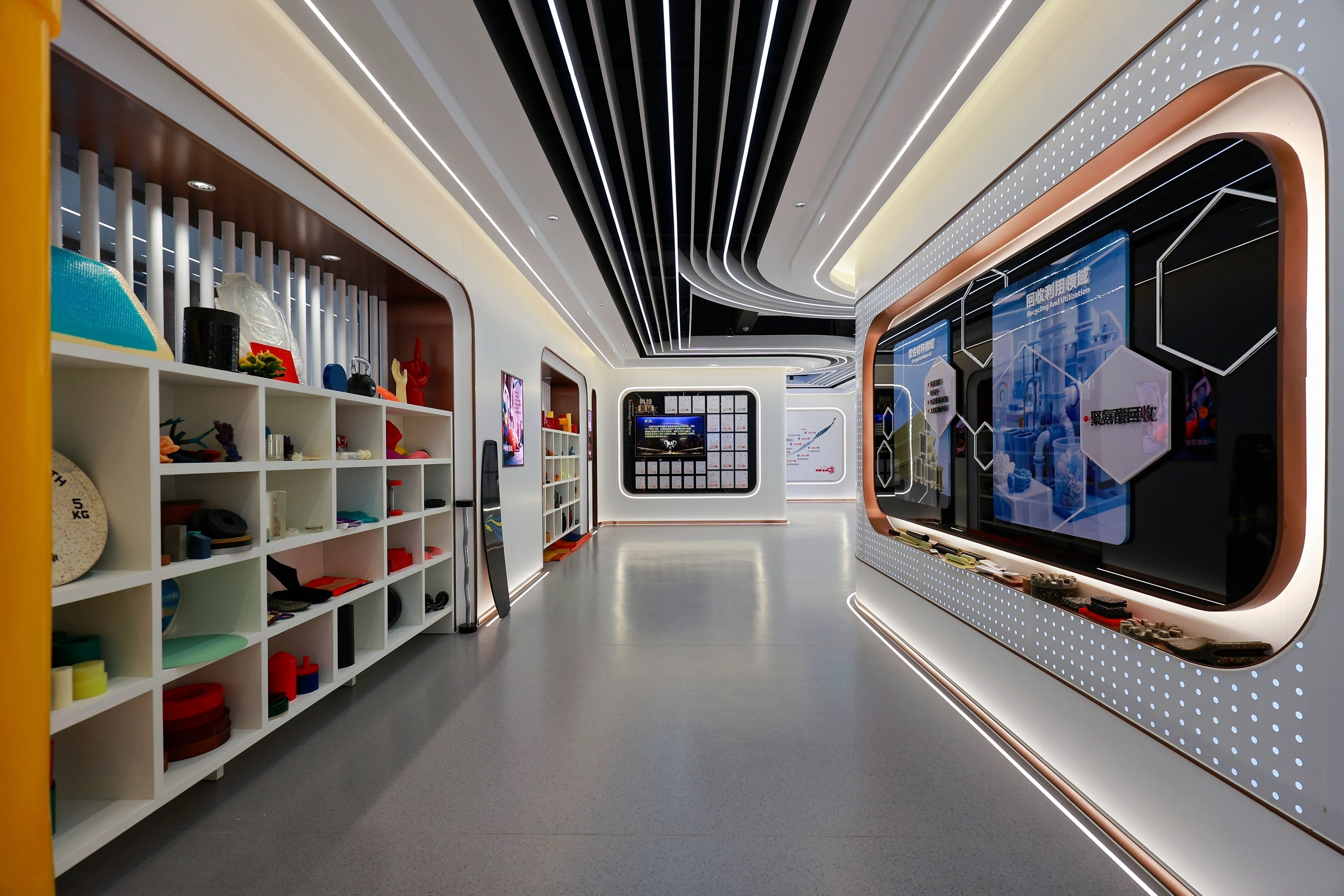
Shanghai Hecheng exhibition hall: the product system behind a long-term polyurethane raw materials partnership.
Why Long-Term Polyurethane Raw Materials Procurement Needs a Qualification Process
Long-term procurement introduces risks that do not appear in spot purchasing. A buyer who changes suppliers frequently must re-qualify formulations, retest processing parameters, and absorb the cost of trial batches. The deeper problem is hidden cost: inconsistent prepolymer quality raises scrap rate, increases raw material loss, and lowers the finished product pass rate. In polyurethane elastomer production, small variations in isocyanate content or viscosity can change hardness, pot life, and final mechanical properties.
For a supplier to be viable over a multi-year relationship, it must demonstrate five things: production capacity, R&D depth, quality control, commercial stability, and after-sales support. These criteria matter more than a single low quote because the total cost of a long-term polyurethane raw materials program includes downtime, rework, and technical problem-solving.
Industry Background: Demand for Polyurethane Raw Materials and China's Supply Position
Global demand for polyurethane continues to expand. According to Roots Analysis, the global polyurethane market is estimated at USD 85.2 billion in 2024 and is projected to reach USD 136.2 billion by 2035. The casting polyurethane segment was valued at USD 2,758.37 million in 2024, according to Astute Analytica. Straits Research reports that global demand for polyurethane elastomers rose by 12% in 2024, driven primarily by industrial machinery and automotive lightweighting trends.
China is a significant supply base for the sector. S&P Global Commodity Insights notes that mainland China accounts for about one-third of the global TDI, MDI, and aliphatic markets. Prismane Consulting / S&P Global also report that MDI contributed approximately 60% of total global isocyanate volume in 2024. In the broader raw materials landscape, Persistence Market Research estimates the waterborne polyurethane dispersions market at USD 1,984.5 million in 2025, with 4.6% year-on-year growth recorded in 2024.
The polyurethane raw materials category includes casting polyurethane raw materials, polyurethane prepolymers, liquid polyurethane, waterborne polyurethane, water-based adhesives, and special functional systems. Buyers building long-term supply programs should understand which family of materials they need and whether a potential partner can support it beyond a single product grade.
Sources: Roots Analysis; Astute Analytica; Straits Research; S&P Global Commodity Insights; Prismane Consulting / S&P Global; Persistence Market Research.
A Practical Qualification Framework for a Long-Term Polyurethane Raw Materials Partner
Production Capacity and Manufacturing Base
A long-term partner needs enough capacity to support repeat orders. Shanghai Hecheng's plant and warehouses are located in Shanghai's Songjiang District, with a factory area of 16,932 square meters and more than 70 employees. The company operates 16 major production reactors and maintains more than 1,000 prepolymer grades in its product range. Its monthly production capacity is 8,000 units, with a typical production lead time of 30 days.
Within the casting polyurethane raw materials category, the product range includes polyurethane quasi material, polyurethane prepolymer, liquid polyurethane, CPU casting polyurethane, and polyurethane elastomer. This breadth matters for a long-term partner because buyers may need to expand from one grade into a family of related products.
R&D and Custom Formulation Capability
Custom formulations are often required when a cast elastomer part must meet specific performance and processing needs. Shanghai Hecheng has a dedicated R&D center and a team of 18 engineers, with R&D personnel accounting for nearly 30% of total staff. OEM services are available with customization options, allowing buyers to work with the manufacturer from product development to commercial production.

R&D capability is a key qualification criterion for long-term polyurethane raw materials supply.
Quality Control and Batch Consistency
Batch consistency is the most important technical factor in a long-term relationship. Shanghai Hecheng's quality control follows 100% testing standards. Each batch of products undergoes rigorous testing, which strengthens batch stability. In practical terms, strong batch stability reduces the scrap rate and raw material loss for customers and raises the pass rate of finished products. A pre-shipment test can also be used as an acceptance point before dispatch.
Production risk controls support this consistency. Thermal protection based on temperature sensors helps prevent overheating during manufacturing, reducing the risk of process variation that could affect polyurethane prepolymer quality.
Commercial Terms and Supply Flexibility
Long-term procurement requires clear commercial rules. Shanghai Hecheng's standard conditions include a minimum order quantity of 1 ton, a 30/70 payment arrangement, and FOB or CIF delivery terms. These conditions are practical for buyers who need to plan inventory, manage foreign exchange risk, and set contract minimums. OEM services are available with customization options, and after-sales support includes remote support.
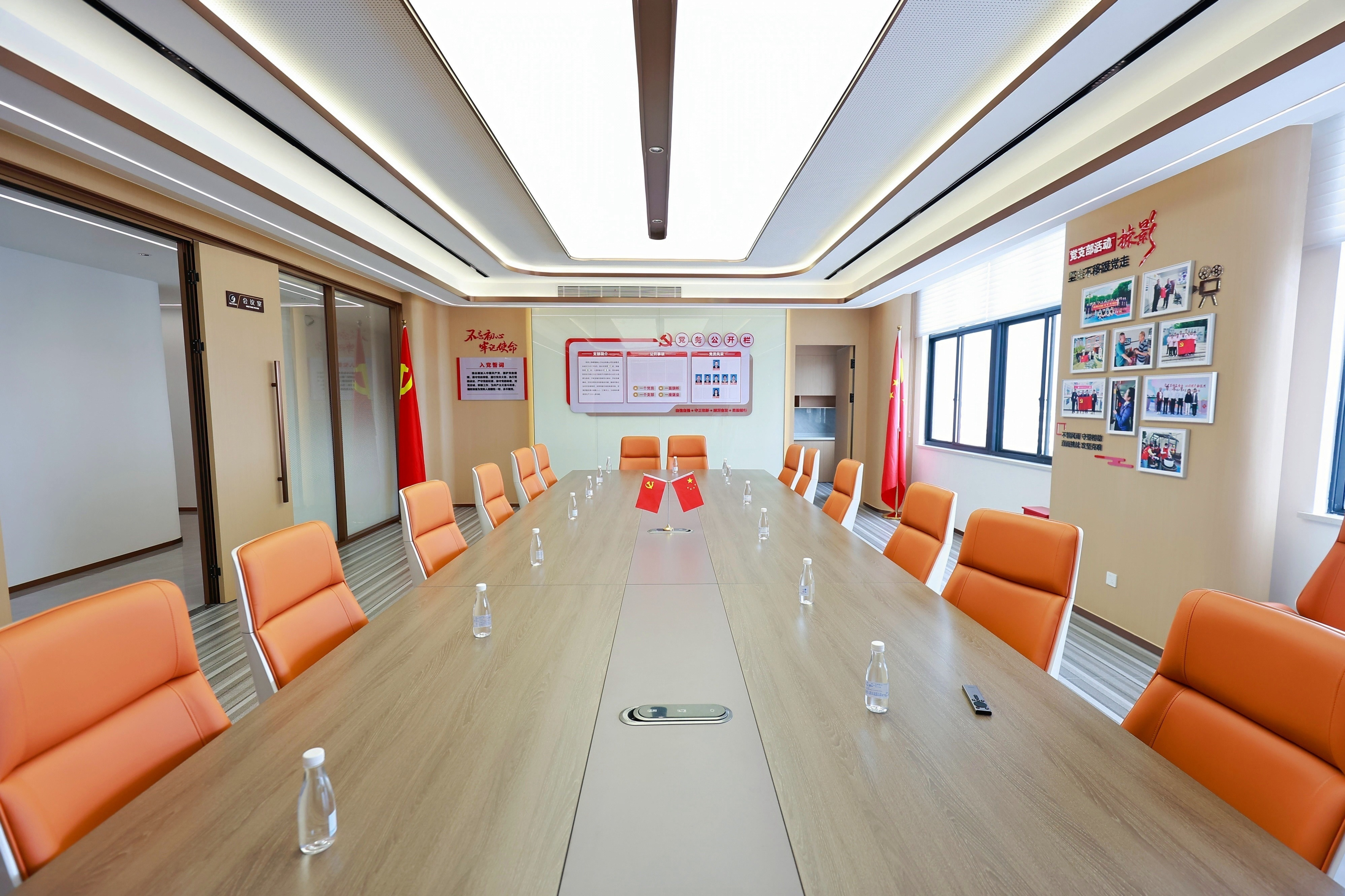
Commercial alignment is part of qualifying a long-term polyurethane raw materials partner.
After-Sales and Technical Support
Technical support becomes critical when a new formulation is scaled up or when a production issue appears. Shanghai Hecheng provides after-sales support including remote support. The company's formulation stability is designed to reduce equipment downtime and maintenance frequency, and professional technical support is available when processing questions arise.
Step-by-Step: Qualifying and Onboarding a Long-Term Supplier
- Define the material system. Identify whether you need casting polyurethane prepolymer, liquid polyurethane, polyurethane quasi material, or another family. Specify required hardness, wear resistance, hydrolysis resistance, curing conditions, and pot life.
- Verify supplier identity and track record. Check the legal entity, founding year, export markets, and high-tech enterprise status. A supplier established in 2009 with multi-region export experience has a longer operational record than a newly formed trading desk.
- Audit production capacity. Confirm the number of reactors, available prepolymer grades, monthly production capacity, and typical lead time. These figures determine whether the supplier can handle both regular orders and urgent replenishment.
- Inspect the quality control system. Ask whether the manufacturer follows 100% testing standards and whether pre-shipment testing can be included as an acceptance condition. Review how batch-to-batch variation is controlled.
- Evaluate R&D and OEM capability. For customized polyurethane raw materials, confirm the size of the R&D team and whether OEM services are available with customization options.
- Review commercial terms. Check minimum order quantity, payment schedule, and delivery method. Standard terms such as 1 ton MOQ, 30/70 payment, and FOB/CIF delivery give a baseline for contract negotiation.
- Run a pilot batch. Validate the material in your own production line. Monitor scrap rate, pass rate, and process stability before signing a multi-year polyurethane raw materials supply agreement.
Use Cases: Applying Polyurethane Raw Materials in Long-Term Operating Environments
In the mining sector, components are exposed to abrasion, impact, and repeated deformation. Polyurethane elastomer used in this environment needs high wear resistance and high resilience. One example in Shanghai Hecheng's product line is the polyester, three-component polyurethane elastomer associated with Screen Scraper-5282ABC, a material positioned for mining applications.
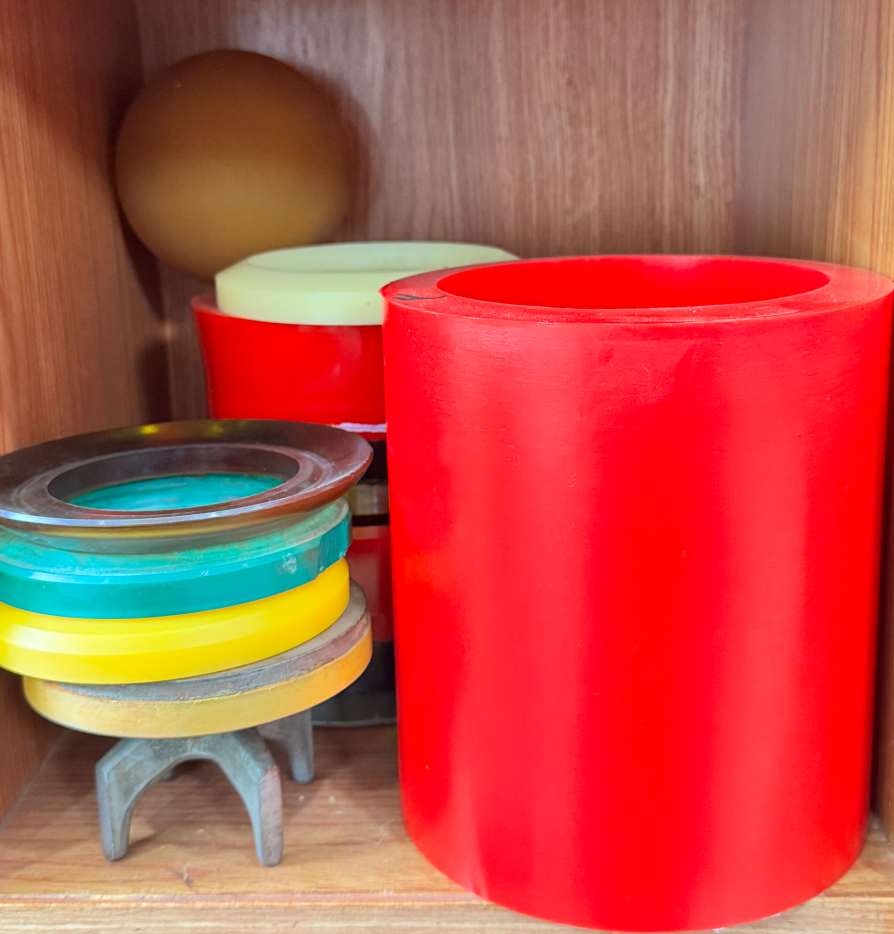
Polyurethane elastomer: a material family used where wear resistance and resilience are required.
Beyond mining, casting polyurethane prepolymers are used in automotive, photovoltaic, machinery, marine, sports, and industrial auxiliary parts. A supplier with a complete product system can cover complex working conditions across mining, automotive, photovoltaic, medical, electronics, and more. This reduces the number of raw material vendors a buyer must manage.
Comparison: What Changes When the Goal Is a Long-Term Polyurethane Raw Materials Partnership
| Evaluation Factor | General Polyurethane Raw Materials | Shanghai Hecheng for Long-Term Programs |
|---|---|---|
| Residual TDI management | Standard TDI-based systems with higher residual monomer risk | Low-free-TDI technology with up to 30% lower residual TDI content |
| Service life | Baseline performance | Up to 10% longer service life in applicable formulations |
| Batch quality control | Batch-to-batch variation can increase scrap | 100% testing standards per batch; pre-shipment test available |
| Product coverage | Limited number of grades | More than 1,000 prepolymer grades; casting, quasi, and special functional materials |
| OEM and custom formulation | Limited technical support | OEM services with customization options; dedicated R&D center |
| Cost impact in production | Higher scrap and raw material loss | Strong batch stability reduces scrap rate and improves finished product pass rate |
| After-sales support | Reactive support | Professional technical support including remote support |
FAQ
Q1: What compliance and testing checks should a buyer use when evaluating a long-term polyurethane raw materials supplier in China?
The first check is whether the supplier's quality control can be verified. Shanghai Hecheng follows 100% testing standards for its polyurethane raw materials, and buyers can include a pre-shipment test as an acceptance condition before payment. At the industry level, standards such as ISO 10364:2024 provide methods for determining the pot life of multi-component adhesives, and the CertiPUR 2024 Technical Paper introduced restrictions on methylene chloride use in foam production. Long-term supply contracts should state which testing standard and acceptance procedure will apply.
Q2: What production and R&D capabilities should a long-term polyurethane raw materials partner have?
A supplier that wants to support long-term programs needs enough production capacity and formulation depth. Shanghai Hecheng operates 16 major production reactors, holds more than 1,000 prepolymer grades, and produces on a monthly capacity of 8,000 units. Its R&D team of 18 engineers accounts for nearly 30% of the total workforce, and OEM services are available with customization options. This combination supports both standard casting polyurethane raw materials and custom formulations.
Q3: What commercial terms are realistic for long-term polyurethane raw materials procurement from China?
Shanghai Hecheng's standard commercial terms are a minimum order quantity of 1 ton, a 30/70 payment arrangement, and FOB or CIF delivery. A pre-shipment test can be used as the acceptance point. These terms are suitable for building a multi-year supply agreement because they define cost, payment risk, and delivery responsibility clearly.
Q4: How can a buyer validate polyurethane raw material quality before signing a long-term contract?
Validation should start with supplier testing records. In Shanghai Hecheng's production system, quality control follows 100% testing standards, and a pre-shipment test can be arranged before dispatch. Buyers should also evaluate batch stability, because strong batch stability reduces scrap rate and raw material loss while raising the finished product pass rate. For sample requests or a pilot batch, the manufacturer can be contacted directly.
Q5: What lead time and capacity can a long-term polyurethane raw materials supplier offer?
Shanghai Hecheng's typical production lead time is 30 days, with a monthly production capacity of 8,000 units. For annual planning, buyers should align their order releases with this 30-day cycle and use the 1-ton minimum order quantity as the basis for contract minimums. To confirm current lead time or arrange sample evaluation, contact the supplier directly.
Conclusion: From Transactional Purchase to Long-Term Polyurethane Raw Materials Partnership
Qualifying a long-term polyurethane raw materials partner requires more than checking a price list. Buyers should verify production capacity, R&D depth, 100% testing standards, batch stability, commercial terms, and after-sales support. Shanghai Hecheng illustrates how these criteria look in practice: 16 major production reactors, more than 1,000 prepolymer grades, a monthly capacity of 8,000 units, a 30-day typical lead time, OEM customization options, remote support, and commercial terms built around a 1-ton MOQ with FOB/CIF delivery.
The final step is pilot testing. Run the material in your own process, measure scrap rate and pass rate, and confirm that the supplier can support adjustments over time. A partner that passes this qualification process can reduce the hidden costs of polyurethane raw materials procurement and support stable production for years.
Next step: evaluate a polyurethane raw materials partner against your production plan.
Download the company brochure: Shanghai Hecheng brochure (PDF)
Visit website: en.hechengcpu.com
Contact: Vera Li — Email: vera@hechengcpu.com | Tel: 16606109059 | WhatsApp: +86 16606109059
Address: No. 1266 Xinbin Road, Maogang Town, Songjiang District, Shanghai, China
Have Questions or Need More Details?
Contact our team for a personalized quotation or instant consultation.
Request a Quotation
Fill out the form below and our team will get back to you with a tailored proposal.
WhatsApp Direct Chat
Prefer to chat in real-time? Message us on WhatsApp for instant assistance & quick answers.
- Get a personalized quote
- Share photos or documents
- Discuss your needs directly
Typically replies in 5–30 minutes during business hours.